What you will learn about how to clean a newborn’s ears, eyes, and nose in this blog:
- Cleaning the outside of your newborn’s eyes, ears, and nose gently with clean water is usually enough to maintain everyday hygiene.
- When cleaning your baby’s eyes, always wipe gently and use a fresh piece of cotton wool for each eye.
- A little earwax is completely normal in newborns and helps protect the ear canal. There’s no need to remove it from inside the ears, as it usually clears naturally.
- Avoid cotton buds inside the ears or nose, and skip kajal, surma, and putting oil or ghee inside these areas.
- If your baby has red or swollen eyes, unusual ear discharge, or congestion that affects feeding, consult your paediatrician.
Knowing how to clean a newborn’s ears, eyes, and nose can feel quite daunting when your baby is so tiny and delicate. You might worry about hurting them or wonder whether you’re cleaning enough, especially when you notice discharge or mucus.
In reality, these areas mostly clean themselves, so you only need to wipe the outside gently with cotton wool or a soft cloth dipped in clean water. You should never put anything inside your baby’s ears, eyes, or nose, even if you notice newborn ear wax, sticky eyes, or a little mucus.
Let’s look at how to care for each area gently, what to avoid, and when your baby might need extra attention.
What You Need to Clean a Newborn’s Ears, Eyes & Nose Safely
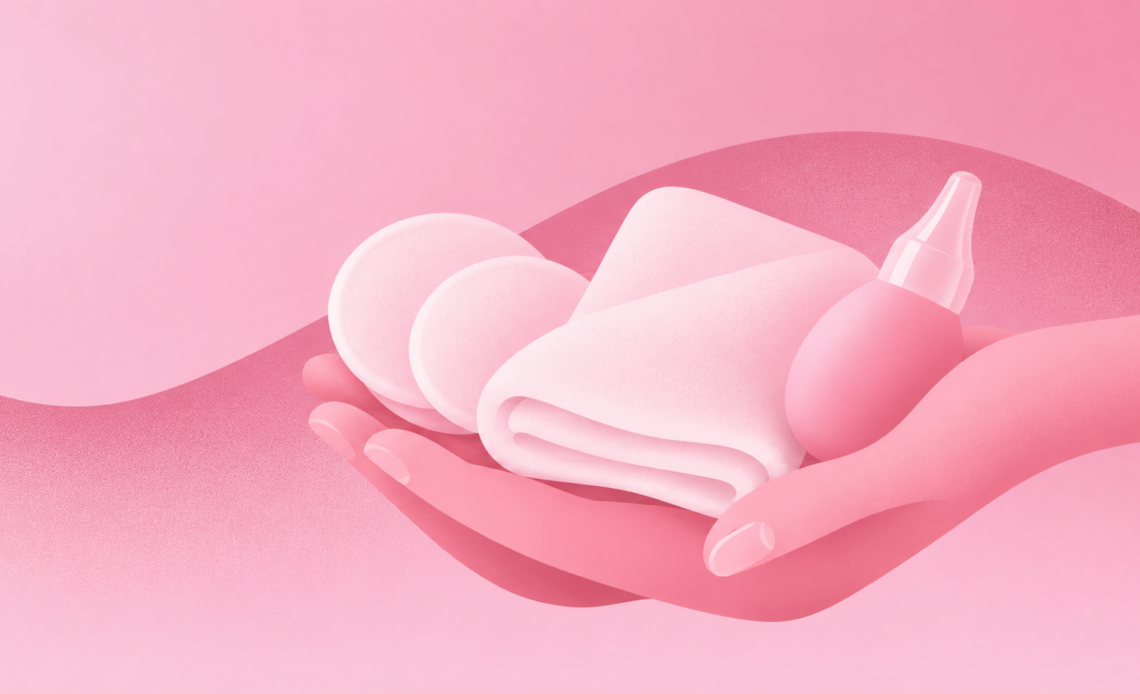
You don’t need a cupboard full of products for a newborn’s eye, ear, and nose care. A few simple things you probably already have at home are enough. Keep these handy before you start.
- Cotton wool balls or pads.
- Clean water that has been boiled and allowed to cool.
- A soft, clean washcloth.
- A soft towel to gently pat your baby dry.
If you need help putting together your baby’s essentials, check out our newborn care checklist to see what else you might need in those early weeks.
How to Clean Your Newborn’s Eyes
To clean your newborn’s eyes, you’ll need some cotton wool and water that has been boiled and allowed to cool. Here’s how to do it safely.
- Wash your hands: Always start with clean hands before touching your baby’s face. This helps keep germs away from your baby’s delicate eyes.
- Wet the cotton wool: Dip a fresh piece in cooled boiled water and squeeze out any excess so it’s slightly damp, not dripping wet.
- Wipe gently: Gently wipe from the inner corner, near the nose, towards the outer corner. Use one smooth stroke, without rubbing or pressing on the eye.
- Use a fresh piece each time: Use a new piece of cotton wool for every wipe and for each eye. This helps prevent spreading any discharge from one eye to the other.
- Pat dry: Gently pat the skin around your baby’s eyes with a clean, soft towel. Avoid rubbing the area.
Note: You don’t need to clean inside the newborn’s eyelids or use any special products unless your doctor recommends them.
What Can You Do for Sticky or Watery Eyes
If your newborn wakes up with sticky eyes or a little crust around their eyelids, don’t panic. Newborn eye discharge is fairly common in newborns and can happen when their tear ducts are still developing and aren’t draining tears properly. In fact, the NHS estimates that around 20% (1 in 5) babies experience it, and symptoms resolve by 8-12 months.
Until then, you can gently clean away the discharge following the steps above. If the discharge has dried, hold the damp cotton wool against the closed eyelid for a few moments to soften it before wiping gently. Never force your baby’s eyelids open or try to remove crust by picking at it.
However, keep an eye out for anything that seems unusual. Contact your doctor promptly if your baby’s eyelids are red or swollen, or if you notice thick yellow or green discharge. It’s especially important to get medical advice for these symptoms in the first few weeks after birth, as these could be a sign of an eye infection.
How to Clean Your Newborn’s Ears
When figuring out how to clean newborn ears, remember that you only need to clean the outside. Here’s what to do.
- Wipe the outer ear: Dampen a soft washcloth with clean, lukewarm water and gently wipe the outside of your baby’s ear.
- Clean behind the ears: Gently wipe behind each ear, paying attention to the tiny creases where milk, moisture, and dirt can collect.
- Dry gently: Use a soft towel to pat the ears and the skin behind them dry. Don’t leave the creases damp, as moisture can irritate your baby’s skin.
You might also notice some newborn earwax. Don’t worry, earwax is normal and helps protect the ear canal by trapping dirt and debris. It usually works its way out naturally, so there’s no need to remove it yourself.
Note: Never insert cotton buds, your fingers, or any other object into the ear canal, as this can push wax further in or injure the delicate ear. During bath time, try to avoid getting water directly into your baby’s ears. For more on keeping your baby clean during baths, see our newborn bathing guide.
How to Clean Your Newborn’s Nose
Your baby’s nose is tiny, and even a little mucus can make it sound stuffy. Newborns often sneeze to clear their noses naturally, so you don’t need to do much.
Just use a soft washcloth or fresh cotton wool dampened with clean water to gently wipe away any mucus around your baby’s nostrils. If there’s no visible mucus, you don’t need to clean the area.
And remember not to insert cotton buds, your fingers, or anything else into your baby’s nose. The lining inside their nostrils is delicate and can easily become irritated.
Also, a little snuffling is common in newborns because their nasal passages are so small. However, if a newborn’s blocked nose makes feeding difficult, speak to your doctor. They may recommend saline drops and gentle suction to help clear the mucus. Use these as advised rather than repeatedly trying to clear your baby’s nose yourself.
Traditional Practices to Avoid While Cleaning Your Baby’s Ears, Eyes & Nose Safely
Many newborn care practices are passed down through generations, usually because they’re believed to help protect the baby. But while done with love, some traditions can do more harm than good, especially when it comes to your baby’s eyes, ears, and nose.
- Putting oil or ghee in the nose, ears, or mouth: These practices are sometimes used to clean or prevent infections. However, oil can accidentally enter a baby’s airways and cause a serious lung condition called lipoid pneumonia. Indian studies have documented this risk in infants, so it’s best to keep oil and ghee out of these areas.
- Applying kajal or surma: It’s common for families to use kajal for cultural reasons or to protect a baby from the evil eye. However, some products contain high levels of lead. Studies have reported blood lead levels up to 500% higher in children exposed to certain traditional eye cosmetics, which can harm a child’s brain development and learning. Applying kajal near the eyes can also cause irritation or introduce germs that may lead to infection.
- Blowing into the nose or ears: This may be intended to clear mucus or remove water, but blowing directly into your baby’s nose or ears can introduce germs and push mucus deeper into the nasal passages, potentially making congestion worse.
- Using hairpins, matchsticks, or cotton buds inside the ears: These can scratch the delicate ear canal, cause injury, or push earwax further inside. A soft, damp cloth is all you need to clean the outer ear.
And, as for traditional oil massage, you don’t necessarily need to skip it. Just take care to keep oil away from your baby’s eyes, nose, ears, and mouth. See our guide to safe newborn oil massage for more.
When to See a Doctor
Most everyday cleaning needs are simple, but it’s important to know when something needs more attention. Contact your doctor if you notice any of the following.
- Eyes: Red or swollen eyelids, or pus coming from your baby’s eyes.
- Ears: Discharge or bleeding from the ears, or frequent ear-pulling alongside a fever.
- Nose: A blocked nose that makes feeding difficult, noisy breathing with signs of discomfort, or flaring nostrils. If your baby is struggling to breathe, seek urgent medical care.
- Fever: A temperature of 38°C or higher in a baby under three months needs immediate medical assessment, even if your baby otherwise seems well.
Trust your instincts, too. If something doesn’t seem right, it’s always okay to check with your doctor rather than wait and worry.
Keeping Their Little Senses Safe
When it comes to newborn eye, ear, and nose care, you don’t need to do too much. A soft cloth or fresh cotton wool and clean water will usually do the trick. Gently wipe the outside, use a new piece for every wipe, and leave the insides alone. And while kajal and oil might be familiar family traditions, they’re best avoided in these delicate areas.
A little earwax, frequent sneezing, or some sticky eye discharge can be perfectly normal. What matters is knowing when something is more than that, like redness, swelling, unusual discharge, or a blocked nose that makes feeding difficult. If you’re unsure, check with your paediatrician.
The aim isn’t to keep every little bit of mucus or earwax away. It’s to know what needs cleaning, what’s best left alone, and when your baby might need a little extra care.
FAQs
How often should I clean my baby’s eyes, ears and nose?
Wipe away eye discharge and nasal mucus as needed, and clean the outer ears during bath time. Use clean water and a soft cloth or cotton wool, and never insert anything into the ears or nose.
Can I put breast milk in my baby’s sticky eyes?
No, breast milk is not a proven treatment for sticky eyes or eye infections. Clean the discharge with cooled boiled water and contact your doctor if your baby has red or swollen eyelids or thick yellow or green discharge.
Is it normal for my newborn to sneeze a lot?
Yes, frequent sneezing is normal in newborns and helps clear their tiny nasal passages. Seek medical advice if your baby also has difficulty breathing, struggles to feed, or develops a fever.
Do I need to clean my newborn’s mouth and tongue?
You can gently wipe your newborn’s gums with a clean, soft, damp cloth. If white patches inside the mouth don’t wipe away easily, consult your doctor, as they may indicate oral thrush.
Have questions on how to clean your newborn’s eyes, ears, or nose? Drop them in the comments below. We’d love to help you navigate those tiny-baby worries.
Disclaimer
The content of this article is provided for general informational and educational purposes only and is not intended to constitute medical advice, diagnosis, or treatment. The information shared is of a general nature and may not be appropriate for all individuals or specific circumstances. Readers should not disregard, delay, or substitute professional medical advice based on the information contained herein.
If your baby experiences any symptoms, or if you notice anything unusual or have concerns relating to their health or overall wellbeing, you should consult a qualified healthcare professional. While every effort is made to ensure the information shared is accurate and up-to-date, Nua makes no representations or warranties, express or implied, regarding the accuracy, completeness, or suitability of the information provided and disclaims all liability arising from reliance on this content to the fullest extent permitted by law.