You have been changing diapers more often and applying barrier cream, but the rash is still there. Could it be an ordinary diaper rash, or could it be an infection?
What you will learn in this blog identifying a diaper rash vs. yeast infection:
- A regular diaper rash is usually caused by moisture, urine, stool and friction. It often spares the skin folds.
- A yeast diaper rash may involve the folds and have small red spots around the main patch.
- Recent antibiotic use can increase the risk of a Candida rash.
- A rash that does not improve after 2–3 days of good skin care should be checked by a paediatrician.
- Barrier cream protects irritated skin, but a suspected yeast infection may need an antifungal recommended by a doctor.
What Is a Regular Diaper Rash?
A regular diaper rash is usually irritant contact dermatitis. It happens when a baby’s delicate skin is exposed to moisture, urine or stool for too long, or rubs repeatedly against the diaper. Diarrhoea and tight-fitting diapers can make the irritation worse.
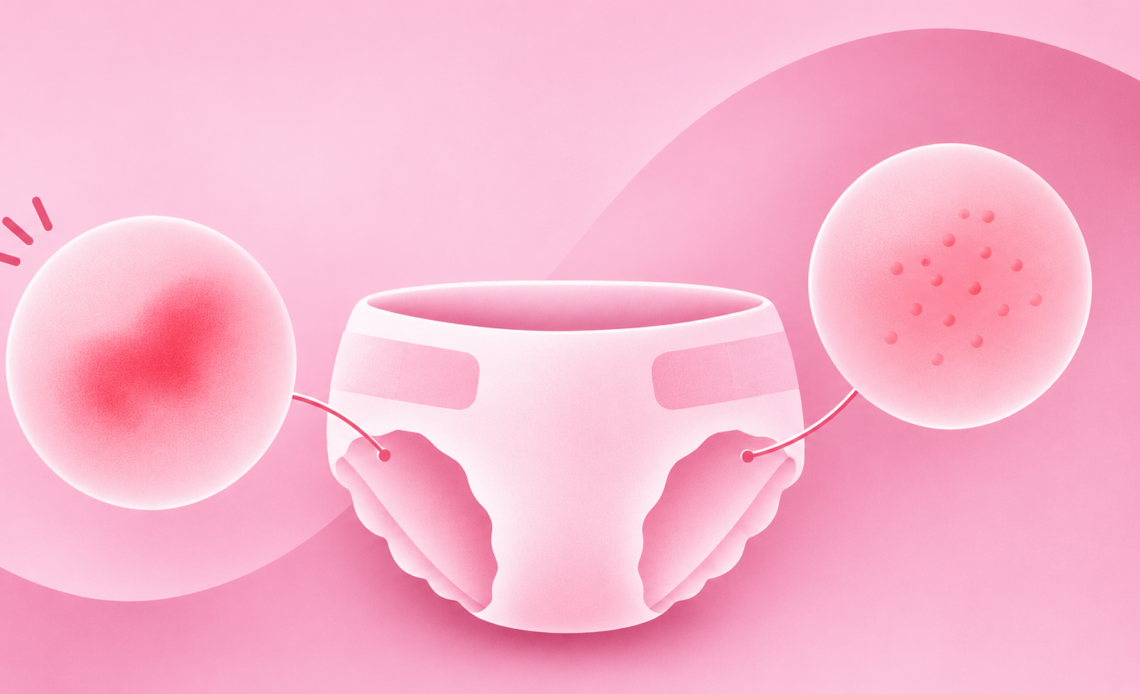
The rash usually appears as flat pink or red patches on the areas that come into direct contact with the diaper. The groin folds are often spared.
Dermatologists recommend frequent diaper changes, gentle cleaning, some diaper-free time and a barrier cream containing zinc oxide or petrolatum.
With these steps, mild irritation often starts to settle.
For the full routine, read our guide on how to prevent diaper rash here.
What Is a Yeast Infection in the Diaper Area? (a.k.a. a Candida Diaper Rash)?
Sometimes, what starts as an ordinary diaper rash can develop into a yeast infection. This happens when Candida, a type of yeast that normally lives on the body, begins to multiply. The warm, damp environment inside a diaper can encourage this growth, especially when the skin is already irritated.
According to Mayo Clinic, antibiotic use can increase the risk of a yeast diaper rash.
Antibiotics help fight bacterial infections, but they can also kill some of the good bacteria that normally keep Candida growth under control. When these bacteria are reduced, Candida can multiply more easily and cause an infection in the diaper area. This is why some babies develop a yeast rash during or after taking antibiotics.
Unlike regular irritation, Candida often affects the groin folds as well as the surrounding skin. Barrier cream can still protect the skin from moisture and friction, but it does not treat the yeast itself. A paediatrician may recommend an antifungal cream if Candida is suspected.
What Does A Yeast Diaper Rash Look Like?
Here are some common signs of yeast diaper rash:
- Satellite spots: Small red bumps or spots just outside the main rash. These are called satellite lesions.
- Skin-fold redness: The rash extends into the creases of the groin instead of leaving them clear.
- Sharper edges: The main patch may look shiny, bright red or pink, with a more defined border.
- Little improvement with routine care: The rash persists despite frequent diaper changes and barrier cream. This is a reason to get it checked, not proof of a yeast infection.
- White mouth patches: Oral thrush, which is creamy white, yellow, or cottage-cheese-like lesions on the tongue, inner cheeks, gums, roof of the mouth, or tonsils, can come from the same yeast.
Some babies have white patches in the mouth that do not wipe away easily. A doctor should check these.
On brown or black skin, colour changes may be harder to judge. Look at where the rash appears, whether the folds are involved and whether there are small spots around the main patch.
Diaper Rash vs. Yeast Infection: Quick Comparison
Here is yeast diaper rash vs. regular diaper rash at a glance:
| Regular diaper rash | Yeast rash | |
|---|---|---|
| Look | Flat, pink to red, blurry edges | Deep red, sharper edges, satellite spots |
| Skin folds | Usually spared | Often involved |
| With barrier cream | Improves in 2–3 days | Little or no change |
| Treatment | Barrier cream, air time | Antifungal cream, doctor-advised |
How to Tell If Diaper Rash Is Yeast: A Quick Guide
Unsure about diaper rash vs yeast infection? Try these steps:
- Check the folds: gently open the creases. Redness here suggests yeast.
- Scan the edges: look for satellite spots.
- Give it 2–3 days: change often, air-dry and apply thick barrier cream. Skip talcum powder, which isn’t safe for babies.
- Check the mouth: white patches that don’t wipe off suggest thrush.
- Call your paediatrician: only a doctor can confirm yeast. Don’t start medicated creams yourself.
Need a refresher? Our newborn diapering guide makes it easy here.
How to Care for a Yeast Diaper Rash
If your baby has a yeast diaper rash, a few simple steps can help keep the area clean, dry and comfortable.
- Change diapers frequently: Change wet or soiled diapers as soon as possible. This helps prevent moisture from irritating the skin further. Here’s a guide to how often your baby’s diaper needs changing.
- Clean the area gently: Use warm water and a soft cloth to clean your baby’s diaper area. Avoid rubbing or scrubbing the rash. If you use wipes, choose ones that are free of alcohol and fragrance.
- Allow some diaper-free time: Leave the diaper off for short periods whenever possible. Pat the skin dry after cleaning and allow it to air-dry before putting on a fresh diaper.
- Use barrier creams carefully: A cream containing zinc oxide or petroleum jelly can help protect the skin from moisture and friction. However, it will not treat the yeast infection itself.
- Avoid products that may irritate the skin: Avoid talcum powder, scented products and harsh soaps. Do not apply steroid or antibiotic creams unless your baby’s doctor recommends them.
- Consult your paediatrician: Home care can help reduce irritation, but a yeast infection may need an antifungal cream. Your paediatrician can confirm the cause of the rash and recommend the right treatment.
When Should You See a Doctor?
Call your paediatrician if the rash isn’t improving after 2–3 days, is spreading, or has blisters, pus or oozing. With fever, poor feeding or a very fussy baby, call the same day. The NHS lists these as reasons to get checked, and notes an antifungal cream may be prescribed for thrush.
If the skin is cracked or bleeding, read our guide to managing severe diaper rash.
Look at the Pattern, Not Just the Redness
Red skin alone doesn’t tell you much. The pattern does. When you’re weighing diaper rash vs yeast infection, a rash that spares the creases and settles in a few days is usually plain irritation. Sharp edges, spots, involved folds and no response to cream deserve a paediatrician’s look.
Got questions about your baby’s skin? Tell us in the comments below. We’ll help you out!
FAQs
1. Diaper Rash vs Yeast Infection: Can a Baby Have Both?
Yes. A regular rash that drags on can let yeast move in, so the two often overlap.
2. Can a Candida Diaper Rash Go Away on Its Own?
Rarely. Barrier cream doesn’t kill yeast, so it tends to linger until treated with an antifungal.
3. Is a Fungal Diaper Rash Contagious?
Not usually, since yeast already lives on skin, but wash your hands after changes, as yeast can spread.
4. Should I Stop Using Diapers Until the Rash Clears?
No, you don’t need to stop using diapers. Change them frequently, avoid fastening them too tightly and give your baby some diaper-free time whenever possible.
5. Can Antibiotics Cause a Yeast Diaper Rash?
Yes. Antibiotics can reduce the good bacteria that normally help keep Candida under control. This can allow the yeast to grow and cause a diaper rash.
6. Can I Use Regular Diaper Rash Cream on a Yeast Infection?
You can use a barrier cream to protect your baby’s skin from moisture and friction. However, it won’t treat the yeast infection itself. Your paediatrician may recommend an antifungal cream.
Disclaimer
The content of this article is provided for general informational and educational purposes only and is not intended to constitute medical advice, diagnosis, or treatment. The information shared is of a general nature and may not be appropriate for all individuals or specific circumstances. Readers should not disregard, delay, or substitute professional medical advice based on the information contained herein.
If your baby experiences any symptoms, or if you notice anything unusual or have concerns relating to their health or overall wellbeing, you should consult a qualified healthcare professional. While every effort is made to ensure the information shared is accurate and up-to-date, Nua makes no representations or warranties, express or implied, regarding the accuracy, completeness, or suitability of the information provided and disclaims all liability arising from reliance on this content to the fullest extent permitted by law.