What you will learn in this blog about how to bathe a newborn baby:
- Wait at least 24 hours after birth before giving your newborn their first bath, and stick to sponge baths until the umbilical cord stump falls off and the area heals.
- Bathe your newborn around three times a week, with gentle clean-ups in between to keep their face, neck folds, hands, and diaper area clean.
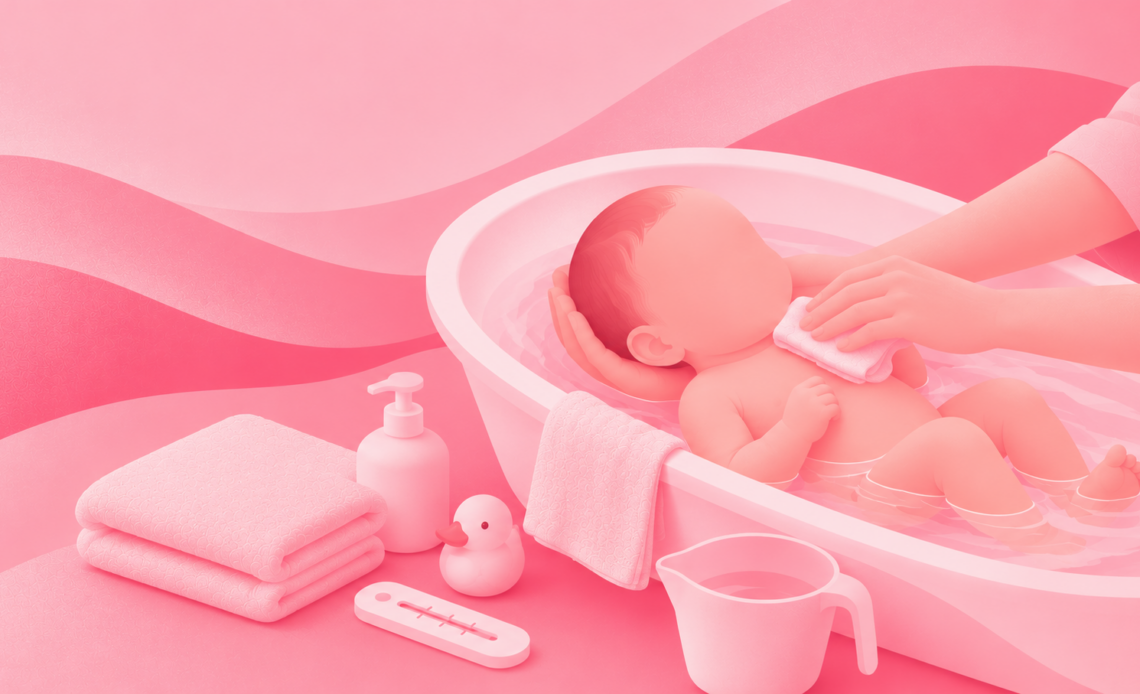
- Prepare a safe bathing space by keeping your supplies within reach, maintaining a comfortably warm room, and checking that the bath water is around 37-37.5°C.
- Dry your baby gently after bathing, paying special attention to skin folds, and dress them promptly to help them stay warm.
- Follow all the newborn bath safety precautions, including supporting your baby’s head and neck, keeping the water shallow, and never leaving them unattended.
- Recognise signs of skin irritation or umbilical cord problems that require medical attention, and know when to contact your paediatrician.
Figuring out how to bathe a newborn baby can feel like a pretty scary learning curve. And honestly, it is a little terrifying. They’re SO tiny, SO delicate, and SOOO slippery when they’re wet. You’ve got to make sure they don’t slip, support their head properly, keep checking if the water is too hot (or too cold), and make sure the soap doesn’t get into their eyes.
That’s a lot to think about when bathing such a little human!
But take a deep breath. You don’t have to get everything figured out at once. You don’t even need to give your newborn a full bath right away. Just stick to sponge baths until their umbilical cord stump falls off and the area heals. And after that, move to short tub baths with lukewarm water about three times a week.
Not that bad, right?
So, let’s walk through these newborn bath steps in detail. From newborn bath safety to getting the newborn bath water temperature, we’ve got everything you need to make bath time a little less intimidating.
Let’s get into it, shall we?
When Can You Give Your Newborn Their First Bath?
The WHO recommends waiting at least 24 hours after birth before giving a healthy, full-term newborn their first bath.
This is because newborns are still learning to regulate their body temperature. They also have less insulating body fat and lose heat more easily than adults, so bathing them too early can increase the risk of them getting too cold.
Plus, if you do bathe the baby, you’ll have to keep them wrapped up for warmth, which means you may miss out on some precious bonding time like direct skin-to-skin contact or breastfeeding.
And there’s a good chance your baby’s first bath might happen at the hospital, with a healthcare professional guiding you. So, nothing for you to worry about there.
After that, even when it’s time for you to bathe your baby for the first time at home, you’ll likely be giving them a simple sponge bath. Your baby’s umbilical cord stump usually takes around 1-2 weeks to fall off, and until it does, tub baths aren’t recommended, as soaking the stump can make it harder to keep the area dry and may increase the risk of infection
How Often Should You Bathe a Newborn?
Around three baths a week is usually enough when it comes to how often to bathe a newborn.
So, you can officially take daily baths off your to-do list! Bathing too often can dry out your baby’s delicate skin, and honestly, they’re not exactly doing anything that’d get them dirty too quickly anyway.
Of course, that doesn’t mean there’s no cleaning involved between newborn baths. You can gently wipe their face, neck folds, hands, and diaper area daily, especially after milk spills, spit-up, or diaper messes. And when it’s hot and humid, a quick wipe with a damp cloth also helps clean those sweaty little folds.
For more on keeping your baby clean between baths, check out our complete newborn hygiene guide here.
As your baby grows and gets more active (hello, rolling, crawling, and exploring every inch of the floor), you might find yourself needing to bathe them more often. But for the baby-in-the-cradle era, a few baths a week and little clean-ups in between will do just fine.
Sponge Bath or Tub Bath: Which One and When?
Sponge baths are commonly recommended until the umbilical cord stump falls off and the area heals. After that, you can introduce tub baths.
This is because newborn sponge baths let you clean your baby without soaking their umbilical cord stump. Since the stump is still healing and can provide an entry point for bacteria, keeping it clean and dry helps it separate naturally and reduces the risk of infection.
| What to know | Sponge bath | Tub bath |
| When to start | After the recommended 24-hour delay for the first bath, until the cord stump falls off and the area heals. | Once the stump falls off and the area has healed, usually around 1-2 weeks after birth. |
| How it’s done | Lay your baby on a towel and use a soft, damp washcloth to clean one area at a time. | Gently wash your baby in a small baby tub with shallow, lukewarm water, supporting their head and neck throughout. |
| How long it takes | A few minutes to clean the areas that need attention. | Around 5-10 minutes of bath time is plenty for a newborn. |
| If your baby gets upset | Pause, wrap them up, and comfort them before continuing. | Take them out safely, wrap them in a warm towel, and try again later. |
And remember, there’s no need to rush the switch from sponge to tub. Follow your healthcare professional’s advice on cord care, and let your baby get used to bath time at their own pace.
Before You Start: Room, Water and Supplies
A little prep makes your newborn bath much less stressful. Get everything ready before undressing your baby, so you don’t have to scramble mid-bath.
- Prepare your supplies: Keep soft washcloths, towels, a clean nappy, fresh clothes, and a baby bathtub (if needed) within arm’s reach.
- Keep the room warm: Avoid cold drafts so your baby doesn’t get chilled.
- Check the water temperature: The Indian Academy of Pediatrics recommends around 37-37.5°C for healthy, full-term newborns. Use a bath thermometer or check with your elbow or wrist, the water should feel comfortably warm, never hot.
- Mix the water thoroughly: If using a geyser, remember that hot water can cause blisters. Fill the tub with cold water first, add hot water gradually, mix thoroughly to eliminate hot spots, and recheck the temperature before bringing your baby near it.
- Keep the water shallow: The Indian Academy of Pediatrics also recommends a water level of around 5 cm or up to the hip of the baby.
- Never leave your baby unattended: Support your baby’s head and neck throughout the bath and keep one hand on them at all times. If you need to step away, take your baby with you.
How to Give a Newborn a Sponge Bath: Step by Step
A newborn sponge bath is pretty simple once you get the hang of it. The key is to keep your baby warm, work one area at a time, and never leave them unattended on the changing surface.
- Get your baby comfortable: Lay them on a flat, safe, padded surface and wrap them in a soft towel, uncovering only the area you’re washing.
- Start with the face: Use a clean, damp washcloth and plain water to gently wipe your baby’s face. Use a fresh part of the cloth for each eye, wiping from the inner corner outward.
- Wash one body part at a time: Uncover your baby’s arms, chest, tummy, legs, and back one at a time, gently washing each with a damp washcloth and patting it dry before moving on to keep them warm. Pay extra attention to skin folds around the neck, armpits, and thighs, where moisture can collect.
- Keep the cord stump dry: When bathing a newborn with an umbilical cord, avoid soaking the stump. If it gets wet or soiled, gently clean it with water and pat it dry.
- Clean the diaper area last: Gently wash your baby’s bottom and genital area, wiping from front to back.
- Dry and dress your baby: Pat them dry, paying attention to skin folds, then put on a clean nappy and clothes to keep them warm.
What about the eyes, ears, and nose? Clean only the parts you can see, gently, with a damp cloth. Avoid inserting cotton buds or anything else into them.
How to Give a Newborn a Tub Bath: Step by Step
Once your baby’s umbilical cord stump has fallen off and the area has healed, you can move on to tub baths. These newborn bath steps will help you keep your baby safe, clean, and comfy.
- Get a secure hold: Slide one arm behind your baby’s head and neck, supporting their head with your forearm and holding their upper arm with your hand. Use your other hand to support their bottom as you lower them into the tub.
- Lower your baby’s feet first: Ease them into the lukewarm water slowly, giving them a moment to get used to it.
- Keep their head above water: Keep their face well above the water throughout as you continue supporting their head and neck securely, even if your baby seems settled.
- Wash their hair gently: Use your cupped hand to pour a little water over their scalp, tilting their head slightly back so water runs away from their eyes. Use a small amount of mild baby shampoo if needed.
- Wash the body: Gently clean your baby’s neck, arms, hands, tummy, legs, and back. Pay special attention to skin folds, where milk, sweat, and moisture can collect, as that can lead to irritation.
- Clean the diaper area last: Wash your baby’s bottom and genital area gently at the end, wiping from front to back.
- Keep bath time short: Around 5–10 minutes is plenty. If your baby becomes distressed or starts getting cold, wrap things up sooner.
- Lift and wrap your baby: Support their head and neck while lifting them straight into a towel. Pat them dry, especially around skin folds, then dress them immediately to keep them warm.
What to Use in the Bath: Plain Water or a Mild Cleanser?
When it comes to your baby’s first few baths, plain water is usually enough. In fact, NHS guidance recommends:
- In the first month: Stick to plain water to gently clean your baby’s delicate skin.
- After the first month: Use a small amount of mild, fragrance-free cleanser only where needed, such as the diaper area and skin folds.
- For their hair: Washing once or twice a week is generally enough. Use plain water or a little mild baby shampoo when needed.
- Skip the extras: Avoid bubble baths, perfumed products, and adding bath products directly to the water.
Your newborn’s skin barrier is still developing, so frequent washing with cleansers or exposure to fragrances can strip away natural oils and cause dryness or irritation. Plain water helps clean away everyday mess without unnecessarily disturbing that protective barrier.
After the Bath: Drying and Dressing Your Baby
Newborn bath time isn’t over just because your baby is out of the water! Newborns lose heat easily, so the next step is to dry them gently and get them dressed ASAP.
- Pat, don’t rub: Use a soft towel to gently pat your baby dry, paying extra attention to the neck, armpits, behind the ears, groin, and thigh creases, where moisture can get trapped.
- Dry before diapering: Make sure the diaper area is completely dry before putting on a fresh nappy to help prevent irritation.
- Dress them promptly: Put on clean clothes soon after drying to help your baby stay warm.
- Don’t worry about a little peeling: Mild peeling is common in newborns as their skin adjusts to the outside world after birth.
- Keep extras simple: Oiling is optional. If you choose to oil your baby, read our baby oiling guide here. Also, powders are generally unnecessary and can be accidentally inhaled, so it’s best to skip them (read more about this here).
And that’s it. With these simple steps, you’ve covered the essentials of how to bathe a newborn baby safely, from the first splash to the post-bath cuddle.
Newborn Bath Safety Rules Every Parent Should Know
When learning how to bathe a newborn baby, safety always comes first. Babies can slip under even a small amount of water, so keep these newborn bath safety rules in mind:
- Never leave your baby alone: Not even for a second, including in a bucket or basin. If you need to step away, take your baby with you, as newborns can easily slip underwater.
- Keep one hand on your baby: Support their head and neck throughout the bath, keeping their face above water because newborns cannot support their heads.
- Skip bath seats and rings: They don’t prevent drowning and aren’t a substitute for holding your baby securely.
- Don’t add water mid-bath: Prepare the water beforehand, as adding hot water while your baby is in the tub can cause scalds. So, check the newborn bath water temperature to avoid sudden hot spots.
- Use a stable, non-slip surface: Make sure the tub or basin cannot tip or slide, as sudden movement could cause your baby to slip or fall.
- Choose the right time: Avoid bathing your baby when they’re hungry, overtired, or immediately after a feed, as they may become distressed or uncomfortable.
- Keep water away from their face: Never pour water forcefully over your baby’s face or into their ears or nose, and don’t blow into these areas, as this may interfere with breathing.
- Keep smoke away: When drying your baby, keep them away from dhoop, incense, and other sources of smoke, as newborns have delicate airways that can be easily irritated.
Note: In many Indian households, newborns are traditionally bathed across an adult’s legs or in a familiar family-held position. If you follow this practice, make sure your baby has a secure hold, with their head and neck supported and their face always above water. Never rely on a slippery position or grip that makes it difficult to control your baby’s movements.
When to Call Your Paediatrician
Contact your paediatrician if you notice:
- Cord stump changes: Redness, swelling, discharge, or a bad smell around the stump.
- Skin irritation: A rash after using a new product, or skin that is cracked or bleeding.
- Signs of illness: Your baby seems unusually cold, floppy, or unwell after a bath.
For more guidance on caring for your baby’s delicate skin, check out our newborn skin care guide.
A Little Splash, A Lot of Safety
Learning how to bathe a newborn baby can feel overwhelming at first, but it gets easier with practice. Wait at least 24 hours after birth for the first bath, start with sponge baths until the umbilical cord stump falls off and heals, and check the water temperature before every bath.
Around three baths a week is usually enough, with gentle clean-ups in between. Keep bath time short, dry your baby carefully, and most importantly, never leave them unattended near water, even for a second.
And remember, there’s no need to get everything perfect on day one. Take it slowly, follow your baby’s cues, and enjoy those little post-bath cuddles. You’ve got this!
FAQs
What should I do if my baby’s cord stump gets wet?
Gently pat it dry with a clean cloth. If it becomes soiled, clean it gently with water and dry it thoroughly. Avoid soaking the stump, and follow your paediatrician’s cord-care advice.
What is the best time of day to bathe a newborn?
Choose a time when your baby is awake, calm, and comfortable. Avoid bathing them when they’re hungry, overtired, or immediately after a feed.
What if my newborn hates bath time?
Don’t force it. Pause, wrap your baby in a warm towel, and comfort them. Keep future baths short and the room comfortably warm. You can return to sponge baths for a little longer if needed.
Do I need a baby bathtub, or can I use a basin?
A clean, stable basin can work for a sponge bath. For a tub bath, use a suitable baby bathtub or another safe bathing container that won’t tip or slide.
Can I bathe together with my baby?
It’s safest to avoid holding a slippery newborn while getting in or out of a full-sized bathtub. Prepare the bath separately, and have another adult help if you need support.
When can my baby move to a regular bathtub?
Around 6 months, or when your baby can sit independently, you can consider transitioning to a regular bathtub with close supervision.
Should I bathe my baby every day in hot weather?
Not necessarily. Around three baths a week are usually enough. In hot weather, gently wipe your baby’s face, neck folds, hands, and diaper area as needed to remove sweat and everyday mess.
Have any more questions? Leave them in the comments, and we’ll be happy to answer them!
Disclaimer
The content of this article is provided for general informational and educational purposes only and is not intended to constitute medical advice, diagnosis, or treatment. The information shared is of a general nature and may not be appropriate for all individuals or specific circumstances. Readers should not disregard, delay, or substitute professional medical advice based on the information contained herein.
If your baby experiences any symptoms, or if you notice anything unusual or have concerns relating to their health or overall wellbeing, you should consult a qualified healthcare professional. While every effort is made to ensure the information shared is accurate and up-to-date, Nua makes no representations or warranties, express or implied, regarding the accuracy, completeness, or suitability of the information provided and disclaims all liability arising from reliance on this content to the fullest extent permitted by law.