What you will learn about managing a severe diaper rash in this blog:
- A severe diaper rash can leave your baby’s skin raw, cracked, peeling, or bleeding, and may cause significant pain during diaper changes.
- Blisters, pus-filled bumps, yellow crusting, and redness spreading beyond the diaper area can indicate an infection that needs medical treatment.
- If your baby has cracked, bleeding, or open skin, contact your paediatrician rather than relying on home care alone.
- Gentle cleaning, avoiding friction, and using a suitable protective ointment can help prevent further damage while you arrange medical care.
- Your doctor can examine the rash, check for a fungal or bacterial infection, and recommend the treatment your baby needs.
A severe diaper rash can be worrying for any parent, especially when you notice your baby’s skin cracking, peeling, or even bleeding. The affected area may look raw and sore, your baby may cry when you clean it, and even changing their diaper can become difficult. When your little one is this uncomfortable, it’s only natural to want to help their skin heal as quickly as possible.
But when a rash becomes this severe, it’s important to be mindful of how you care for the affected skin. Rubbing the area, using the wrong products, or applying creams without knowing what’s causing the rash can make things more uncomfortable for your baby. Sometimes, broken skin can also become infected, which may need medical treatment.
So, let’s get into how to manage a cracked or bleeding diaper rash, what you can do at home, and when to see a doctor for a diaper rash.
How Do You Know If Your Baby Has a Severe Diaper Rash?
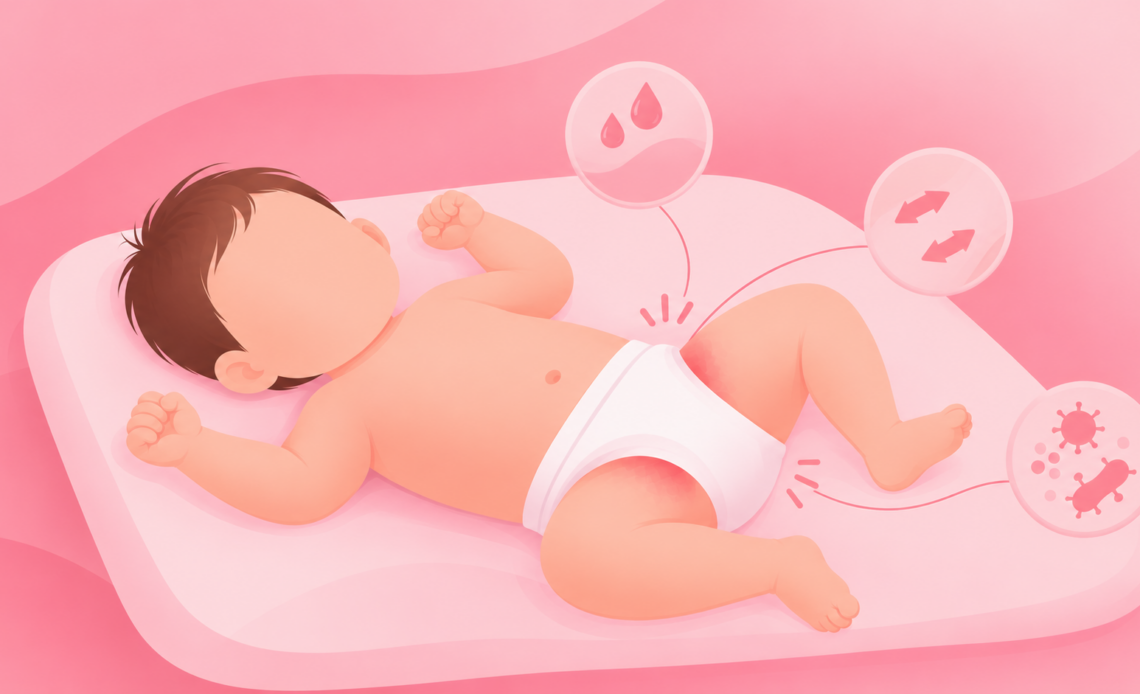
A regular diaper rash is usually pink or red, a bit tender, and gets better within a few days of gentle care. A severe diaper rash looks and feels different. You might see:
- Raw, bright-red skin: The affected area looks intensely red, shiny, and sore, almost as if the top layer of skin has been rubbed off.
- Cracks or splits in the skin: You can see visible lines or small openings in the skin, which may look deep, painful, or tender to the touch. These can also appear in the creases where the thighs meet the bottom.
- Bleeding skin: You may notice small spots of blood on the affected area, on the wipe, or inside your baby’s diaper.
- Peeling skin or open sores: The skin may start flaking or peeling in patches. In some areas, this can leave exposed, raw skin that looks wet or may ooze fluid.
- Blisters or pus-filled bumps: You may notice small fluid-filled blisters, bumps containing pus, or yellowish crusts on the affected skin.
- Pain and discomfort: Your baby may cry during diaper changes, flinch when you touch the affected area, cry while peeing or pooping, or seem unusually fussy and difficult to settle.
When Does a Diaper Rash Become ‘Severe’?
Your baby’s skin spends much of the day in a warm, moist diaper, with regular exposure to pee and poop. This can take a toll on its natural protective barrier, especially when the skin doesn’t get enough time to recover between diaper changes. If the irritation continues, the damage can go beyond redness and soreness. The skin may become raw, develop cracks and open sores, and even start bleeding. This is when a diaper rash can become severe.
A few things can contribute to this worsening or make an existing rash harder to heal:
- Diarrhoea or frequent poops: More frequent stools mean more contact with the skin, and less time for it to recover between nappy changes. Here’s how often to change your baby’s diaper, including during diarrhoea.
- Heat and humidity: Sweat and dampness can make it harder to keep the diaper area dry, particularly during hot or humid weather.
- A tight diaper: A snug diaper can rub against the skin with every movement, which can aggravate an existing rash.
- Changes in your baby’s diet or medication: Starting solids, trying new foods, or taking antibiotics can change your baby’s bowel movements and stool composition. This may aggravate an existing rash. One study found that babies who received oral antibiotics had nearly 16 times higher odds of diaper dermatitis.
- A yeast or bacterial infection: When the skin barrier is damaged and the rash isn’t treated, yeast (a fungus called Candida) or bacteria can enter the affected area and cause an infection. This can make the rash worse and may require specific treatment.
- Using products that irritate the skin: Fragranced wipes, harsh soaps, or adult creams can make an already sore rash much worse.
Want to know how to prevent diaper rashes in the first place? Read our guide here.
How to Treat a Severe Diaper Rash At Home
When your baby’s skin is cracked, bleeding, or has open sores, the priority is to protect the damaged skin and prevent further irritation while it heals. Home care can help, but severe diaper rash should also be assessed by a paediatrician, as your baby may need a medicated cream or treatment for an infection.
Here’s what you can do at home:
Start by cleaning the affected area gently.
Use a squeeze bottle filled with lukewarm water or a wet, soft cotton cloth to gently rinse away pee and poop. If stool is stuck to the skin, let water loosen it before removing it gently. Avoid rubbing over open sores or peeling patches.
If you notice blisters, don’t pop them or peel away the skin covering them. If there are pus-filled bumps or yellowish discharge, don’t squeeze or try to drain them. These could be signs of infection and need a paediatrician’s assessment.
Let the skin dry without rubbing it.
After rinsing, use a soft, clean cloth to gently pat the surrounding skin dry. Don’t wipe across cracks, raw patches or open sores. If the skin is weeping or has fluid coming from it, don’t try to rub it dry. Let the area air-dry and have your paediatrician check it.
Apply a thick layer of barrier cream.
The American Academy of Pediatrics (AAP) recommends a zinc oxide cream or petroleum jelly-based ointment to help protect the skin from further contact with pee and poop. Apply a generous layer at each diaper change.
Keep the damaged skin away from further friction.
Once the area is clean and dry, use a soft, well-fitting diaper that doesn’t press against open or sore patches. You want to avoid unnecessary rubbing against sore skin (more on choosing the right diaper size here).
Also, try to give your baby short diaper-free periods on a clean towel, if comfortable, so the affected area isn’t constantly covered.
Get medical treatment as soon as possible.
These steps can help protect your baby’s skin and keep them comfortable, but they aren’t a substitute for medical treatment. If the rash has cracked, started bleeding, or developed open sores or blisters, speak to your paediatrician. They may prescribe an antifungal cream if the rash is caused by Candida (yeast), an antibiotic if there is a bacterial infection, or another medication to manage inflammation.
Common Mistakes to Avoid When Your Baby Has a Severe Diaper Rash
Dealing with a severe diaper rash for the first time can be scary, especially when it’s on such tiny, delicate skin. And when your baby is uncomfortable, it’s easy to feel like you need to try everything to make it better. A few things, though, are best avoided.
- Using cornstarch or talcum powder: This is a common remedy passed down through generations to keep the diaper area dry. But when your baby’s skin is already raw or cracked, powders can cause further irritation rather than help it heal. Plus, loose powder particles can be inhaled by babies, causing breathing problems (more on that here).
- Using fragranced baby products: Scented wipes, soaps, bubble baths, and lotions can irritate your baby’s skin. Even products labelled gentle or made for babies may contain fragrances that sting or trigger further irritation. So, it’s best to stick to plain lukewarm water for cleaning the affected area.
- Medicated creams without a doctor’s advice: Avoid using steroid, antifungal, or antibiotic creams unless your paediatrician recommends them. These creams treat different conditions, so using the wrong one may irritate the skin, mask signs of an infection, or delay the right treatment.
- Rubbing to remove scabs, stuck poop, or cream: Scrubbing can reopen cracks and cause more bleeding. Soften residue with lukewarm water and gently lift away only what comes off easily. Don’t try to scrape away dried cream, scabs, or peeling skin.
- Coconut oil, essential oils, herbal pastes: These may sound harmless because they’re often labelled natural or organic, but that doesn’t mean they’re suitable for broken baby skin. Some ingredients can irritate the area or trigger an allergic reaction. It’s best not to experiment with home remedies when the skin is raw or cracked.
- Applying too many products at once: Layering different creams, oils, and powders can further irritate the skin and make it difficult to identify what’s helping or worsening the rash.
How Do You Know If a Severe Diaper Rash Has Become Infected?
A severe diaper rash that looks very red or sore isn’t necessarily infected. But if you start noticing blisters, pus-filled bumps, or redness spreading beyond the main rash, it could be a sign that an infection has developed. Here are some signs that may help you spot the difference:
- Bright red patches with tiny red spots around them: If the redness is especially noticeable in the skin folds and you see little red dots or bumps around the edges, it could be a yeast infection. Here’s how to tell a yeast infection apart from a regular diaper rash.
- Blisters, pus-filled bumps, or yellowish crusts: These can be signs of a bacterial infection. The skin may also look swollen or feel warm.
- Cracks, bleeding, or open sores: These are signs that the skin barrier has broken down. They don’t automatically mean there’s an infection, but broken skin is more vulnerable to germs.
You don’t need to wait for the rash to become infected before getting it checked. If you’re worried about how it looks, speak to your paediatrician.
How Long Does a Severe Diaper Rash Take to Heal?
A severe diaper rash can take around 7-14 days to heal, particularly if it involves cracked, bleeding skin or a secondary yeast (Candida) infection. Recovery depends on the severity of the rash and whether your baby receives the right treatment. If it isn’t improving within 2–3 days, check with your paediatrician.
When Should You See a Doctor for a Severe Diaper Rash?
Please call your paediatrician or go to a doctor the same day if you notice any of these red flags:
- Your baby has a fever along with the rash
- The rash is spreading beyond the diaper area, like onto the tummy, back, or thighs
- The rash hasn’t improved within 2-3 days of treatment, or if it keeps coming back.
- Your baby seems unusually sleepy, floppy, very fussy, or isn’t feeding well
- Your baby is crying a lot and can’t be soothed during changes or when peeing
- There’s a bad smell or discharge
No More Rash Decisions
A severe diaper rash looks scary, and watching your baby in pain is extremely hard. But the plan is actually simple. Keep the area clean and dry, protect it with a thick barrier layer, avoid scrubbing and unproven remedies, and call the doctor early when you see cracks, bleeding, blisters, pus, or fever. Healing takes a few days, sometimes longer, and that’s okay.
We hope this guide made it feel a little less overwhelming. It won’t replace your paediatrician’s advice, but it can help you know what to do, what to skip, and when to ask for help.
FAQs
What should I put on a diaper rash that is bleeding or cracked?
Gently clean the area with lukewarm water and apply a thick layer of a zinc oxide barrier cream or petroleum jelly-based ointment. However, it’s best to speak to your paediatrician before relying on home care alone.
Can a severe diaper rash cause blisters or open sores?
Yes, a severe diaper rash can cause raw patches, blisters, and open sores. These may also point to an infection, so have your baby examined by a paediatrician.
How do I know if my baby’s diaper rash is infected?
Bright red patches with small spots around the edges, especially in skin folds, may indicate a yeast infection. Blisters, pus-filled bumps, or yellowish crusts can point to a bacterial infection. Your paediatrician can confirm the cause.
When should I take my baby to the doctor for a diaper rash?
See your paediatrician if the rash is cracked, bleeding, blistered, has pus or open sores, or is causing your baby significant pain. Also seek medical advice if your baby has a fever, seems unwell, or the rash isn’t improving with home care.
Got a question about diaper rash that we haven’t answered? Drop it in the comments, and we’ll break it down for you.
Disclaimer
The content of this article is provided for general informational and educational purposes only and is not intended to constitute medical advice, diagnosis, or treatment. The information shared is of a general nature and may not be appropriate for all individuals or specific circumstances. Readers should not disregard, delay, or substitute professional medical advice based on the information contained herein.
If your baby experiences any symptoms, or if you notice anything unusual or have concerns relating to their health or overall wellbeing, you should consult a qualified healthcare professional. While every effort is made to ensure the information shared is accurate and up-to-date, Nua makes no representations or warranties, express or implied, regarding the accuracy, completeness, or suitability of the information provided and disclaims all liability arising from reliance on this content to the fullest extent permitted by law.