
After a hair tie, sunscreen, your favourite lip gloss and an emergency pad (hopefully Nua’s), if there’s anything else most girlies keep in their bags, it’s wet wipes. Be it a sweaty gym session, accidental ketchup squirt on your shirt or just another day of being on your period, reaching for a wet wipe is a no-brainer. But hold on. Does the same wipe work for all of these? Or do you need special wet wipes for intimate areas? The answer is a simple, a plain yes. Your very sensitive intimate areas need products specifically made for them.
Let’s dive deep into wet wipes and understand how you can choose safe wet wipes for intimate areas.
Why Are Regular Wipes Harmful For Intimate Areas?
The most important thing to understand here is pH balance. A healthy intimate pH allows good bacteria, like lactobacilli, to thrive while keeping harmful microbes in check. When this delicate balance is disrupted, it can lead to irritation, itching, dryness, and infections like bacterial vaginosis (BV) or yeast infections. And it’s not something you should take lightly, as research shows that these issues affect up to 1 in 5 women worldwide.
Using products with the wrong pH, like regular wipes, can upset your vulva’s natural acidity. This creates the perfect environment for harmful bacteria to multiply, raising your risk of infections. In fact, studies show that some intimate hygiene products can increase the risk of bacterial infections or UTIs by up to 3.5 times because of the disruption they cause to your intimate pH and microbiome.
This is exactly why you need pH-balanced intimate products, especially designed for your intimate area, and not make do with the regular ones that can be harmful.
What Should You Use To Clean Your Intimate Area?
You should only use wipes created specifically for your vulva to clean your intimate area. This is because their entire formulation is built around one core principle, to gently cleanse it without disrupting your natural balance. But then again, don’t just grab any intimate wipes. Look for ones that are:
pH-Balanced
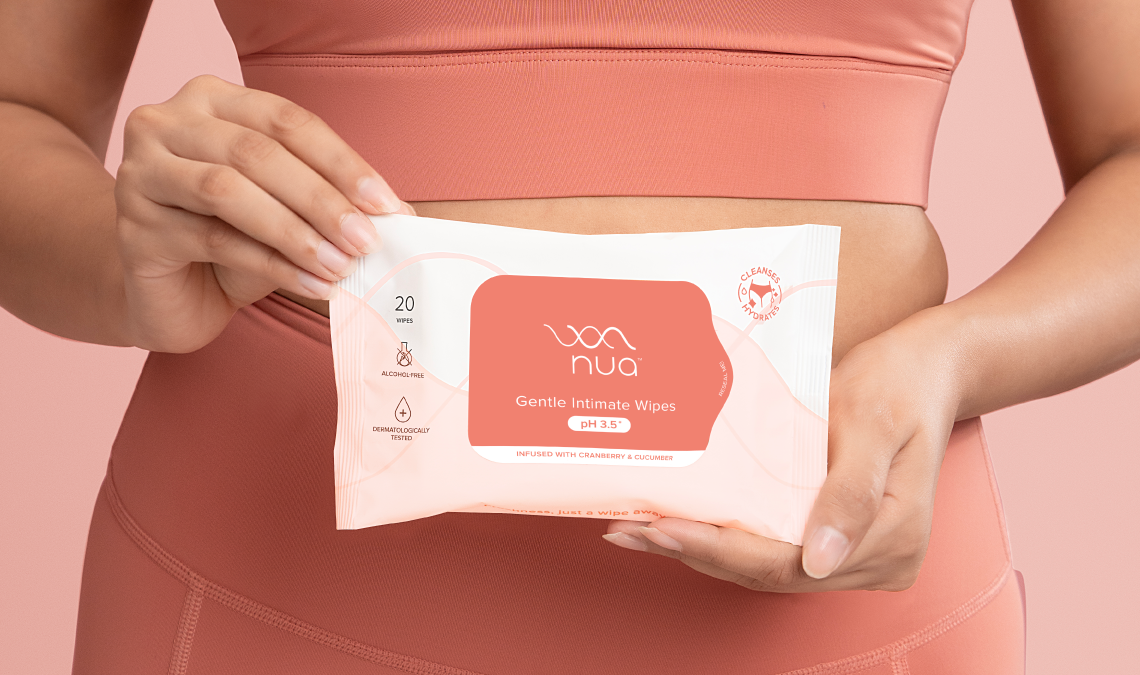
Intimate wipes should be formulated to match the natural acidic pH of your vulva, unlike regular wipes. Nua’s Intimate Wipes do it perfectly with ingredients like Lactic acid, which help maintain the ideal pH levels of 3.5-4. They support your body’s natural defences by keeping the balance between the good and bad bacteria in check.
Contain Gentle Ingredients
The intimate skin is extremely delicate. It shouldn’t be exposed to harsh chemicals, parabens, sulfates, alcohol and strong fragrances, as they can cause irritation or even allergic reactions. While regular wipes often contain these toxins, look for intimate wipes that are enriched with natural, hypoallergenic ingredients. Take the Nua’s Intimate Wipes, for example, they have the most soothing ingredients like cranberry, cucumber and aloe vera. You can learn more about these ingredients here.
Dermatologically-Tested
Most of the regular wet wipes you’ll find on the market aren’t dermatologically tested for skin. A good intimate wipe, on the other hand, will only be made available to you after thorough testing. Nua’s wipes are quality-checked and dermatologically-approved to ensure they’re 100% safe for your intimate region.
What You Should Avoid While Cleaning Your Intimate Areas?
When it comes to intimate hygiene, less is often more. Your vagina is a self-cleaning system and doesn’t need soaps, wipes, or fancy washes inside. Using them can upset its natural balance and lead to irritation or infections, so avoid putting anything inside your vagina.
What actually needs gentle cleaning is your vulva, the external part you can see and touch. Even on the vulva, avoid harsh scrubbing or perfumed products. Its skin is delicate, and over-cleaning can strip away natural protection and cause discomfort.
Another thing — avoid wiping back to front. You should always wipe front to back. That means you start at your vulva (the external part in front) and wipe towards your anus (the back). Why? Because the back area naturally has more bacteria, and if those germs get pushed forward into your vagina or urethra, they can cause infections like UTIs.
And finally, don’t reuse wipes or flip them over. Once a wipe is used, it can carry bacteria you don’t want to reintroduce. So, just toss it in the bin. Reusing the same wipe or flipping it around can put bacteria right back where you don’t want them.
Wait, Can I Use Baby Wipes for My Intimate Area?
Baby wipes are designed to clean an infant’s delicate skin during diaper changes, dealing with pee and poop. They do happen to be a much more gentle option than regular wipes, but that still doesn’t make them a good option for your intimate area.
The most critical flaw is that they are not pH-balanced for your vulva. They have a more neutral pH, around 5.5 to 7, to be gentle on an infant’s skin. Using a product with this pH on your vulva can disrupt its natural acidic environment, which can raise your risk of bacterial infections by 30%, as per research.
And while they are more gentle, they may still contain fragrances or other chemicals that are not suitable for the highly absorbent and sensitive vulval tissue.
So, if you’re looking for gentle wet wipe options for your intimate area, it’s best you choose a naturally-formulated, alcohol-free intimate wipe. Something like Nua’s that ensures vulval pH balance and is dermatologically tested.
When Should I Use Intimate Wipes?
Intimate wipes come in handy on many occasions. During your period, for example, they can be super helpful. Menstrual blood has an alkaline pH, which can throw off your body’s natural balance for a bit. A pH-balanced wipe helps you feel clean while supporting your vagina’s natural acidity.
They’re also perfect for post-workout or on super hot days. Sweat plus tight clothes can make things sticky and uncomfortable, and a quick wipe-down can prevent irritation. Plus, if you’re traveling, stuck on a long flight or spending hours at an event with no proper bathroom, wipes are the easiest way to freshen up.
The same goes for after intimacy. While water is always great, a gentle wipe can be a more convenient option to reduce bacteria and the risk of UTIs. And let’s be honest, public restrooms aren’t always the cleanest. When there’s no toilet paper or you just don’t trust what’s there, having a wipe in your bag is like an oasis. You can read more on the best times to use intimate hygiene products here.
Let’s Get Intimate With Our Wipes
Using a wipe here and there in an emergency is totally fine, but for everyday care, you should stick with products made especially for your vulva. Because it’s about way more than just feeling fresh. It’s about preventing irritation, infections and imbalance in your intimate ecosystem.
How do you take care of your intimate health? Share your tips and experiences in the comments. It might just help someone else stay fresh and safe.