What you will learn about nose strips vs. scrubs in the guide:
- Blackheads are clogged pores made of oil and dead skin cells that turn dark when exposed to air, not trapped dirt.
- For existing blackheads, nose strips are usually more effective because they physically lift out the pore plug.
- Scrubs mainly exfoliate the skin’s surface, helping remove dead skin cells and prevent future buildup.
- Nose strips offer quick results in around 10–15 minutes, making them useful for fast pore cleanup.
- Use scrubs and nose strips on different days to avoid over-exfoliation and irritation.
- For best results, use nose strips on a clean, wet nose, let them dry fully, then peel slowly and moisturize after.
The nose strips vs. scrubs debate has been around for as long as blackheads have annoyed people staring into mirrors. Both promise clearer pores, which makes choosing between them pretty confusing. Especially if your nose is currently dotted with what looks like a constellation of tiny black holes.
On one side, you have the satisfying peel-and-reveal of nose strips. On the other, the exfoliating promise of a nice scrub. Which one really wins the battle of blackheads?
Well, if your goal is blackhead removal for the spots that are already there, nose strips take the win with their instant pore-cleaning action. But wait, that doesn’t mean you throw away your scrub just yet. They still have a place in your skincare routine.
Let’s break down the nose strips vs. scrubs dilemma, see which is better, how to buy the right product and finally, how to use them for the best results.
First, What Exactly Are Nose Blackheads?
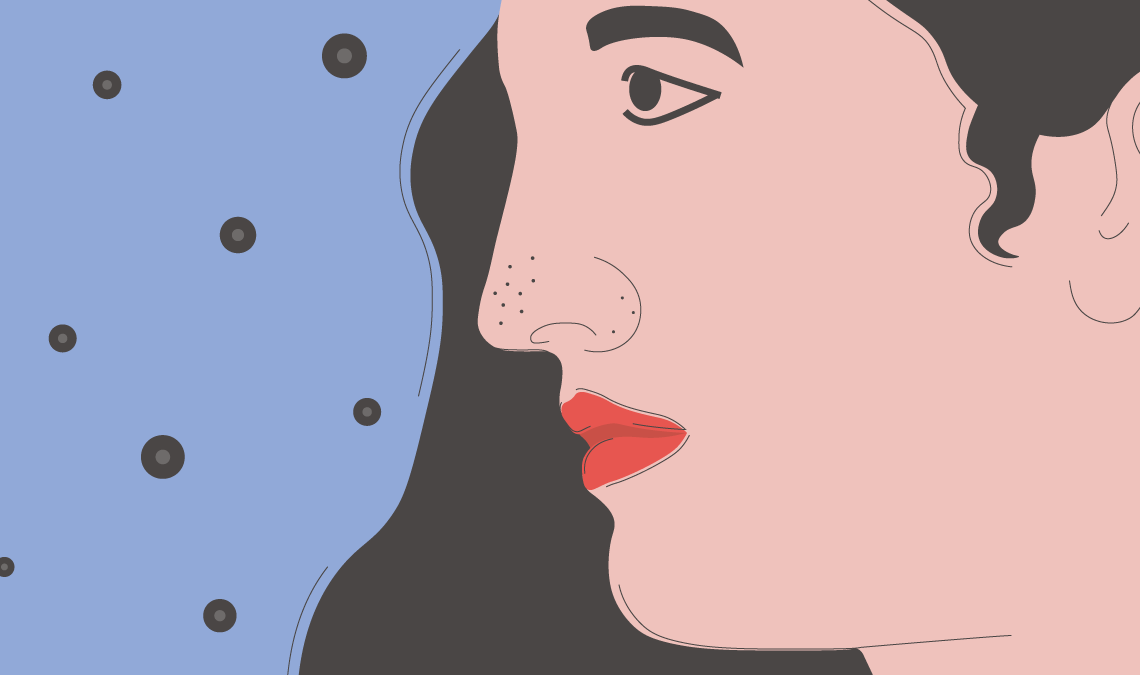
Blackheads are not, despite what they look like, dirt stuck in your pores. They’re actually oxidized oil and dead skin cells that have gotten trapped in your pore opening.
Your skin naturally produces sebum (oil) to keep itself moisturized. Your skin also sheds dead skin cells constantly. Sometimes, these dead cells don’t shed properly and instead mix with the oil and get stuck in your pores. When this mixture is exposed to air, it oxidizes and turns dark, hence the black colour, forming blackheads.
Research shows that blackheads make up nearly 27% of acne lesions. So, if you’re struggling with them, you’re not alone.
Blog continues after the ad.

Why Do These Blackheads Appear More on Your Nose?
Your nose is part of the T-zone, which has more oil glands and larger pores than other parts of your face. So, if you do the math, it’s pretty simple. More oil + larger pores = more blackheads on your nose.
Your skin is doing a lot more than you think. If you want to learn more about how your pores work and why they get congested, read more about blackheads here.
Nose Strips vs. Scrubs: Which Should You Choose for Removing Blackheads?
For existing blackheads, it’s always better to choose nose strips. The thing about blackheads is that they sit deep inside your pores. Because of this, simple surface cleansing (which is what a scrub does) isn’t enough to remove them. You need a product that will remove them from the inside, which is exactly what nose strips do.
Let’s compare them head-on for blackhead removal.
Nose Strips Actually Unclog the Pores
A good nose strip uses adhesive action to physically grip and pull out the plug of oxidized oil sitting inside your pore, removing the blackhead right then and there.
In fact, nose strips enriched with active ingredients like witch hazel, such as Nua’s Nose Strips, go a step further, drawing out all the impurities and unclogging the pores more effectively.
Scrubs, on the other hand, exfoliate the surface of your skin. They remove dead skin cells and help keep your skin smooth and bright, which is genuinely great. But they can’t reach inside a pore and pull out a blackhead that has already formed.
Nose Strips Give You Instant Results
Nose strips work in about 10 to 15 minutes. You apply, wait, peel, and you’re done. The results are immediate. You can literally see the blackheads you pulled out on the strip afterwards (which is oddly satisfying).
So, for a quick cleanup before an event or just a satisfying Sunday skin session, nothing beats that instant peel-and-reveal of your nose strips.
Scrubs need time. Using a gentle scrub 1-2 times a week for 4-6 weeks can help remove dead skin buildup and make pores look clearer. But even then, they can’t pull out blackheads that are already lodged deep inside the pores.
Nose Strips Can Be Gentler on Skin Than Scrubs
A scrub involves rubbing a physical exfoliant against your skin, which can sometimes be too harsh, especially around the delicate nose area or for people with sensitive skin. This is one thing to keep in mind when you’re weighing up nose strips vs. face scrubs for everyday use.
Nose strips, when formulated thoughtfully like Nua’s, can be much gentler. A strip made with skin-soothing ingredients like witch hazel and aloe vera to calm irritation and cleanse without stripping your skin barrier will get the job done while actively caring for your skin at the same time.
Nose Strips Target Blackheads More Precisely
Blackheads cluster on the nose. A scrub covers your whole face, which is fine for overall skin health and face exfoliation, but not particularly enough for blackhead removal. Think about it. You’re using the same product on your cheeks as on the most congested part of your face.
A good nose strip, on the other hand, is shaped exactly for your nose. It adheres to the curves and contours where blackheads actually live, giving focused attention to exactly where you need it.
Looking for a nose strip that ticks all these boxes? Find something truly amazing here.
How Can You Prevent Blackheads?
The thing about blackheads is that they’re going to keep coming back. They can’t be permanently cured or got rid of because your skin will always produce oil, which can always trap dead skin cells, and that can always cause blackheads.
So, for blackhead removal, prevention is the key. This is where both scrubs and nose strips earn their place in your skincare routine.
Regular face exfoliation with a scrub helps stop dead skin cells from building up and mixing with oil in the first place, which means fewer blackheads form over time. And nose strips that have pore-tightening ingredients like pure matcha, such as Nua’s Nose Strips, help minimize the size of your pores after clearing them out. This makes it a little harder for debris to settle back in, preventing blackheads for the good.
But Are Nose Strips Bad for Your Skin?
Nope. Not if you buy the right ones. The conversation around nose strips side effects usually comes from the older versions of these products.
The very first generation of nose strips was pretty aggressive. They used strong and harsh adhesives that, when peeled off, took more than just blackheads with them. They pulled at the skin, stripped natural oils, and left the area red and irritated.
But skincare has come a long way since then. Today’s nose strips are built to actively protect your skin barrier rather than stripping it. So, as long as you use the right nose strips, it’s all good. Here’s what you should look for when buying nose strips for safe blackhead removal.
- Natural active ingredients like matcha and witch hazel.
- Soothing add-ons like aloe vera.
- Irritation-free formula.
- Dermatologically-tested and approved.
- Skin barrier protection and maintenance.
- No alcohol, artificial fragrances, or harsh chemicals.
If you’ve been avoiding nose strips because you’re scared it’ll be too harsh for your skin, here’s a gentler option worth looking at.
Can You Use Both Scrubs and Nose Strips Together?
Yes, you can use both, but spacing them out and keeping things gentle is key to avoiding irritation and getting the best results.
- Use a gentle scrub first, then wait 2–3 days before using a nose strip.
- Avoid using both on the same day, as over-exfoliation can strip the skin barrier.
- Limit scrubbing to 1–2 times a week and nose strips to once weekly.
- Follow up with a soothing, non-comedogenic moisturizer after both scrubs and nose strips.
How to Use Nose Strips for Best Results
The way you use a nose strip matters almost as much as the strip itself. Many people feel their nose strips aren’t working, but very often, it’s because they’re using them wrong.
- Cleanse your face first. Remove makeup, sunscreen, or anything else sitting on your skin.
- Wet your nose thoroughly as the moisture activates the adhesive in the strips. Dry skin means the strip won’t bond properly.
- Peel the strip and smooth it down carefully so it sits flat and makes full contact with your nose, including the sides.
- Wait 10 to 15 minutes. Let the strip dry completely. If you peel it off too early, it won’t have had time to bond with your pores.
- Peel from the edges inward, slowly and firmly. Don’t rip it off quickly. A slow, steady peel gives the adhesive time to do its job.
- Rinse with cool water and moisturize to help keep your skin calm.
Nose Strips vs. Scrubs: Who Wins the Battle of the Blackheads?
In the nose strips vs scrubs battle, neither is the enemy, and neither is a waste of your money. They’re just designed for different jobs.
Scrubs keep your skin surface smooth and help prevent future blackheads by clearing away the buildup that causes them. That’s a super useful function, and they deserve a place in your skincare routine.
But when you want to actually remove a blackhead that’s already there, nose strips are the more direct, more effective, and faster answer.
So use both, just use them right. And if you’ve any more questions, drop them in the comments, we’ll get back to you.
Disclaimer:
The content of this article is provided for general informational and educational purposes only and is not intended to constitute medical advice, diagnosis, or treatment. The information shared is of a general nature and may not be appropriate for all individuals or specific circumstances. Readers should not disregard, delay, or substitute professional medical advice based on the information contained herein.
If you experience any symptoms, notice anything unusual, or have concerns relating to your health or overall wellbeing, you should consult a qualified healthcare professional. While every effort is made to ensure the information shared is accurate and up-to-date, Nua makes no representations or warranties, express or implied, regarding the accuracy, completeness, or suitability of the information provided and disclaims all liability arising from reliance on this content to the fullest extent permitted by law.