What you will learn about reusing pads and infection risk from this guide:
- You should never reuse a disposable pad, even if it looks clean.
- Pads absorb more than blood: sweat, discharge, skin cells, and bacteria stay trapped inside.
- Once exposed to air, even small amounts of blood can break down and promote bacterial growth.
- Reusing a pad can increase the risk of infections like BV, UTIs, and yeast infections.
- Washing doesn’t make disposable pads safe, the structure breaks down and bacteria can remain.
- Instead of reusing, switch to panty liners on light days to avoid waste.
- Always change pads every 4–6 hours (or sooner on heavy flow) to stay hygienic.
It’s day 4 of your period and your flow is basically non-existent. You peel off your pad, and it looks quite pristine. Barely a spot here or there. Your brain starts to wonder why waste it when you can get a little more use out of it. But reusing pads and infection risk go hand in hand, and the truth is that just because the pad looks clean doesn’t mean it actually is. Once a pad touches your body, it absorbs more than what you can see, like discharge, sweat, dead skin cells and bacteria, all of which stay trapped inside it. So while it may seem harmless to reuse the pad, putting it back on simply means bringing all of that nasty stuff right back near your vagina.
So, let’s discuss it properly, in a little more depth. Without judgment, of course. Just facts, science, and some real talk about why your vagina deserves better than a recycled pad.
Can I Reuse Sanitary Pads?
No. Absolutely not. It’s not safe to reuse a disposable sanitary pad.
And here’s why. Once period blood (even if it’s a few spots) leaves your body, it begins to react with air. This is a normal process called oxidation, but it also means the blood starts breaking down. Because it is organic matter, it can quickly become food for bacteria, making it perfect for bacterial growth. If you reuse period pads, you are essentially reintroducing this concentration of harmful bacteria near your vagina.
Blog continues after the ad.
What if the Pad Has No Blood on It? Can I Reuse It Then?
No, you should not be reusing a pad even if there’s no blood on it. The moment the pad makes contact with your vulva, it doesn’t just absorb the period blood but also picks up sweat, dead skin cells, and vaginal discharge. All of these don’t necessarily have a colour, so you may not see them on your pad, but that doesn’t mean they’re not there. And all of them play a role in bacterial growth, putting you at risk for infections.
Here is what a sanitary pad actually picks up during your period, beyond the blood:
- Vaginal discharge, which adds moisture and nutrients for bacteria.
- Sweat, which creates the warmth and dampness bacteria need to multiply.
- Skin cells that transfer bacteria from the skin’s surface straight into the pad.
Think of your pad like a used tissue. You wouldn’t blow your nose, let it dry, and then put it back in the box for another day, would you? The same logic applies to the question, “can I reuse sanitary pads?”, and the answer is always no.
You deserve protection that’s built for your body, not a shortcut that works against it. Designed for real flow, real comfort. explore Nua’s Complete Comfort Sanitary Pads.
Can I Wash and Reuse Disposable Sanitary Pads?
No. Disposable sanitary pads aren’t designed to be washed. The absorbent core inside them breaks down when washed, making the pad lumpy, ineffective, and honestly kind of gross. Plus, washing doesn’t fully eliminate bacteria, especially the harmful strains that can cause infections. Even if you scrub it like you’re trying to remove a ketchup stain from a white carpet, microscopic bacteria will still be lurking.
If you’re looking for something you can wash and reuse, a menstrual cup made from medical-grade silicone is a great alternative. It sits comfortably inside the vagina, collects fluid rather than absorbing it, and can be used again and again. In fact, one cup can last for years, making it both eco-friendly and cost-effective. But disposable sanitary pads? Not meant for a second round.
What If I Don’t Want to Waste a Pad on Spotting Days?
Throwing away a pad that looks almost clean can hurt your heart. We get it. Trust us, we do. Pads aren’t cheap, and even when you can afford them, you go through way too many of them every month to waste even one.
So, on those super light flow days or just spotting days, switch to a liner instead. These are made for minimal discharge, keeping you clean without feeling like you’re wasting a perfectly good pad. Plus, they feel like nothing. Nua’s Panty Liners are just 1 mm thin. That’s as thin as a credit card. But since they have a super-absorbent core, you get 100% reliable protection.
And an added bonus? They’re so much cheaper than pads. You can use them as much as you want without any guilt!
What Happens if I Reuse Disposable Pads? The Real Health Risks
Reusing a disposable sanitary pad or wearing one for too long won’t do any harm immediately, but it can surely increase the risk of infections and health issues. Here’s what poor menstrual hygiene can lead to:
- Bacterial vaginosis (BV)
- Yeast infections (YI)
- Urinary tract infections (UTIs)
- Pelvic inflammatory disease (PID)
- Reproductive tract infections (RTIs)
One study found that over 62% of women who practised poor menstrual hygiene, such as reusing pads, had at least one vaginal infection, and 52% of them experienced symptoms of reproductive tract infections (RTIs). The link between reusing pads and infection risk is not worth ignoring.
When the stakes are this real, the pad you choose matters more than you might think. For pads that take your health as seriously as you do, explore these!
How Often Should I Change My Sanitary Pad?
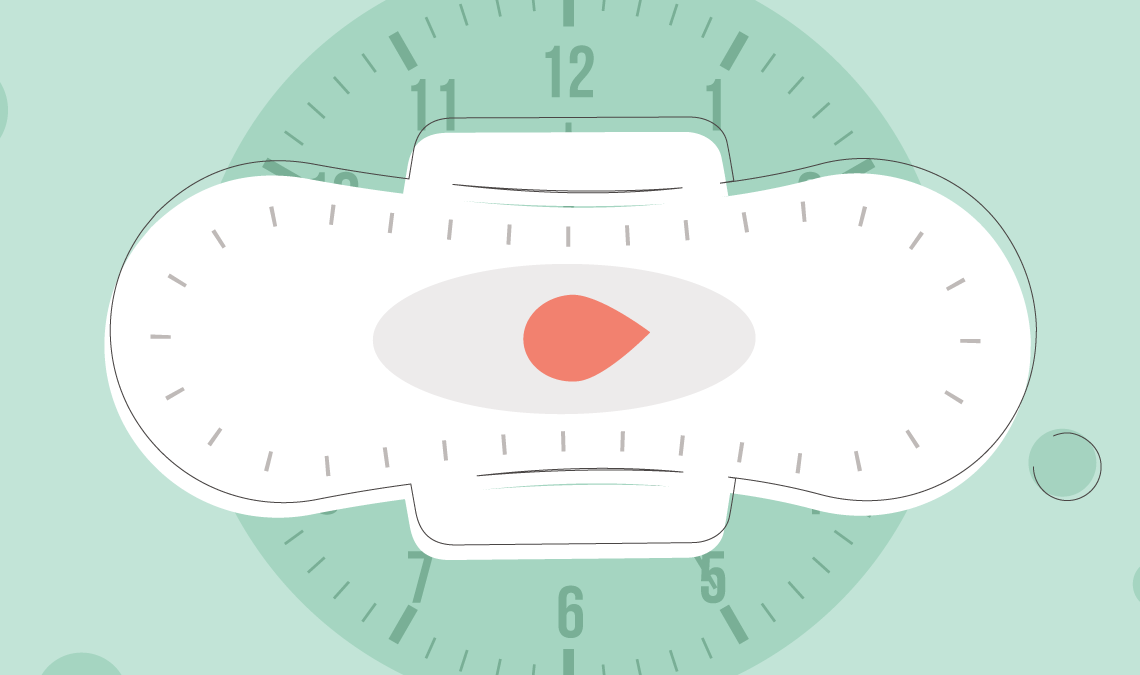
You should change your pad every 4 to 6 hours, even if it looks clean or your flow feels light. Studies show that bacteria grow very fast on a used sanitary pad because it stays warm and damp. In fact, bacteria can multiply up to 500 times within just 3 hours, and after several hours of wear, the surface of a pad can carry over 100 bacteria per square centimetre. That’s why these period pad safety tips are non-negotiable.
Here is your actionable guide on how often to change your sanitary pad, based on flow and activity:
- Every 4 to 6 hours on regular flow days, even if the pad looks clean or you haven’t moved much.
- Every 2 to 3 hours on heavy flow days, because a saturated pad is a bacteria magnet.
- Right after exercising or sweating, because heat and moisture speed up bacterial growth significantly.
- Even on rest days or low-activity days, change on schedule. Sitting still doesn’t make the pad cleaner.
- Always before bed. Switch to a fresh overnight pad and don’t stretch it past 8 hours.
These period pad safety tips are simple, but they make a real difference to your overall menstrual hygieneand comfort.
What’s the Best Time to Change Pads?
There’s no single best time to change pads, as long as you change it in time. But a rough daily schedule can help you stay consistent without thinking too hard about it.
- 7 AM: Change your pad when you wake up, always.
- 11 AM: Check and change, especially if you have a heavier flow.
- 3 PM: Another check and change mid-afternoon.
- 7 PM: Change again before dinner and evening commitments.
- 10 to 11 PM: Put on a fresh overnight pad before bed.
This keeps you roughly within the 4-hour window throughout the day. You can adjust based on your flow, but never push past 6 hours. These are the best time to change pads guidelines, though your body and flow will always be your best guide.
Try the pad made for every kind of day!
The Bottom Line on Reusing Pads and Infection Risk
Your vagina has its own natural balance that keeps it healthy and comfortable. Reusing pads and infection risk are directly linked because once a pad touches your body, it absorbs discharge, sweat, and bacteria, whether you can see them or not. Disposable sanitary pads and sanitary napkins are made for one-time use. Reusing or washing them isn’t just ineffective, it actively puts your health at risk. On lighter days, switch to a liner instead of reusing. Change your pad every 4 to 6 hours. And when in doubt, choose fresh over frugal. Your body will thank you for it.
Got more questions about menstrual hygiene? Drop them in the comments and we’ll have an honest girl-to-girl chat.
Disclaimer:
The content of this article is provided for general informational and educational purposes only and is not intended to constitute medical advice, diagnosis, or treatment. The information shared is of a general nature and may not be appropriate for all individuals or specific circumstances. Readers should not disregard, delay, or substitute professional medical advice based on the information contained herein.
If you experience any symptoms, notice anything unusual, or have concerns relating to your health or overall wellbeing, you should consult a qualified healthcare professional. While every effort is made to ensure the information shared is accurate and up-to-date, Nua makes no representations or warranties, express or implied, regarding the accuracy, completeness, or suitability of the information provided and disclaims all liability arising from reliance on this content to the fullest extent permitted by law.