What you will learn about when to start the period talk with your daughter:
- The best time to talk about periods is before the first period starts, ideally around age 8 or earlier if she asks questions.
- Start with small, casual conversations instead of one big serious talk.
- Use clear words like period and menstruation so it feels normal, not secretive or embarrassing.
- Common signs puberty is beginning include breast development, body hair, growth spurts, and body odour.
- Explain that periods are a natural body process and every experience can be different.
- Teach practical basics like how to use pads, how often to change them, and what to do if it starts at school.
- Keep period products visible at home and talk about them casually to normalize the topic.
- The goal is not one perfect talk, but creating a safe space where she can always ask questions.
You never forget your first period. Not because it was magical (spoiler: it usually isn’t), but because it marks the start of something no one really prepares you for, probably because you’ve not had a talk about periods yet. There’s a good chance you were in school, trying to act normal with a sweater tied around your waist, calling your mom with something cryptic like “emergency.” And that’s no surprise considering that research shows that in India only 45.17% of girls were aware of the menarche and menstrual cycle before its onset. This is exactly why knowing when to start the period talk with your daughter matters so much.
If you’re a mom reading this, chances are you’re from a generation where the first period talk for parents was a little… patchy. Maybe you got a basic explanation, or maybe you just figured it out as you went along. But now, you’re doing things differently. You’re not just handing over a pad, you’re equipping your daughter with confidence, facts, and zero shame. You’re breaking cycles. And that’s powerful!
So let’s talk about the right age to talk about periods, how to start the conversation, and what it means to raise girls who are informed, empowered, and ready.
When is the Right Age to Talk About Periods?
The honest answer is: before the first period arrives. According to research, some girls start puberty at 8, some at 13. But if she’s old enough to ask questions, she’s old enough to hear the answers. A good rule? Start the puberty talk for parents and daughters by age 8. Not a full-on TED Talk about menstruation, but gentle, age-appropriate nuggets: bodies change, periods happen, it’s totally normal.
Waiting until the first period to drop the entire reproductive biology syllabus can feel overwhelming (and a little too late), for her and for you. Instead, make it a series of small, relaxed chats. According to the NHS, periods start about 2 years after breasts start growing (or armpit hair starts growing, or any such physical sign of puberty). This may be a good starting point for these chats. That way, when the big day comes, it doesn’t feel like a plot twist.
Blog continues after the ad.

Here’s something that helps when timing feels uncertain. The signs of puberty in girls by age can show up differently for everyone, so watching for early physical cues like breast development or height spurts around ages 8 to 10 is a natural signal that when to start the period talk with your daughter is now.
Many parents find it helpful to have the right products ready before the conversation even begins, because it makes everything feel more real and less scary.
How Do You Start the Period Talk? Let It Be Real
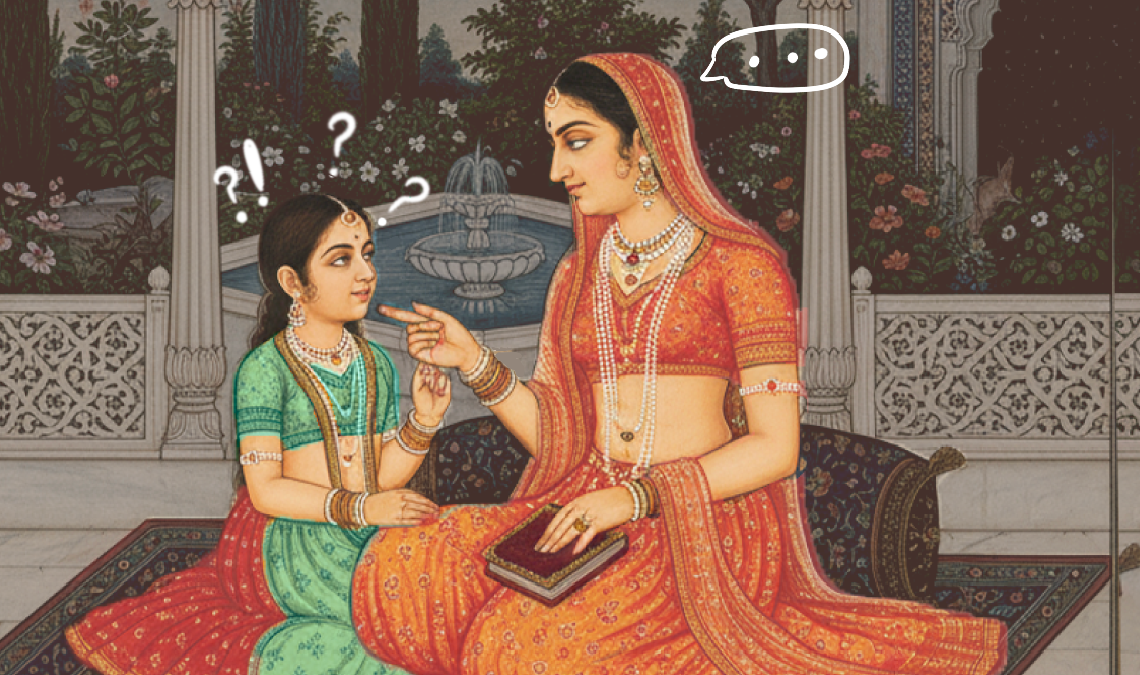
The first period talk should feel like a conversation, not a lecture. If you’re nervous, that’s okay. We all carry some awkwardness, especially if your own first period awareness moment (if it even happened) was mumbled, vague, or skipped entirely. But kids notice everything. If you’re calm and open, she will be too.
Here’s the energy to channel: no shame, no drama, just truth. Start simple: “One day soon, your body will start to change, and one of those changes is something called a period.” Use correct terms, but skip the textbook tone. You’re not her science teacher. You’re her safe space.
This is where menstrual hygiene education for kids comes in naturally. Normalize pads, period panties, and how to stay clean and maintain intimate hygiene. Lay out a few pads (preferably Nua’s Complete Comfort Sanitary Pads). Show her how to use them. Maybe even let her pick a cute pouch to keep in her school bag. Make it feel like a rite of passage, not a medical emergency.
What Are the Signs It’s Time to Have This Talk? A Parent’s Checklist
The right moment to talk isn’t always a calendar date. Here are the signs that it’s time:
- She’s between 8 and 10 years old. This is when signs of puberty in girls by age often start showing up, even if her period is still years away.
- She’s asking questions about bodies or babies. Curiosity is a green light, not a problem to manage.
- She’s noticed changes in her own body. Height spurts, breast buds, or body hair are natural conversation starters.
- She’s overheard something at school. Better she hears the truth from you than playground myths from classmates.
- You’ve not talked about it yet. That alone is reason enough. The best time to start is now.
Knowing when to start the period talk with your daughter isn’t about having a perfect plan. It’s about being present when she needs you.
Sometimes the easiest way to open the conversation is by showing her something tangible. Here’s what we put together when we got tired of daughters being caught off guard, explore the Teen Comfort Pack here!
How Do You Normalize Period Conversations at Home?
You can’t normalize period conversations at home by having one talk and calling it done. Normalization is a habit. So yes, keep period products in plain sight. Mention your own cycle casually. Let your son hear too. Talking about periods at home shouldn’t be a whispered thing between women. It should be just… normal. Like “pass the salt.”
Use every chance to drop in little moments of education. Watching a movie and a character has cramps? Say it. Buying groceries? Throw in a pack of pads and explain why. These micro-conversations create a home where period talk isn’t taboo, it’s just Tuesday.
Why Should You Stop Using Code Words for Periods?
Using the right words matters more than most parents realise. It’s not “that time.” It’s a period. Menstruation. Use the words. It takes the sting out of them.
If you’re wondering how to normalize period conversations at home, start by modelling it. Say things like, “I have my period today, I’m a bit tired,” or “Can you bring me my pads?” Let your kids hear that. Let your daughter know this isn’t some secret club she’s being shoved into.
Bring dads into the chat too. A period talk guide for fathers starts with something simple: knowing where the pads are, not making it weird, and being the dad who can buy period products without flinching. That shows her that empathy and support don’t come with a gender.
How Do You Make Her First Period Feel Less Scary?
Your presence is the most important product in the room. Here’s how to show up for her:
- Lead with feelings, not facts. Ask “How are you feeling about all this?” before you explain how a pad works.
- Tell her what to actually expect. It might be light, heavy, irregular, painless, or uncomfortable. Every body is different. All of it is normal.
- Build a first-period kit with her. Pads, hand sanitizer, a spare pair of undies, some chocolate, and a cute pouch.
- Write her a note. Something small that says: you’re seen, you’re supported, and this is nothing to hide.
- Remind her it’s not like the movies. It’s not always a dramatic event. Sometimes it’s just a Tuesday.
The first period awareness for pre-teens conversation isn’t just logistics. It’s the moment she learns that her body isn’t something to be embarrassed about.
If you want her first period to feel handled, not hidden, the right kit makes all the difference. For daughters who deserve to feel ready, not caught off guard, shop the Teen Comfort Pack!
How Do You Explain Menstruation to a Younger Child?
Menarche education for parents doesn’t need to be complicated. Here’s a simple, age-by-age approach:
- Ages 5 to 7: Plant the seed. Keep it very simple. “Bodies change as we grow up. One of those changes for girls is something called a period.” That’s it. No need to go further unless she asks.
- Ages 8 to 10: Add context. Now you can explain menstruation to an 8-year-old with a little more detail. “Every month, the uterus builds a little lining in case a baby comes. If no baby comes, that lining leaves the body as blood. That’s a period.” Answer questions as they come.
- Ages 10 to 12: Get practical. Talk about what to expect physically, how to use a pad, and what to do if her period starts at school. Walk her through the menstrual hygiene education for kids basics like changing pads, tracking her cycle, and managing discomfort.
- Ongoing: Keep the door open. Let her know she can always come to you. The conversation doesn’t end once she has her period. It’s just getting started.
Knowing when to start the period talk with your daughter is really about knowing her. Some kids are ready at 7, some at 10. Follow her cues, meet her where she is.
What Are the Final Things to Keep in Mind About the Period Talk?
There is no perfect script. No one “right way.” But if you’re asking the question, you’re already on the right track.
Thinking about when to start the period talk with your daughter is the right instinct. Menarche education for parents isn’t about memorising facts. It’s about creating space. Talking about periods at home, preparing your daughter for her first period, teaching menstrual hygiene, none of it is one big talk. It’s a lifestyle. It’s making space for her to grow into her body with knowledge instead of fear.
And maybe, years from now, when she’s helping her daughter with her first period, she’ll remember how you made it feel safe. Honest. Uncomplicated. Like it was always meant to be.
Disclaimer:
The content of this article is provided for general informational and educational purposes only and is not intended to constitute medical advice, diagnosis, or treatment. The information shared is of a general nature and may not be appropriate for all individuals or specific circumstances. Readers should not disregard, delay, or substitute professional medical advice based on the information contained herein.
If you experience any symptoms, notice anything unusual, or have concerns relating to your health or overall wellbeing, you should consult a qualified healthcare professional. While every effort is made to ensure the information shared is accurate and up-to-date, Nua makes no representations or warranties, express or implied, regarding the accuracy, completeness, or suitability of the information provided and disclaims all liability arising from reliance on this content to the fullest extent permitted by law.