When most women think about menstrual health, the first question is usually, “When’s my next period due?” But the menstrual cycle is so much more than a countdown to bleed days. It’s a dynamic, responsive rhythm, a kind of monthly mood ring, reflecting what’s happening with your hormones, energy, stress, and recovery. Focusing only on dates misses one of the most useful parts of cycle tracking: menstrual cycle length variability.
When you start paying attention to menstrual cycle length variability, those small shifts in how long your cycle lasts from month to month begin to tell a much richer story than any predicted start date.
This is where understanding cycle length variation actually becomes practical. A longer cycle after a high-stress month, a shorter one when training eases off, or more variability during under-fuelling aren’t coincidences — they’re your body translating lived experience into biology. When you learn to read that translation, cycle tracking turns into informed adjustment instead of guesswork.
Start Here: What Counts as “Normal” (and What Doesn’t)
Before you can interpret variability, you need a baseline.
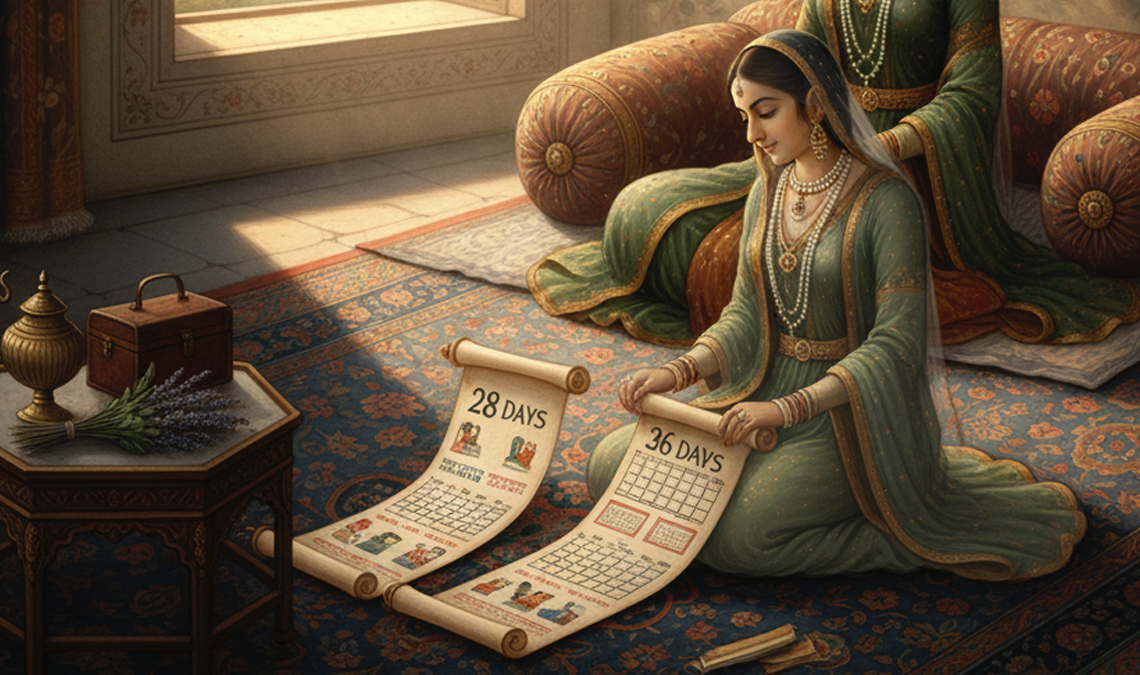
A common myth is that a “healthy” cycle is always 28 days. According to research, most healthy cycles fall anywhere between 21 and 35 days, and even within that range, variations of a few days (up to 7) are perfectly normal. The average period cycle length differs widely between individuals, and it’s also normal for your own cycles to vary from each other by a few days.
So, the first question isn’t “Am I 28 days?” It’s:
Am I generally within the normal range?
How much do my cycles shift month to month?
That second question is where menstrual cycle length variability becomes meaningful. Instead of viewing variation as something to fix, it helps to see it as context. Your cycle length reflects how your nervous system, metabolism, and reproductive hormones are interacting right now. Over time, noticing these subtle shifts gives you a clearer picture of how resilient (or strained) your system may be.
Why Cycle Length Variability Matters More Than a Single Number
If your cycle is 27 days one month and 30 the next, that’s often just normal responsiveness. Your body is adjusting to real life.
What matters is the pattern:
- Small variability (a few days) is commonly healthy.
- Bigger swings (for example, shifting by more than ~7 days from one cycle to the next) may point toward menstrual cycle irregularities worth exploring.
This is where you begin to understand why cycle length changes. Cycle length is largely driven by when you ovulate. Ovulation doesn’t operate on a rigid schedule, it’s sensitive to signals of safety, energy availability, and stress. When those signals are supportive, ovulation tends to occur more consistently. When they’re not, your body may delay it, prioritising survival and recovery over reproduction.
If ovulation is delayed, cycles tend to lengthen. If ovulation happens earlier, cycles tend to shorten. When your body feels under-resourced or under stress, it may delay ovulation, which shows up as greater menstrual cycle length variability over time.
A Simple Way to “Read” Your Cycle Length Changes
A leading gynaecologist, Ludwig Fränkel, once said that “the only regularity of the menstrual cycle is its irregularity.” In practice, this means no two cycles are ever identical, even in the same person.
Where it becomes useful to pay closer attention is when your cycle starts darting around. If it’s big swings, that level of menstrual cycle length variability can reflect deeper influences like sustained stress, low energy availability, or shifts in hormonal health and cycle length.
With that in mind, think of cycle length variability as your body asking one of these questions:
1) “Am I under more stress than usual?”
High or chronic stress increases cortisol, which can delay ovulation and increase variability (more on that here). Late cycles, stronger PMS, sleep disruption, and digestive shifts often travel together. This is a major reason why cycle length changes.
2) “Am I fuelled enough for what I’m demanding?”
Under-eating, low-fat diets, or inconsistent meals can suppress ovulation, leading to longer cycles, lighter periods, or missed bleeds. This is where the connection between hormonal health and cycle length becomes very real because hormones need energy to run.
3) “Am I recovering from my training and workload?”
Moderate movement supports cycle health, but sudden increases in training load, especially without fuel, can lengthen cycles or make them more unpredictable. Over time, this shows up as increased menstrual cycle length variability.
4) “Am I sleeping and recovering consistently?”
Sleep is hormone regulation. Poor sleep can disrupt the rhythm of the hypothalamic–pituitary–ovarian axis (brain–hormone–ovary signalling loop) and shift ovulation timing.
5) “Am I carrying emotional strain?”
Emotional stress mirrors physical stress in the body. Anxiety, burnout, or prolonged low mood can make cycles more variable and symptoms more intense.
A big takeaway here is that the menstrual cycle and stress nutrition relationship is often the centre of cycle length changes. Stress and under-fuelling frequently overlap, and your cycle reflects that.
How to Track Meaningfully (So You Can Actually Use the Data)
The best tracking system is always the one you’ll actually stick to. You don’t need anything fancy to begin, start with whatever feels manageable like a paper calendar on your desk, a basic period-tracking app on your phone, or even a simple spreadsheet. Consistency matters more than complexity.
If you’re going with an app, using the one each month helps the algorithm learn your personal patterns, making predictions far more accurate and reliable over time. Trackers like Nua’s or Clue, Flo, Stardust, etc., become significantly smarter the longer you use them, because they analyse your past data to refine cycle forecasts. Switching tools too often resets this learning curve, while sticking to one system builds a steady, personalised picture of your cycle rhythm.
Blog continues after the ad.

If you’re doing it manually or digitally, here’s what to focus on so you can interpret understanding cycle length variation in a practical way:
Track these basics:
- Cycle day 1 (first day of bleeding)
- Total cycle length each month
- Sleep quality
- Energy levels
- Mood, focus, and motivation
- Digestion/appetite changes
- Symptoms like: flow, bloating, cramps, headaches, cravings, or changes in training performance.
Then, instead of looking at one month in isolation, look at three cycles together. Three months is usually enough to see whether changes were a one-off stressor or an emerging pattern.
If you want deeper insight, tools like basal body temperature (BBT) tracking or hormone-based urine tests can help clarify ovulation timing. BBT reflects progesterone rise after ovulation, so tracking it over time can confirm whether ovulation is happening consistently. Hormone-based tests can highlight estrogen or LH patterns, adding another layer to understanding cycle length changes (though they work best alongside consistent lifestyle tracking).
However, these are optional metrics, you can learn a lot from simple data when you stay consistent.
Putting It Together: What to Do with Common Patterns?
This is where tracking variability becomes genuinely useful. You don’t need perfect data, you just need a clear response plan.
If your cycles are gradually getting longer, it often points to delayed ovulation. Ask:
- Has stress increased?
- Has sleep dipped?
- Have you changed training volume/intensity?
- Have you been eating less or skipping meals?
This pattern often reflects the menstrual cycle and stress nutrition load stacking up.
If your cycles are swinging widely month to month, this is classic menstrual cycle length variability that may signal menstrual cycle irregularities (especially if it’s persistent).
Do you have:
- Irregular sleep schedules
- High emotional stress
- Big shifts in training
- Inconsistent food intake or dieting
If your answer is yes to this, and you can’t seem to find a solution yourself, consider seeing a medical professional, or a cycle-syncing coach (like me! check out @cyclesyncwithragini!)
If your cycles are getting shorter over time, sometimes this is normal, but repeated shortening can reflect earlier ovulation or changes in overall hormonal signalling. It’s worth paying attention to stress, recovery, and overall wellbeing, especially if symptoms also change every time your cycle does.
If you miss a period or go far outside the normal range, remember – one missed period can happen thanks to stress, travel, illness. Repeated missed periods or cycles consistently outside the normal menstrual cycle range are worth discussing with a clinician.
Micro-Adjustments That Support Cycle Stability
If your data suggests stress and under-fuelling are driving variability, start small:
- Aim for regular meals and enough overall energy (especially around training)
- Prioritise sleep consistency where possible: aim for regular sleep and wake times, reduce late-night screen exposure, and protect wind-down time. Even small improvements in sleep regularity can support more stable ovulation timing.
- Add recovery days when training load increases: balance hard sessions with lighter days, mobility work, or complete rest, and increase fuel intake alongside training so your body doesn’t interpret the load as stress.
- Build stress buffers: walks, downtime, boundaries, breathwork — whatever is realistic
- Use gentle cycle-syncing: plan higher-demand work, training, or social commitments for phases when energy is naturally higher, and allow more recovery, flexibility, and lower pressure during phases when your body signals slower pace. This supports cycle stability by working with hormonal shifts rather than pushing against them. Learn more here.
These aren’t “wellness tips.” They’re practical supports for hormonal health and cycle length. When these foundations improve, many people notice their cycle length gradually stabilising back into their personal normal, not because the body was forced to comply, but because it finally had what it needed.
From Tracking to True Understanding
When you shift from “When is my next period?” to “What is my cycle length doing over time?” everything changes.
Menstrual cycle length variability becomes a feedback system, not something to fear or control. The more you track, the more you can connect your cycle changes to your lifestyle like stress, sleep, training, and the menstrual cycle and stress nutrition balance.
The goal isn’t to force your body into a rigid schedule. It’s to understand what your patterns are saying, respond with small supportive changes, and use your cycle as a guide for long-term wellbeing, grounded in understanding cycle length variation rather than chasing perfection.
To learn more about Ragini’s work with cycle syncing, and to get support for creating your own cycle syncing plan, check out @cyclesyncwithragini!