
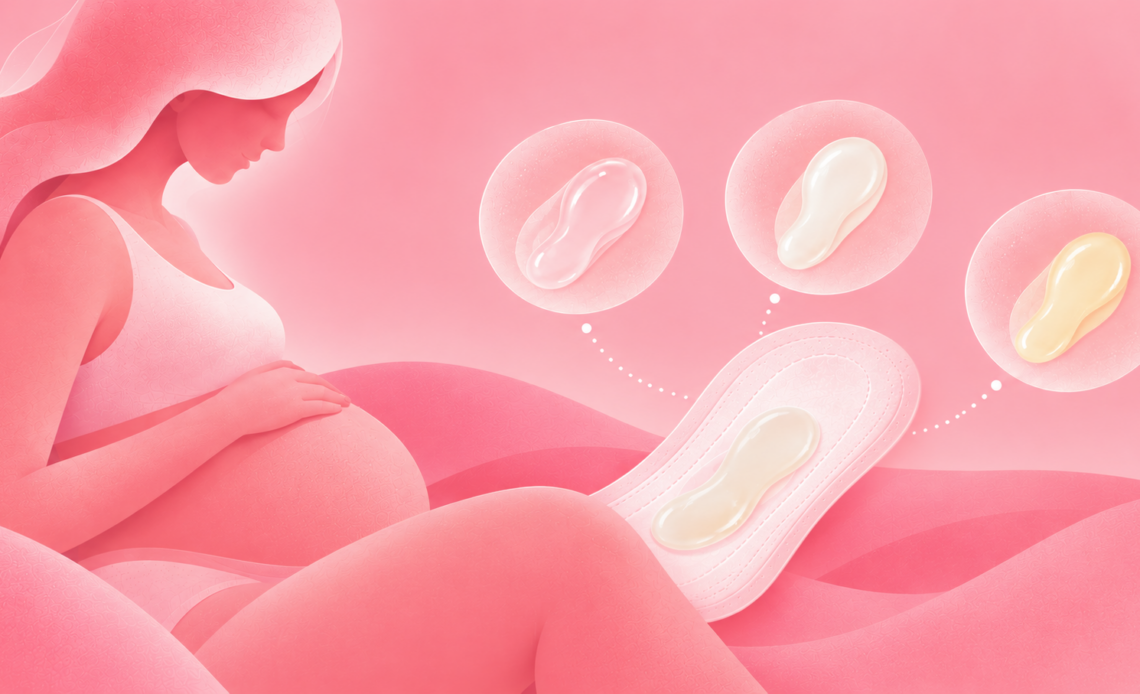
Wondering, “why and how does vaginal discharge change during pregnancy?” here’s what we will cover in this guide:
- During pregnancy, it’s normal for vaginal discharge to increase due to rising estrogen and progesterone levels, increased blood flow, and cervical changes.
- Most pregnancy discharge is harmless and can be managed by maintaining good intimate hygiene, wearing breathable cotton underwear, and using panty liners when needed.
- However, changes in the colour, texture, smell, or amount of discharge—especially with itching, burning, or watery leakage—may indicate an infection or another condition.
- If you notice these changes or have any concerns, consult your healthcare provider promptly.
If you’ve noticed more vaginal discharge after becoming pregnant, you might be wondering whether it’s normal or something to worry about. The good news is that increased discharge is one of the earliest and most common changes during pregnancy.
But why does it happen, and how does it change from the first trimester to the third? In this guide, we’ll explain what’s normal, what causes these changes, and when it’s time to speak with your healthcare provider.
What Is Vaginal Discharge?
Vaginal discharge is a normal milky-white fluid that comes out of the vaginal opening. It is produced by the cervix (the lower part of the uterus, or womb, that connects to the vagina) and the vagina. This fluid is a healthy mix of water, cervical mucus, shed cells, and beneficial bacteria that helps keep the vagina clean, moist, and protected from infections. Most women produce about 1–4 millilitres (roughly ½ to 1 teaspoon) of vaginal discharge each day.
The amount, colour, and consistency of vaginal discharge can change throughout different stages of life and during the different phases of your menstrual cycle, pregnancy, and menopause. Understanding why these changes occur can help you know what to expect throughout each trimester.
Why Does Vaginal Discharge Change During Pregnancy?
Vaginal discharge naturally increases during pregnancy due to hormonal and physical changes in your body. This thin, milky-white discharge, called leukorrhea, may begin to increase as early as 1–2 weeks after conception and helps create a healthy environment for your growing baby.
Here’s why it happens:
- Hormonal changes: Rising estrogen and progesterone levels stimulate the cervix and vaginal glands to produce more cervical mucus and vaginal fluid.
- Increased blood flow: Pregnancy increases blood flow to the pelvic region and reproductive organs, boosting gland activity and making vaginal discharge more noticeable.
- Cervical changes: As the cervix softens and prepares for childbirth, it produces more protective mucus. This mucus gradually forms a mucus plug that seals the cervix and helps prevent harmful bacteria from entering the uterus.
Because these changes continue throughout pregnancy, the amount and consistency of vaginal discharge may vary from one trimester to the next.
How Discharge Changes Throughout Pregnancy
You may notice increased vaginal discharge compared to normal once you become pregnant, but the amount and texture of discharge also changes across pregnancy.
- First trimester: A slight increase in thin, clear or milky-white discharge may be one of the earliest signs of pregnancy.
- Second trimester: The discharge usually becomes more consistent and may increase in amount while remaining thin, clear, or milky white.
- Third trimester: Discharge is often at its heaviest and may become thicker or more mucus-like. As your due date approaches, you may also notice a pink, brown, or blood-tinged discharge (known as a bloody show), which can be an early sign that labour is approaching.
How to Manage White Discharge After Conception
Managing white discharge after conception is usually simple. Wearing breathable cotton underwear with a panty liner, maintaining good intimate hygiene, staying hydrated, and avoiding scented products can help keep you comfortable and reduce the risk of irritation or infection.
Daily Hygiene and Comfort
Wash Gently
Clean only the outer vaginal area (vulva) with lukewarm water or a gentle, pH-balanced intimate wash like Nua’s. Avoid scrubbing, and always wipe from front to back after using the toilet to prevent bacteria from spreading. Read our complete guide on how to wash your vulva without irritation here.
Wear Breathable Clothing
Choose loose-fitting clothes and cotton underwear to improve airflow, reduce moisture buildup, and keep the intimate area comfortable.
Use Panty Liners When Needed
If the extra discharge feels uncomfortable, wear an unscented panty liner and change it every 3–4 hours, or sooner if it becomes damp. Nua’s Panty Liners are soft, lightweight, and designed to absorb everyday discharge while helping you stay fresh and comfortable.
Avoid Scented Products
Skip scented soaps, vaginal sprays, powders, and douches, as they can disrupt the vagina’s natural pH and healthy bacteria, increasing the risk of irritation or infection.
Diet and Lifestyle
Include Probiotic-Rich Foods
Add yogurt, kefir, and other fermented foods to your diet to help support a healthy balance of vaginal bacteria.
Stay Hydrated
Drinking enough water supports your overall health and helps your body function optimally during pregnancy.
Limit Excess Sugar
Reducing added sugar intake may help lower the risk of yeast infections, particularly if you’re prone to them.
These simple self-care habits can help you manage normal pregnancy discharge more comfortably. For added everyday protection against excess discharge, Nua’s Panty Liners offer a comfortable way to stay fresh and dry without disrupting your routine.
Signs of Abnormal White Discharge During Pregnancy
Abnormal pregnancy discharge is usually different from normal leukorrhea in its color, texture, or smell. If your discharge is accompanied by itching, burning, or watery leakage, it could be a sign of an infection that requires medical attention. Look for the following signs:
- Unusual texture: Thick, clumpy discharge that resembles cottage cheese often points to a yeast infection during pregnancy. Thin, greyish-white discharge with a strong fishy odor may indicate bacterial vaginosis.
- Unusual color: Yellow, green, dark grey, or blood-tinged discharge instead of the usual clear or milky white color can be a sign of any vaginal infection or, in some cases, pregnancy-related complications.
- Itching or burning: Itching, redness, swelling, or a burning sensation while urinating commonly occurs with infections such as yeast infections or bacterial vaginosis.
- Watery leakage: A sudden gush or continuous trickle of clear, watery fluid may be leaking amniotic fluid rather than normal vaginal discharge. Seek immediate medical attention if this occurs, especially before your due date.
When to See a Doctor for Vaginal Discharge During Pregnancy
If you notice any of the warning signs described above or feel that your vaginal discharge is different from what’s normal, contact your healthcare provider promptly. Early evaluation can help diagnose infections and reduce the risk of complications for you and your baby.
Your healthcare provider may:
- Ask about your symptoms and pregnancy history.
- Perform a pelvic examination, if needed.
- Test a sample of the discharge to identify the cause.
- Recommend pregnancy-safe treatment if an infection is confirmed.
Avoid using over-the-counter vaginal medications or home remedies unless your healthcare provider advises you to do so.
Most pregnancy discharge is completely normal and doesn’t have to be uncomfortable. Once your healthcare provider has ruled out any underlying infection or complication, Nua’s Panty Liners can help absorb everyday discharge and keep you feeling dry and comfortable throughout the day.
The Final Takeaway
Pregnancy comes with many physical changes, and increased vaginal discharge is one of the most common. While it can sometimes feel uncomfortable, messy, or even worrying, it’s usually a normal sign that your body is working to protect both you and your growing baby.
Understanding what’s normal—and knowing the warning signs that need medical attention—can help you feel more confident throughout your pregnancy. On days when the extra discharge feels bothersome, using breathable cotton underwear or Nua’s Panty Liners can help you stay dry and comfortable. If you ever notice sudden changes in the colour, smell, or consistency of your discharge, or experience symptoms like itching, burning, or watery leakage, don’t ignore them. Your healthcare provider can help determine the cause and ensure you and your baby stay healthy.
FAQs
1. Is vaginal discharge normal during pregnancy?
Yes, increased vaginal discharge is common during pregnancy. This thin, milky-white discharge, called leukorrhea, is caused by hormonal changes and increased blood flow to the pelvic area.
2. What does normal pregnancy discharge look like?
Normal pregnancy discharge is usually thin, clear or milky white, with a mild or no noticeable smell. Its amount and consistency may change as your pregnancy progresses.
3. How does vaginal discharge change during each trimester?
During the first trimester, discharge may increase slightly. It often becomes more consistent in the second trimester and may be heavier or thicker in the third trimester. Pink or blood-tinged discharge near your due date may be a bloody show.
4. What causes increased vaginal discharge during pregnancy?
Rising estrogen and progesterone levels, increased blood flow to the pelvic region, and changes in the cervix all contribute to increased vaginal discharge during pregnancy.
5. How can you manage vaginal discharge during pregnancy?
Wear breathable cotton underwear, maintain gentle intimate hygiene, stay hydrated, and avoid scented soaps or vaginal sprays. You can also use unscented panty liners, changing them every 3–4 hours or sooner if damp.
6. When should you worry about vaginal discharge during pregnancy?
Consult your healthcare provider if you notice yellow, green or grey discharge, a strong or unusual smell, itching, burning, or thick, clumpy discharge. A sudden gush or continuous trickle of watery fluid needs immediate medical attention, as it could be amniotic fluid.
Disclaimer
The content of this article is provided for general informational and educational purposes only and is not intended to constitute medical advice, diagnosis, or treatment. The information shared is of a general nature and may not be appropriate for all individuals or specific circumstances. Readers should not disregard, delay, or substitute professional medical advice based on the information contained herein.
If you experience any symptoms, notice anything unusual, or have concerns relating to your health or overall wellbeing, you should consult a qualified healthcare professional. While every effort is made to ensure the information shared is accurate and up-to-date, Nua makes no representations or warranties, express or implied, regarding the accuracy, completeness, or suitability of the information provided and disclaims all liability arising from reliance on this content to the fullest extent permitted by law.