
What you will learn in this blog about why teens get irritated with their parents so easily:
- Teenagers may react more emotionally because the brain regions responsible for logic and impulse control are still maturing.
- Puberty hormones don’t just affect the body. They also influence the brain, making feelings, frustrations, and reactions feel much more intense.
- A growing need for independence is a normal part of adolescence and can lead to disagreements and fights with parents.
- Many parent-teen conflicts happen because both sides are adjusting to a changing relationship and learning how to communicate in new ways.
- Sleep deprivation is extremely common during the teenage years and can make it harder to stay patient, regulate emotions, and cope with everyday stress.
- Home is often the place where teenagers feel safest letting their guard down, which is why parents sometimes see emotions that stay hidden everywhere else.
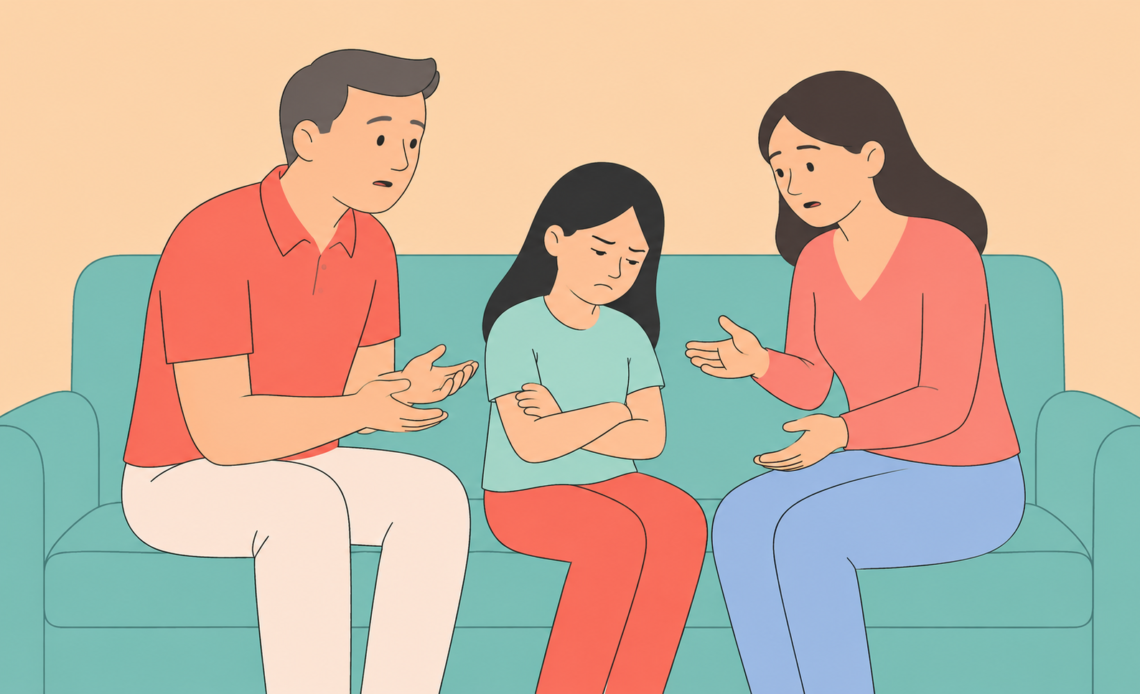
Why do teens get irritated with their parents so quickly and easily? For example, a simple question about school from dad gets an annoyed shrug, a reminder to clean up the room from mum is met with a deadly eye roll, and a conversation about weekend plans somehow turns into an argument that leaves everyone wondering how things escalated so quickly.
These moments are so common during the teenage years in every household that they almost feel like a natural phenomenon.
But what if it’s actually just that? A natural phenomenon.
Because the truth is that adolescence is one of the biggest periods of change a person goes through. While teenagers are navigating these insane changes in their bodies, brains, emotions, and social lives, parents are adjusting to a relationship that suddenly looks very different from the one they had just a few months ago.
So, let’s dig deep and take a closer look at the psychology of teens and why teenagers argue with parents all the time.
First, What’s Going On Inside a Teenager’s Brain?
One of the biggest reasons teens get irritated with their parents super easily is incomplete brain development and emotional changes during adolescence.
In fact, research has found that the human brain doesn’t finish developing until the mid-20s. And the very last part to fully develop is the prefrontal cortex, the part responsible for impulse control, weighing consequences, and basically thinking things through.
Blog continues after the ad.

Meanwhile, the amygdala, the brain’s emotional alarm system, is already fully online and running at full power. It’s the part that goes off when something feels like criticism, rejection or control, and during the teen years, it is VERY sensitive.
The result? Feelings often arrive before logic has had a chance to catch up.
It’s kind of like accidentally touching a hot pan. The hand pulls away before there’s even time to think about it. Similarly, teenagers can sometimes react before they’ve had a chance to pause, process what’s happening, and decide how they actually want to respond.
How Do Hormones Affect a Teenager’s Mood?
Puberty floods the body with hormones and brain chemicals (neurotransmitters) in amounts it has literally never dealt with before, affecting the systems responsible for mood swings, motivation, and behaviour.
- Sex hormones: Estrogen, progesterone, and testosterone rise rapidly during puberty, making emotions and reactions feel more intense.
- Serotonin: Puberty can affect how the brain uses serotonin, a chemical involved in regulating mood, making emotional ups and downs more common.
- Dopamine: The teenage brain becomes sensitive to dopamine, the brain’s reward chemical, increasing the desire for excitement, new experiences, and emotional highs.
For girls, period irritation adds another layer on top of this. In the days before a period, estrogen, progesterone and serotonin drop, causing emotional sensitivity to go up. However, having the right period products and self-care essentials can help make this phase feel a little easier.
And for boys, puberty can bring spontaneous erections and other bodily changes that can feel confusing or embarrassing to deal with.
Now, that is a LOT happening at once. No doubt, a small criticism can feel much more personal, and a disagreement can feel much more upsetting when you’re a teen.
Plus, There’s a Growing Need for Independence
During the teen years, the brain isn’t just learning to manage emotions differently. It’s actively building the person the teenager is going to be. This creates space for opinions, taste, values, and a sense of self that exists outside of family.
And that identity is built partly from everything the teen was raised with, and partly from everything else, like friends, the internet and their own experiences. Which means it’s completely possible, and completely normal, for the person to think a little differently than the household they grew up in.
It might show up as:
- Questioning family rules and traditions
- Wanting more privacy and time alone
- Forming different opinions from parents
- Dressing and talking like a new person
- Wanting greater control over decisions
For the parents, this can be genuinely baffling because it’s definitely not easy to watch someone grow into a person who is, in SOOO MANY ways, different. But this teenage desire for independence from family is a completely normal part of character development. And an important one at that.
Want to understand more about what’s happening during puberty? Read our complete guide here.
Meanwhile, Parents are Adjusting Too
The teenage years don’t just bring changes for teenagers. They bring changes for parents, too.
One day, a child is happily sharing every detail of their day, from what happened in class to who said what during lunch. The next, “How was school?” gets answered with a quick “fine” before they disappear into their room and shut the door.
And when a door closes, the natural instinct is to knock, louder and louder, until the door opens. So it’s common for parents to respond to this indifference by holding on to their kids a bit tighter, asking a few more questions, and wanting a bit more contact.
The challenge is that this coincides with when teenagers are craving more personal space. That’s where parent-teen communication problems begin. Because from a teenager’s perspective, it can feel like they’re being questioned, monitored, or not trusted enough.
Basically, neither side has done this before. The teen has never been this version of themselves before. The parent has never parented this version of their kid before. Both are learning how to navigate a relationship that suddenly looks very different from the one they were used to.
Still wondering why emotions can feel all over the place during puberty? Here’s a helpful guide to understanding and managing those big feelings.
We Also Need to Talk About Sleep
One factor that often gets overlooked during the teenage years is sleep. Research shows that 17% of high school students have difficulty falling asleep before 2 am at least 3 times per week.
Many people assume that’s because they’re scrolling on their phones or don’t want to go to bed. While that can sometimes be part of it, biology is also playing a role.
During puberty, the body’s internal clock, known as the circadian rhythm, naturally changes. Melatonin, the hormone that helps the body feel sleepy, starts getting released later in the evening than it did during childhood. In simple terms, teenagers are naturally wired to fall asleep later and wake up later than adults.
The problem is that school, classes, and other responsibilities still start early in the morning.
As a result, many teenagers end up getting less sleep than their bodies actually need. For girls, periods can sometimes add to the sleep struggle, making comfortable period care especially important.
Because when someone is tired day after day, it becomes much harder to manage emotions, stay patient, and cope with everyday frustrations.
Lastly, It All Comes Out at Home
Teens spend most of their day managing how they come across. At school, with friends, online, there’s performing, holding it together, adjusting. The social pressure of being a teenager is genuinely exhausting, and for most teens, home is the one place where the guard comes down.
Which means parents often see the version of a teen who has been holding it together all day and has finally reached the one place they don’t have to anymore. The snapping, the irritability, the short fuse, it’s often not about home at all. It’s everything that got compressed all day, finally letting go.
Strangely, getting the “worst” version of a teenager at home can actually mean they feel safe enough to be themselves with their parents.
So, What Actually Helps?
What actually helps with parent-teen communication problems is not a lecture. Not a deep conversation. And definitely not tough love or endless arguments. Sometimes, it’s all about:
- Right timing: The moment someone walks in the door from school or work is usually the worst possible time to bring up anything important. The tank is empty. Give it an hour or two before starting a conversation.
- Being around: Teens and parents can simply enjoy being in the same space with no agenda. Watching Netflix, going for a drive, sharing memes, or doing something fun together.
- Not taking things personally: Not every eye-roll, sigh, or short answer is a sign that something is wrong between the parent and the teen. Often, it’s just something the teenager is dealing with outside the home.
- Keeping the door open: Teens may not always want to talk when parents are ready. But knowing they can talk when they’re ready makes a big difference.
Learn more about what can help make this stage a little easier to navigate for teens in our guide here. And if periods are part of the journey, our Teen Period Pack is designed to support teens through their first few cycles with everything they need in one place.
It’s All Going To Be Okay. Promise!
If there’s one thing to take away from all of this, it’s that most teenage-parent conflicts aren’t happening because someone is doing something wrong. More often, they’re the result of the brain, body, and relationship undergoing enormous changes all at the same time.
The teenage years can be frustrating and confusing, but they’re also a completely normal part of growing up. It’s a tale as old as time itself.
So the next time a simple comment somehow turns into an argument, remember that there’s often much more going on beneath the surface than meets the eye.
Have a parent-teen story you want to share? We’d love to hear about it in the comments below.
FAQs
1. Why do teenagers get irritated with their parents so easily?
Teenagers are going through major changes in their brains, hormones, emotions, and social lives. These changes can make everyday frustrations feel more intense and harder to manage.
2. Why do teenagers argue with their parents so much?
A growing need for independence often leads teens to question rules, want more privacy, and form opinions that differ from their parents. This can naturally create disagreements as both sides adjust.
3. Why do teens seem more emotional during puberty?
Puberty hormones and changes in the brain can influence mood, motivation, and emotional responses. Since emotional systems mature at a different pace from areas responsible for impulse control, reactions can sometimes come before reasoning.
4. Why do teenagers take their frustration out on their parents?
Home is often where teenagers feel safest letting their guard down. After managing social pressures and emotions throughout the day, they may release that built-up frustration around the people they feel most comfortable with.
5. How can parents communicate better with an irritated teenager?
Giving teens some space, choosing the right time to talk, spending time together without an agenda, and keeping communication open can help. Not every eye roll or short response needs to be taken personally.
Disclaimer
The content of this article is provided for general informational and educational purposes only and is not intended to constitute medical advice, diagnosis, or treatment. The information shared is of a general nature and may not be appropriate for all individuals or specific circumstances. Readers should not disregard, delay, or substitute professional medical advice based on the information contained herein.
If you experience any symptoms, notice anything unusual, or have concerns relating to your health or overall wellbeing, you should consult a qualified healthcare professional. While every effort is made to ensure the information shared is accurate and up-to-date, Nua makes no representations or warranties, express or implied, regarding the accuracy, completeness, or suitability of the information provided and disclaims all liability arising from reliance on this content to the fullest extent permitted by law.