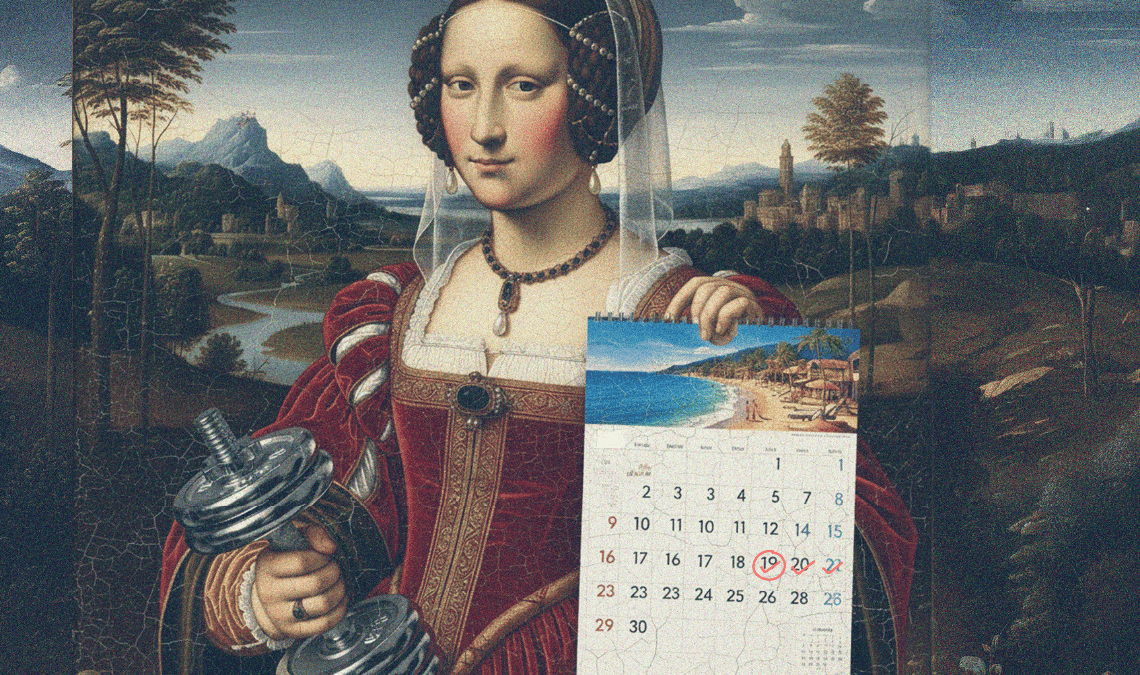
Cycle syncing may sound new, but it’s really a modern name for ancient wisdom. For generations, women have treated menstruation as more than just a “time of the month”—figuring out ways of coping using instinct, listening to their bodies and honouring what was needed. They slowed down, sought warmth, harnessed herbs, chose comforting foods and leaned into rest. Our mothers and grandmothers didn’t call it “hormone cycle support” or talk about “menstrual health,” but their rituals were rooted in the same wisdom cycle syncing now makes explicit — they instinctively worked with their bodies instead of pushing against them.
Fast forward to today, and women’s wellness has stepped into the spotlight. Instead of blanket advice that assumes all bodies function identically, conversations around health are becoming more personal, nuanced and science-driven. And one of the most interesting, empowering ideas leading that shift is cycle syncing, an idea that aligns nutrition, fitness, work and self-care routines with menstrual cycle phases. Some people dismiss it as a wellness fad, but the truth is, it’s backed by biology. The menstrual cycle phases aren’t just about reproduction; they shape mood, metabolism, focus, energy, even social confidence. Ignoring them while you go about your routine is like ignoring the season or weather as you step outside.
So, let’s explore what cycle syncing means, the science behind it, its benefits, and how it can be applied practically in daily living.
What is Cycle Syncing?
Cycle syncing is the practice of aligning your diet, exercise, lifestyle choices, and even work routine to the natural rhythm of your hormone cycle. The idea is simple but profound. Instead of treating your period like a random inconvenience, you use it as a guide, a blueprint for optimal living. The cycle isn’t static, it flows through four distinct phases, each with unique hormonal shifts. And those shifts affect everything from cravings to productivity.
Cycle syncing doesn’t mean micromanaging your life with a stopwatch. Think of it as creating your own cycle calendar. A framework you can lean on to optimize energy, reduce discomfort, and live more in sync with your body. Some days, your body whispers, “take it easy.” Other days, it says, “let’s go.” Listening to that voice instead of silencing it is what makes cycle syncing work.
The Four Menstrual Cycle Phases, Explained Like the Seasons
At the heart of every menstrual cycle is the interplay of two key female hormones, estrogen and progesterone, that guide not just fertility, but also mood, vitality, and even how the body responds to stress or hunger. These hormone levels go up and down throughout the month, creating a natural pattern that’s different for every woman and every cycle. This pattern is divided into four phases.
Instead of seeing the menstrual cycle phases as rigid blocks, imagine them as seasons, one blending into the next, each with its own characteristics. Once you see it this way, everything clicks!
Menstrual Phase: Winter
This is when your period starts. Estrogen and progesterone drop, making many women feel tired and in need of rest. This explains the low energy and irritability. Your body literally asks for warmth, comfort, and downtime, just like you feel in the winter.
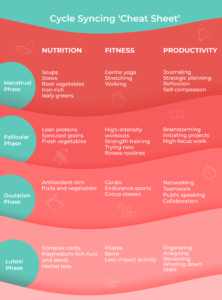
Food-wise, think hearty soups, iron-rich greens, and root vegetables to replenish lost nutrients (for the best foods to eat during your period, read this). Fitness? Forget punishment workouts, your best bet is gentle yoga, stretching, or mindful walks. Mentally, this is the season for turning inward—journaling, reflecting, recharging. Treat it as a reset. Full winter vibes!
Follicular Phase: Spring
As bleeding stops, estrogen climbs. You feel lighter, fresher, more optimistic, just like you do when spring rolls around. Creativity starts bubbling. Physically, your body responds well to high-intensity workouts and strength training, you have the energy to push harder. This is a great time to try new routines or take on challenges. At work, this is your brainstorming season. Think: new ideas, fresh starts, bold moves. Fresh produce, lean proteins, and sprouted grains help fuel this upswing. As it is in spring, everything is on the up and up!
Ovulatory Phase: Summer
Estrogen peaks, and suddenly you’re magnetic. Confidence, libido, sociability, everything’s dialled up. Imagine flirty bikini season!
This is the phase where your communication skills shine and networking feels effortless. Fitness is at its peak, endurance and strength feel aligned, so go for that group class, run, or cardio challenge. Your body loves light, vibrant foods now — raw veggies, fresh fruit, big colourful salads. Think of this phase as your external-facing season, the one where you show up and shine, just like summer.
Luteal Phase: Autumn
Here comes progesterone. Energy begins to wane, cravings creep in, and PMS may start making noise. This phase has two halves: early luteal still gives you some strength, so moderate weight training works well. But as you approach menstruation, your body benefits from slowing down. So think, Pilates, Yoga, or restorative movement. Complex carbs, magnesium-rich nuts, seeds, and herbal teas support your system and ease PMS. Mentally, this is a season of tying loose ends. Organize, edit, finish projects. It’s about nesting, grounding, and preparing for your “winter.”
Learn more about menstrual phases here.
The Science Behind Cycle Syncing
This isn’t just a wellness buzzword or intuition with a trendy name—it’s firmly rooted in endocrinology. Research in menstrual health shows hormonal shifts affect metabolism, brain chemistry, and even physical performance. Rather than simply prepping the body for reproduction, each phase of the menstrual cycle sends ripples through our bodies and minds.
For example, in the follicular phase, rising estrogen improves carb metabolism. So, your body processes energy more efficiently and a HIIT workout or weight training make sense. In the luteal phase, metabolism actually increases, which is why cravings intensify. Ignoring these shifts often leads to frustration. Like forcing intense workouts during the luteal phase, for example, risks higher injury rates (like studies linking ACL tear risks to hormonal fluctuations).
That’s why cycle syncing is a practical tool, not a fluffy trend. It works with the body’s existing design.
The Role of Period Tracking
The magic of cycle syncing lies in period tracking (more on this here). Apps, journals, or even cycle calendars give you insight into your own rhythms. Over time, you’ll see patterns. Maybe your ovulatory phase always lines up with feeling more social, or your best creative bursts hit right after menstruation. Tracking transforms “random mood swings” into predictable patterns. And once you see the rhythm, you can plan around it—aligning social life, workouts, and even big work deadlines.
Cycle Syncing ‘Cheat Sheet’
Real Benefits You’ll Notice
- Less PMS chaos: When you nourish your body according to each phase, cramps, bloating, and cravings become more manageable.
- Smarter workouts: Training with your hormone cycle enhances performance and lowers injury risk.
- Boosted productivity: Scheduling demanding tasks for follicular and ovulatory phases means you’re working with your brain’s natural sharpness, not against it.
- Emotional balance: Instead of resisting mood changes, you create space for self-care, which stabilizes your overall wellbeing.
- Long-term women’s wellness: Cycle syncing isn’t tied to just one stage of life. Whether you’re postpartum, navigating perimenopause, or anywhere in between, it evolves with you.
Is Cycle Syncing for Everyone?
While the cycle syncing method can be transformative, it’s important to acknowledge that not every woman experiences a predictable or textbook cycle. Energy levels, moods, and even physical performance can ebb and flow differently from one woman to another, and even from one cycle to the next.
Conditions like PCOS, endometriosis, thyroid issues, or irregular cycles reshape hormone cycles in unique ways. That’s why cycle syncing isn’t about strict formulas. For some women, tailoring it with a healthcare professional makes it more effective. The goal isn’t to follow a rigid checklist, it’s to build a supportive framework for your own body. Even imperfect syncing brings more self-awareness.
Why It’s More Than a Trend
What makes cycle syncing so powerful is how it bridges old wisdom and new science. Generations of women already lived in sync with natural rhythms, even without the language of “estrogen” or “progesterone.” Modern research simply explains why those instincts worked. This makes cycle syncing not a fad, but a sustainable, science-backed approach that reframes how we view menstrual health.
Ultimately, cycle syncing is about reclaiming agency over one’s body, rewriting the narrative around the menstrual cycle, and embracing cyclical living as a source of power rather than limitation. It offers a pathway to greater balance, resilience, and vitality. It’s not about control, it’s about connection.
To learn more about Ragini’s work with cycle syncing, and to get support for creating your own cycle syncing plan, check out @cyclesyncwithragini!