
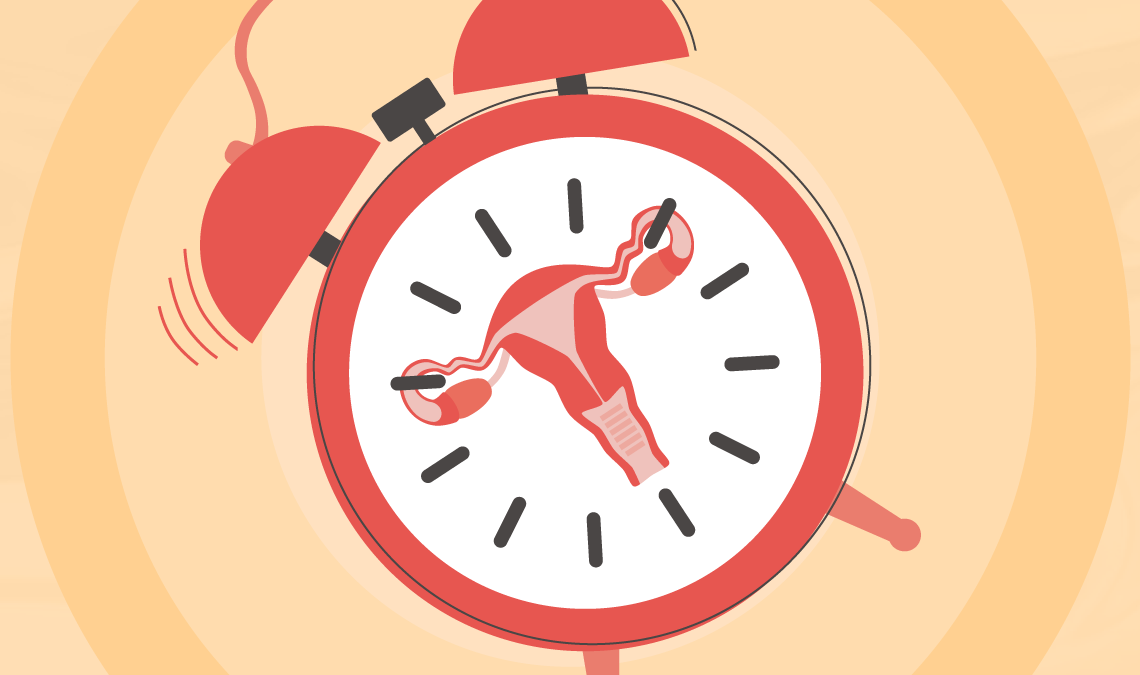
What you’ll learn about early menarche in this guide:
- The average age for menarche has dropped, with more and more girls getting their first period before the age of 10.
- It is driven by higher body fat in childhood, ultra-processed diets, chronic stress, harmful chemicals hiding in everyday products, and disrupted sleep, all of which have become far more common in modern life.
- Early menarche results in a much longer road (several years) to achieve a predictable, regular cycle.
- Impact on mental health is the underreported side of early menarche. Girls who start their period earlier face a higher risk of anxiety, depression, and body image issues.
- Early menarche also impacts health outcomes, like a slightly higher risk of cardiovascular disease and type 2 diabetes. But these are preventable, so there’s no reason to panic.
Girls are growing up in fast-forward these days, especially when it comes to early menarche. And if you’re a parent of a young girl, wondering if girls are starting their periods much younger nowadays, your suspicions aren’t wrong. Science has confirmed that the menstrual clock is indeed ticking faster in the 21st century.
First, Are Girls Getting Their Periods Earlier?
Research shows that a couple of generations ago, things looked very different. In the mid-1800s, the average age of menarche was around 16-17. By the 1970s, it had already dropped to about 14. And for girls born after 2000, it moved closer to 13, with the decline continuing at 0.5 years per decade.
Fast forward to now, when the average age of menarche is 11. Some studies even show that more girls are experiencing early puberty, getting their first period before the age of 9. In fact, as per the National Health Service, it’s now considered completely possible (and okay) for periods to start as early as 8.
If you’re reading this and thinking, wait… that feels really young, you’re not alone. It is pretty confusing. Maybe even a little alarming.
Because periods have always been tied to growing up, when they show up earlier than expected, it raises many questions. What’s causing this? Why are girls getting their periods earlier than before? And most importantly, is this something to worry about?
So, let’s break it down, step by step.
What is Menarche?
Menarche is a girl’s first period, triggered by a hormonal chain that begins in the hypothalamus, which signals the pituitary gland to release Follicle-stimulating hormone (FSH) and luteinizing hormone (LH). These travel to the ovaries and stimulate estrogen production, driving breast development, body hair, growth spurts, and eventually, menarche.
Read our full guide on menarche to understand it better.
But during childhood, this whole system is basically on pause, like a switch that’s turned off. No GnRH is released. But after puberty, your body flips that switch on, triggering menarche. However, sometimes, the GnRH switch is turned on earlier than expected, leading to early menarche.
No matter when menarche starts, having the right, super-comfy first-period essentials can make the whole experience feel a lot more comfortable and less confusing.
What Causes Early Menarche and Early Puberty in Girls?
The brain doesn’t just randomly decide to start puberty or menarche one day. It constantly reads the room and picks up signals from the environment and the body to check if it is a safe, stable time to grow up and start reproducing. Things like:
- Do you have enough nutrition?
- Does your body have enough fat stored?
- Are you generally healthy?
- What’s your stress level like?
- Are you growing up in a safe environment?
When enough of these signals say yes, things are okay, the brain turns on that internal GnRH switch, activating reproductive hormones and triggering puberty.
Blog continues after the ad.

But because today, many of these green signals are showing up sooner than they used to, girls are facing early menarche.
1. Better access to food and calorie-dense diets
Earlier, food was simpler, more home-cooked, and not always available in excess. Now? There’s constant access to snacks, packaged foods, and high-calorie meals.
This means the body reaches a well-fed, energy-stable state much earlier, which is one of the key signals your brain looks for before starting puberty.
Studies show that girls who frequently consumed junk/fast food got their periods about 1.66 years earlier, while even occasional intake was linked to around 1.2 years earlier menarche compared to those who never consumed it.
2. Sedentary lifestyle and higher body fat levels
The biggest shift in the lifestyle of kids today is how less active they are compared to a few years ago.
- Almost no outdoor games
- Less running, walking or cycling
- More time on phones, laptops, binge-watching
- Very little daily movement overall
This level of inactivity causes the body to store more fat as energy, producing chemicals like leptin that regulate appetite and metabolism. They tell the brain that there are enough energy reserves to begin puberty early.
Higher childhood body fat = higher leptin = earlier puberty signal
In fact, research shows that just a 1-point increase in a girl’s BMI, even at the super young age of 3, was associated with a 44% higher likelihood of earlier puberty, with a very high probability of early menarche.
3. Everyday stress is much higher now
Stress isn’t just big life problems you face when you’re an adult. In today’s world, it’s also the little not-so-nice things that creep into the lives of children.
- Academic pressure and competitive exams
- Constant comparison on social media
- Busy, overstimulating routines
- Less downtime to sleep and relax
This kind of ongoing, low-level stress and lack of adequate sleep can affect the brain’s hormone centre and push the puberty process to start earlier. Studies show that over 27% of girls who slept after 10 pm or didn’t get enough quality sleep experienced early puberty.
4. Higher exposure to environmental chemicals
Today, kids are exposed to more chemicals than ever.
- Plastics (packaged food, bottles)
- Processed foods
- Pollution
- Additives in personal care products
Some of these chemicals mimic hormones in the body and send signals that can confuse or speed up the natural puberty timeline. Studies have found that girls with higher exposure to certain plastic-related chemicals (like phthalates) had a 70% higher risk of early menarche.
Even after the periods begin, staying mindful of everyday chemical exposure matters. So, choosing 100% toxic-free, zero-irritation period products is the simplest way to support hormonal health.
So, What Is the Normal Age of Menarche Now, and Should You Worry About It?
Medically, menarche between the ages of 10 and 15 years is considered normal. However, until a few years ago, periods usually started on the higher end of that range, around 12 to 14. Now, they’re happening sooner, with many girls starting closer to 10. Because of this shift, even getting your period at 9, or sometimes 8, is becoming more common and is the new normal. It is nothing to worry about.
Part of this can also come down to genetics. If someone in the family, like a mother or older sister, started their period early, there’s a good chance it can happen earlier for the next generation too.
The only menarche age which isn’t considered normal and should be checked out by a doctor is if periods start before 8, or haven’t started by 15 to 16.
Does Early Menarche Affect Your Menstrual Cycle?
Yes, it can. When periods start early, the body’s hormone system is still maturing, which can affect how cycles behave both in the first few years and sometimes even later.
- Cycles can stay irregular for up to 5 years
- Many anovulatory cycles (no release of egg) early on
- Risk of more intense period cramps
- Higher likelihood of heavier periods
- Longer total reproductive life with late menopause
That said, many people with early menarche go on to have completely normal, regular cycles, especially with good lifestyle habits.
Does Early Menarche Affect Your Health Later in Life?
Yes, there are a few early menarche health risks.
- A small increase in lifetime breast cancer risk or PCOD, because of longer cumulative oestrogen exposure.
- Higher rates of hypertension or cardiovascular disease may be due to high body fat or stress levels (which in turn caused early menarche).
- Increased risk of Type 2 Diabetes, as hormonal changes of early puberty may independently affect insulin sensitivity.
But remember, this DOES NOT mean that starting your period at 10 will 100% cause breast cancer or heart issues. It simply means women with early menarche have shown slightly higher rates of these conditions. If you take care of your body, monitor your health, exercise regularly and eat well, all of this is preventable.
What Does Early Menarche Do to a Girl’s Mental Health?
Girls who start their periods significantly earlier than their peers face higher rates of anxiety, depression, and body image issues. It is largely due to the social and emotional mismatch, not the biology itself.
Imagine being 9 years old. Your body is doing things that none of your classmates’ bodies is doing yet. You might already be wearing a bra when everyone else is in undershirts. You are navigating something so profoundly adult, like menstrual blood, cramps, and hormonal mood swings, with the emotional toolkit of a child.
This is the reality of early menarche for many girls, and it could lead to:
- Depression and anxiety in adolescence that stems from being left out or feeling different, which can persist into adulthood.
- Negative body image, particularly around weight and shape, because they develop curves and gain weight before their friends and before they can understand why.
- Unwarranted romantic or sexual attention earlier, including from older peers and adults, for which they are often entirely unprepared.
However, the good news is that these early puberty mental health risks are significantly reduced when girls have warm, open, informed relationships with adults around them who can help normalize this experience.
Just talking about periods in a positive, matter-of-fact way, preparing them a little in advance, and reminding them that nothing about this is special or wrong can make a big difference.
Can You Prevent Early Puberty and Early Menarche?
While you can’t control genetics, everyday lifestyle habits can support how and when your body develops and transitions into puberty.
- Eating more balanced meals
- Cutting down on ultra-processed food
- Getting enough sleep (around 9 hours for younger girls)
- Staying physically active
- Lowering the exposure to plastics and chemical-filled products
These small habits won’t guarantee a later period, but they’ll help create a healthier environment for your hormones to function smoothly.
If you think your daughter might be close to getting her first period, you can prepare her with the right period products, perfect for young girls going through menarche.
Early menarche is not a disease.
Over time, periods have started happening earlier, and that’s because everyday life has changed. Everything from food, lifestyle, stress, and sleep, all of it is different from what it was a few years ago. And bodies are simply responding to these changes.
So if you or your little girl got your period at 9 or 10, it might feel early, but it’s completely okay. In fact, it’s becoming the new normal now.
So, don’t panic. The goal isn’t to worry more. It’s to know how to take care of the growing body and stay aware of the changes that come with it. Because at the end of the day, your body isn’t doing anything wrong. It’s just changing with the world around you.
If you’ve any more questions about early menarche or early puberty, drop them in the comments, and we’ll get back to you.
Disclaimer
The content of this article is provided for general informational and educational purposes only and is not intended to constitute medical advice, diagnosis, or treatment. The information shared is of a general nature and may not be appropriate for all individuals or specific circumstances. Readers should not disregard, delay, or substitute professional medical advice based on the information contained herein.
If you experience any symptoms, notice anything unusual, or have concerns relating to your health or overall wellbeing, you should consult a qualified healthcare professional. While every effort is made to ensure the information shared is accurate and up-to-date, Nua makes no representations or warranties, express or implied, regarding the accuracy, completeness, or suitability of the information provided and disclaims all liability arising from reliance on this content to the fullest extent permitted by law.