
Here’s what you will learn about newborn skin peeling in this blog:
- Newborn skin peeling is common in the first few weeks and usually settles on its own without any special treatment.
- It happens as your baby’s skin adjusts to life outside the womb, where exposure to drier air causes the outer layer to lose moisture and shed naturally.
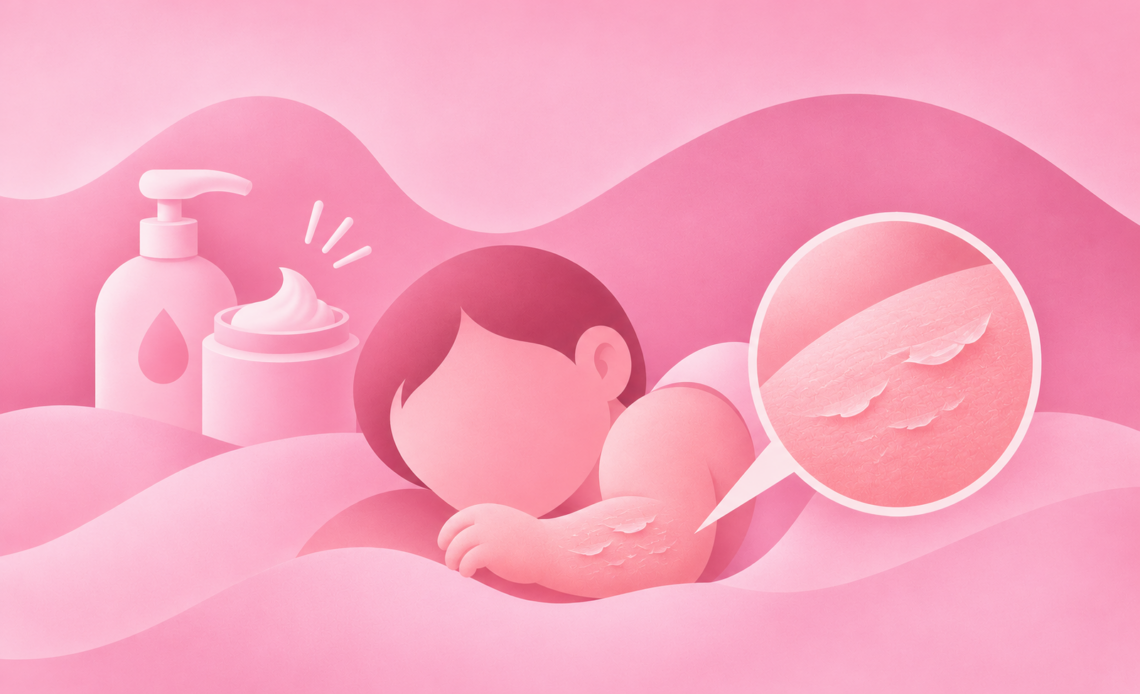
- Baby skin peeling is most noticeable on the hands, feet, ankles and wrists, and may be more pronounced in babies born after their due date.
- Dry indoor air, cold weather and frequent bathing can make your baby’s skin drier and the flaking more noticeable.
- Simple care, like keeping baths short, gently patting the skin dry and letting flakes shed naturally, can help keep your baby comfortable.
- Redness, blisters, bleeding cracks or persistent peeling may need a paediatrician’s attention.
If you have just welcomed your baby home and noticed their skin starting to peel, you might be worried…wondering if something is wrong. The good news is that newborn skin peeling is VERY common in the first few weeks. According to research, 65-75% of babies experience it.
Your baby has spent months surrounded by amniotic fluid in the womb, so their skin needs a little time to adjust to the outside world. After birth, the skin is exposed to drier air, causing the outermost skin layer to lose moisture and shed naturally. So, you may notice some dryness and flaking, especially on their hands and feet. It usually clears up on its own, without much intervention.
But why is your newborn’s skin peeling, how long does newborn skin peel, and when should you be concerned? Let’s get into it.
Why Does Newborn Skin Peel?
Before birth, your baby’s skin is covered in a white, waxy coating called vernix caseosa. Think of it as a natural protective layer that helps shield their skin while they spend months surrounded by amniotic fluid in the womb.
Once your baby is born, their skin is exposed to the air instead of being surrounded by fluid. The vernix gradually comes off, and the skin has to adjust to its new environment. This causes the outer layer to lose moisture and shed its old cells naturally, which can look like dry, flaky patches.
When Does Peeling Start and How Long Does It Last?
Newborn skin peeling usually begins between the second and third day after birth and is most noticeable during the first two weeks. In most babies, the flaking settles within one to two weeks, although it can sometimes last a little longer. The NHS recognises dry or peeling skin during the first week or two as normal.
However, the timing can vary from baby to baby, so there is no need to worry if the peeling takes a little longer to clear, provided the skin looks otherwise healthy, and there are no signs of irritation or infection.
Where Does Peeling Usually Show Up?
Newborn skin peeling is most noticeable on the hands, feet, ankles, and wrists, although it can also appear on the arms, legs, or other parts of the body. You may even spot some flaking around skin folds. There isn’t one clear reason why peeling shows up more in certain areas, and it can vary from baby to baby.
Why Some Babies Peel More Than Others
A few things can make newborn skin peeling more noticeable than usual.
- Being born after the due date: Studies have found that the protective vernix coating naturally decreases towards the end of pregnancy. Babies born after their due date may have less vernix left on their skin at birth, which can make peeling more noticeable.
- Dry indoor air or air conditioning: Air conditioning and low humidity can dry out the air around your baby, making their skin lose moisture more easily and causing dry patches to become more noticeable.
- Cold weather: Winter air often has lower humidity, which can leave your baby’s delicate skin feeling drier and make flaking more visible.
- Frequent bathing: Bathing too often, especially with hot water or soap, can wash away the skin’s natural oils and make dryness worse. Here’s how to bathe your baby gently without drying out their skin.
How to Care for Peeling Skin
Seeing your newborn’s skin peeling can make you want to reach for some kind of medicine or remedy straight away. But baby skin peeling usually settles on its own, so the goal should be to keep your baby comfortable while their skin adjusts.
- Let the skin shed naturally: The flakes will come off on their own as the skin renews. You don’t need to speed up the process with medicine or any other product.
- Keep bath time short: Use lukewarm water and keep baths brief. Plain water, without any soap, is usually enough for newborns.
- Pat the skin dry: After a bath, gently pat your baby with a soft towel instead of rubbing their skin. Pay attention to skin folds where moisture can collect to avoid irritation.
- Keep the air comfortable: If you use air conditioning or heating, avoid letting the room become excessively dry, as this can make flaky skin more noticeable.
- Moisturise only if needed: If your baby’s skin becomes very dry or starts cracking, ask your paediatrician before applying a small amount of fragrance-free moisturiser, especially during the first month (more on that here).
There are also a few things best avoided while the skin is peeling.
- Don’t pull or pick at flakes. This can damage the delicate skin underneath and cause irritation.
- Skip scrubbing and avoid washcloths, exfoliating products, or rubbing the skin to remove flakes.
- Avoid fragranced lotions, as perfumes and other ingredients can irritate sensitive newborn skin.
- Peeling doesn’t need oil to resolve. It usually clears up naturally without it. If you’re considering oil for your baby, read our guide to oiling newborn skin first.
Normal Peeling or Something Else? How to Tell
Most newborn skin peeling is harmless and settles on its own. But it’s important to pay attention to what the skin looks like, where the peeling appears, and whether your baby seems uncomfortable.
| Condition | What it looks like | Where it appears | When it occurs |
| Normal newborn skin peeling | Fine, dry flakes without significant redness or discomfort. | Hands, feet, ankles, and wrists, but can occur elsewhere. | Most common in the first few weeks after birth. |
| Possible eczema | Dry, red, irritated patches that may seem itchy or persist beyond the early newborn weeks. | Often the cheeks, scalp or other areas of the body. | Can develop anytime during infancy and may persist or come and go. |
| Cradle cap | Greasy, yellowish or white scales that cling to the skin. | Mainly the scalp. | Usually develops in the first weeks or months. |
| Diaper area irritation | Redness, soreness, or peeling is linked to skin irritation. | Around the bottom and diaper area. | Can develop whenever the skin becomes irritated by moisture, friction, or prolonged contact with urine and stool. |
For more on cradle cap, eczema and other common newborn skin changes, read our guide here.
And if the peeling is in the diaper area, here’s how to prevent and care for diaper rash.
When to See a Doctor About Peeling Skin
While baby skin peeling is usually harmless, keep an eye out for these signs that your baby may need medical attention.
- Peeling accompanied by significant redness, blisters, raw skin, or oozing.
- Cracks that bleed or skin that looks swollen, warm, or infected.
- Peeling that continues well beyond the first few weeks or develops into thick scales.
- Fever, poor feeding, or your baby seeming unusually sleepy or unwell.
- Widespread redness, tender skin, or blistering, which needs immediate medical attention.
A Fresh Start for Your Baby’s Skin
Newborn skin peeling can look a little alarming, but it’s usually just part of your baby adjusting to life outside the womb. It often settles on its own within the first couple of weeks, without any special treatment. Let the skin shed naturally, keep baths short, and avoid scrubbing or picking at the flakes. If the skin becomes very red, starts blistering, or your baby seems unwell, check with your paediatrician.
And remember, you don’t need a shelf full of products to care for your newborn’s skin. Sometimes, keeping things simple really is enough.
FAQs
1. Will peeling skin leave marks on my baby?
No, normal newborn skin peeling doesn’t usually leave scars or marks. As the old outer layer sheds, fresh skin appears underneath.
2. Does peeling skin mean my baby is dehydrated?
Not necessarily. Newborn skin peeling is common in the first few weeks and doesn’t automatically mean your baby is dehydrated. However, if your baby has fewer wet diapers than usual, feeds poorly, has a dry mouth, or seems unusually sleepy, contact your paediatrician.
3. Can my diet while breastfeeding cause my baby’s skin to peel?
Usually, no. Normal newborn skin peeling is part of the skin’s adjustment after birth and isn’t generally caused by what you eat while breastfeeding.
4. Why are my baby’s lips peeling?
A little peeling on your baby’s lips can happen as the skin adjusts after birth. However, persistent dryness or cracking may have other causes, including irritation or feeding difficulties.
5. Why is my baby’s skin peeling again at 2–3 months?
Peeling at two to three months isn’t necessarily the same normal shedding seen in the first weeks after birth. Dry skin, irritation or conditions such as eczema may cause flaking at this age. If the peeling keeps returning, forms red or itchy patches, or doesn’t improve with gentle skin care, have your paediatrician check it.
Disclaimer
The content of this article is provided for general informational and educational purposes only and is not intended to constitute medical advice, diagnosis, or treatment. The information shared is of a general nature and may not be appropriate for all individuals or specific circumstances. Readers should not disregard, delay, or substitute professional medical advice based on the information contained herein.
If your baby experiences any symptoms, or if you notice anything unusual or have concerns relating to their health or overall wellbeing, you should consult a qualified healthcare professional. While every effort is made to ensure the information shared is accurate and up-to-date, Nua makes no representations or warranties, express or implied, regarding the accuracy, completeness, or suitability of the information provided and disclaims all liability arising from reliance on this content to the fullest extent permitted by law.