What you will learn about newborn skin conditions in this blog:
- Most newborn skin changes are harmless and temporary as the skin, sweat glands, immune system and circulation adjust to life outside the womb.
- Common conditions include milia, erythema toxicum, baby acne, heat rash, cradle cap, Mongolian spots and stork bites; most clear without treatment.
- Avoid squeezing, scrubbing or picking spots, and don’t apply creams, oils or home remedies without paediatric advice. Keep your baby cool and comfortable.
- Newborn jaundice causes yellowing of the skin and eyes; get it checked by a healthcare professional, especially if it appears within the first 24 hours or comes with poor feeding or unusual sleepiness.
- Have persistent rashes, pus-filled spots, spreading redness, changes to birthmarks or belly-button redness checked by a paediatrician.
- Seek emergency care for a rash that doesn’t fade when pressed, blue or grey lips, a temperature of 38°C or higher in a baby under three months, unusual floppiness, or no wet diaper for eight hours.
It’s day three. You’re changing your baby’s diaper and spot red blotches across the chest, some with a tiny yellow-white dot in the middle, plus white specks on the nose that weren’t there yesterday. You start wondering if it’s an allergy, an infection, or something you did.
It’s almost certainly none of those. Newborn skin conditions like these are among the most common things paediatricians get asked about, and most are harmless and temporary. So, if you’ve typed “is my newborn’s rash normal” into your phone mid-diaper change, this guide will help you tell the normal from the not-normal.
Is My Newborn’s Skin Normal?
For most babies, yes. To see why, think about what the skin has just been through.
Before birth it floated in warm fluid with no air and almost no germs. Within minutes of birth it takes on several new jobs, and each job leaves its own mark.
- The sweat ducts are activated and start cooling the body but are still narrow and block easily.
- The oil glands are still stimulated by your hormones, which crossed the placenta late in pregnancy.
- The immune system meets everyday bacteria for the first time.
- The small blood vessels haven’t yet learned to adjust smoothly to cold and warmth.
- And your baby was born with extra red blood cells, useful in the low-oxygen womb but no longer needed, which break down and release a yellow pigment.
Almost everything in the next section is one of these processes showing on the surface.
That’s why normal newborn skin looks nothing like the smooth skin we see in ads, and why most newborn skin conditions are just because your baby’s skin is learning how to be in the world, and not your baby being ill.
Common Newborn Skin Changes That Are Usually Normal
In a study of 340 newborns in rural north India, the most frequent first-week findings included Mongolian spots (40%), stork bites (24%), erythema toxicum (about 20%) and milia (about 15%), showing how routine newborn skin conditions actually are.
So, here’s rundown of the common newborn rashes and marks doctors see daily.
Vernix and Early Dryness
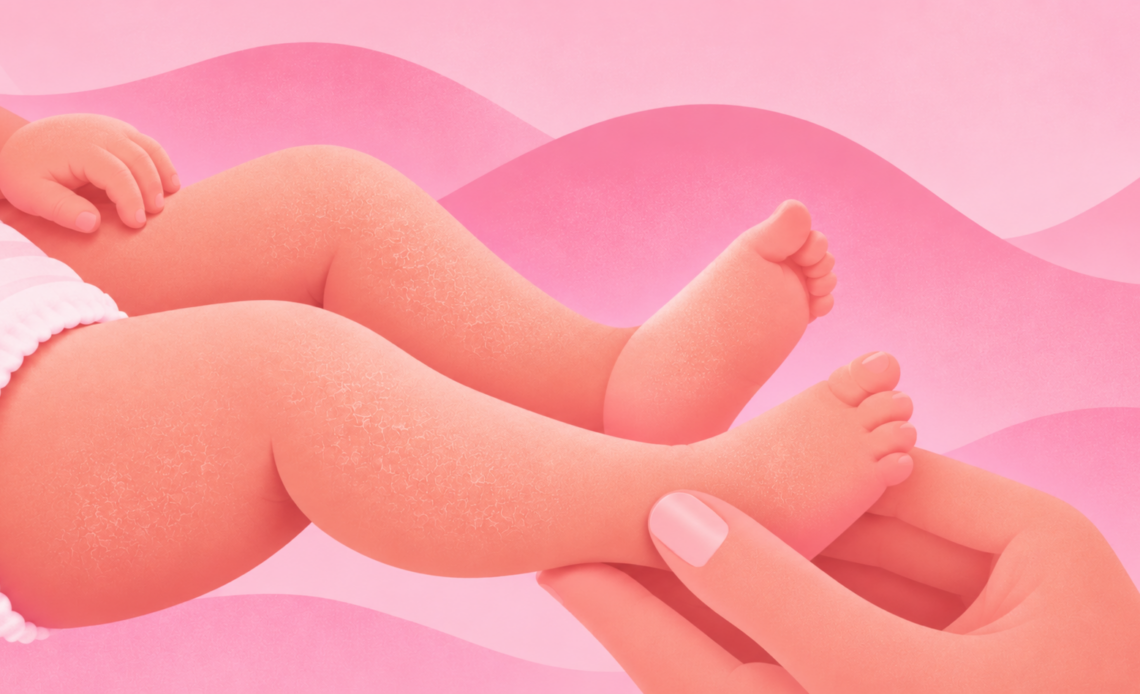
What it looks like: A white, waxy coating at birth, then dry, wrinkled or cracked skin on the hands, feet and ankles.
When it appears: At birth, dryness by day 2 or 3.
When it clears: Within a day or so, dryness over a few weeks.
What to do: Nothing. Vernix is a natural barrier your baby made in the womb, so don’t scrub it off. The dryness is skin that was soaked for nine months drying out in air.
For a simple everyday routine for your newborn’s delicate skin, read our baby skin care guide here.
Milia in Newborns
What it looks like: Tiny, firm, pearly white or yellowish dots on the nose, cheeks and chin.
When it appears: At birth or in the first few days.
When it clears: Usually within a few weeks, and almost always by 1 to 2 months.
What to do: Leave them alone. The common mistake is to treat milia in newborns like whiteheads. They aren’t pores full of oil but tiny pockets of trapped keratin, the protein in the skin’s outer layer. Squeezing can’t empty them, but it can break the skin.
Erythema Toxicum
What it looks like: Red blotches, often with a small yellow or white bump in the centre, like a cluster of insect bites. It spares the palms and soles.
When it appears: Typically day 2 or 3.
When it clears: Within a week or two. Spots move around, showing up in new places by evening.
What to do: Nothing, if your baby is otherwise well. The name is misleading, erythema toxicum isn’t a toxin, allergy or milk reaction. Doctors think it’s immune cells gathering in the skin as it meets bacteria for the first time. It affects anywhere from 1 in 5 to more than half of newborns.
Baby Acne
What it looks like: Small red or white bumps on the cheeks, nose and forehead. On brown skin they may look skin-coloured or darker.
When it appears: Usually at 2 to 4 weeks, up to 6 weeks.
When it clears: Within weeks to a few months, without scarring.
What to do: Wash with plain water and pat dry. Baby acne isn’t caused by dirt or by what you ate. It’s linked to your hormones still in your baby’s system plus the normal yeasts that settle on skin after birth, so scrubbing only irritates it. If it’s still strong at 3 months, mention it to your paediatrician.
Heat Rash in Babies (Prickly Heat)
What it looks like: Tiny bumps or clear pinhead blisters on the neck, chest, back and armpits. Red on lighter skin, on brown skin it may just feel bumpy.
When it appears: Within hours of overheating.
When it clears: Usually a day or two after cooling down.
What to do: Cool the baby. Narrow sweat ducts block when your baby overheats, so sweat leaks into the surrounding skin and raises bumps. Heat rash in babies is very common in Indian summers and monsoons, often because of the belief that newborns always need extra layers. In a warm room, one light cotton layer is often enough. Feel the back of the neck: sweaty and hot means too warm.
Red skin in the neck folds or armpits isn’t always heat rash, it could be chafing. Here’s how to spot and prevent chafing.
Cradle Cap
What it looks like: Yellowish, greasy, scaly patches on the scalp, sometimes the eyebrows.
When it appears: In the first weeks to couple of months.
When it clears: On its own, usually over a few months.
What to do: Don’t pick the scales. Cradle cap isn’t dirt. Scalp oil glands make extra oil that glues dead skin cells into flakes instead of letting them shed. See your doctor if it spreads, looks sore or weeps.
Mongolian Spots
What it looks like: Flat blue-grey patches, usually on the lower back and buttocks. Unlike bruises, they don’t change colour over days.
When it appears: At birth or in the first few weeks.
When it clears: Most fade over the first few years.
What to do: Nothing. Mongolian spots are pigment cells that settled deep in the skin, and deep pigment looks blue, the same reason veins do. They’re very common in Indian babies. Ask your doctor to note them in your baby’s health record, so no one later mistakes them for bruises.
Stork Bites (Salmon Patches)
What it looks like: Flat pink patches on the back of the neck, eyelids or between the eyebrows, darker when your baby cries.
When it appears: At birth.
When it clears: Face patches usually within a year or two; neck patches often stay, hidden by hair.
What to do: Nothing. A stork bite birthmark is a cluster of widened blood vessels, which is why it flushes when blood flow increases.
Blotchy Skin and Bluish Hands and Feet
What it looks like: A lacy, marbled pattern on the body and legs, and bluish hands and feet.
When it appears: In the first days, especially when your baby is cool.
When it clears: Bluish hands and feet settle within days, mottling can come and go for weeks.
What to do: Warm your baby slightly. When cool, an immature circulation sends warm blood to the brain, heart and lungs first, leaving hands and feet with less. Blue hands and feet are normal. Blue lips, tongue or face are an emergency.
Newborn Jaundice: When Yellow Skin Needs Attention
Jaundice is yellowing of the skin and the whites of the eyes. Your baby’s spare red blood cells are breaking down and releasing a yellow pigment called bilirubin, and a newborn’s liver takes days to clear it, so it builds up in the skin.
Because that build-up takes time, typical jaundice appears after the first 24 hours, is most noticeable around day 3 and usually goes in about 2 weeks. Yellowing in the first 24 hours means bilirubin is rising faster than normal, for example from a blood group difference or an infection, so it needs urgent review.
- Check in daylight and press gently on the nose tip to see if the skin looks yellow as it pales.
- On darker skin, look at the whites of the eyes, the gums and the palms.
- Let your doctor or nurse check any jaundice, because only a meter or blood test shows how high it is.
- Seek advice if it spreads, lasts beyond about 2 weeks, if your baby is very sleepy or feeding poorly, or if their poo is pale or chalky.
Many families put jaundiced babies in morning sunlight. The American Academy of Pediatrics advises against this, because you can’t give enough safely without risking sunburn or overheating.
Skin Changes Worth Getting Checked
These aren’t emergencies, but unlike the newborn skin conditions above, they need a paediatrician’s opinion within a few days. Don’t try to diagnose them yourself.
- Dry, itchy, red patches that persist: On brown skin they may look darker, grey or purple. Ordinary dryness improves over weeks. Patches that stay or make your baby rub can mean the skin isn’t holding moisture, which may be eczema.
- A birthmark that grows quickly, or sits near the eyes, nose, lips or diaper area: Stork bites and Mongolian spots don’t grow. A raised mark that enlarges is made of fast-growing blood vessels. Most are harmless, but near the face they can affect vision or feeding, and early checks are important because treatment works best during growth.
- Spots with pus or fluid-filled blisters: A newborn’s immune system can’t contain infection well, so spreading or crusting spots need checking.
- Broken skin that turns warm and red: Spreading redness and warmth suggest bacteria have got into deeper skin.
- Redness around the belly button: A little stickiness at the cord stump is normal. Spreading redness, swelling, smell or discharge can mean infection and needs checking the same day.
Urgent Warning Signs: Get Medical Help Immediately
Go to the nearest emergency department if you notice any of these:
- A rash that doesn’t fade when pressed: Most rashes fade because pressure pushes blood out of widened vessels. A rash that stays may mean blood has leaked into the skin, which can signal sepsis or meningitis. If you’ve already seen a rash that isn’t fading, don’t delay getting medical help.
- Blue or grey colour around the lips: This means not enough oxygen is reaching the blood.
- A temperature of 38°C (100.4°F) or above in a baby under 3 months: At this age, fever is far more likely to mean serious infection.
- Jaundice in the first 24 hours.
- A floppy, unusually sleepy or non-feeding baby: With or without any newborn rash.
- No wet diaper for 8 hours: A sign of dehydration or serious illness.
What to Do While You Wait
- Check your baby before the spot: Note feeding, alertness, wet diapers and armpit temperature. Any urgent sign means stop and get help.
- Don’t squeeze, scrub or pick: Newborn skin breaks easily, and broken skin lets bacteria turn a harmless spot into an infected one.
- Skip creams, oils and home remedies until a doctor advises: Newborn skin absorbs and reacts more easily, oils trap sweat, and any coating hides what the doctor needs to see. Wondering whether your baby needs oiling at all? We separate the myths from the facts here.
- Keep your baby cool: Dress them in loose cotton with good airflow. Overheating makes most rashes look worse.
- Take clear daylight photos: Many rashes come and go, so photos show the doctor what they’d otherwise miss.
Key Takeaways
It’s natural to judge your baby’s health by their skin, because skin is what you can see. In the first weeks, though, most newborn skin conditions are the skin adjusting. So the answer to when to worry about baby rash symptoms is usually found by looking at your baby, not the rash.
- Most changes are normal and clear on their own.
- Know the common ones: milia, erythema toxicum, baby acne, heat rash, cradle cap, Mongolian spots and stork bites.
- Get persistent or changing marks checked by a paediatrician.
- Know the urgent signs: a non-fading rash, blue lips, fever under 3 months, day-one jaundice, a floppy baby, no wet diapers.
- Trust your instincts: if something feels wrong, get it checked.
FAQs
Will my baby’s skin colour change in the first few months?
Usually, yes. Early redness fades as circulation settles, and skin tone often deepens gradually as pigment cells become more active. Many babies are born lighter than their eventual tone.
Can I use home remedies like besan or turmeric on my newborn’s skin?
Ask your paediatrician first. These traditions come from care, but a newborn’s skin barrier is still forming, so pastes can irritate it or cause tiny breaks. Turmeric also stains, which can hide jaundice or a rash.
How do I check for rashes or jaundice on darker skin?
Use daylight. For jaundice, check the whites of the eyes, gums and palms. For rashes, feel as well as look, since bumps and warmth show up by touch, and redness may appear brown, purple or grey.
Should I take photos of my baby’s rash to show the doctor?
Yes, in daylight without flash. But don’t rely on photos for jaundice, because phone cameras adjust colour automatically.
When does newborn skin usually settle down?
Most temporary newborn skin conditions clear within 4 to 6 weeks. Baby acne can last up to 3 months, cradle cap a few months, and birthmarks like Mongolian spots fade over years.
Disclaimer
The content of this article is provided for general informational and educational purposes only and is not intended to constitute medical advice, diagnosis, or treatment. The information shared is of a general nature and may not be appropriate for all individuals or specific circumstances. Readers should not disregard, delay, or substitute professional medical advice based on the information contained herein.
If your baby experiences any symptoms, or if you notice anything unusual or have concerns relating to their health or overall wellbeing, you should consult a qualified healthcare professional. While every effort is made to ensure the information shared is accurate and up-to-date, Nua makes no representations or warranties, express or implied, regarding the accuracy, completeness, or suitability of the information provided and disclaims all liability arising from reliance on this content to the fullest extent permitted by law.