
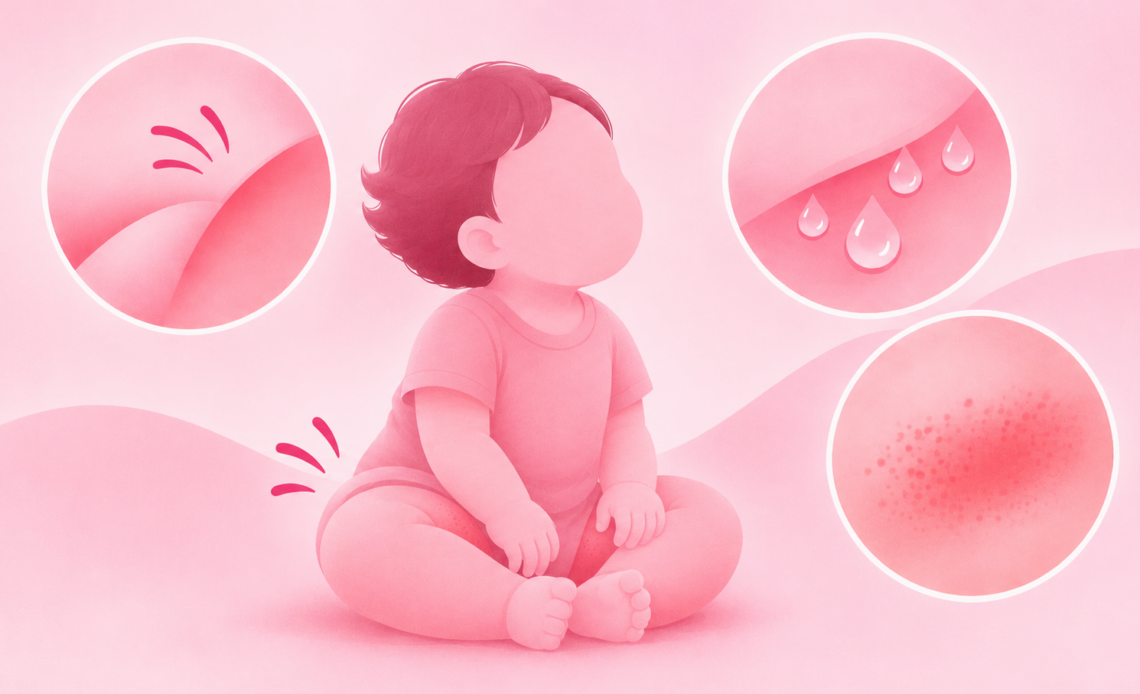
What you will learn about managing redness between your baby’s thighs in this blog:
- Intertrigo, or skin-fold irritation, commonly causes redness between your baby’s thighs and is triggered by skin friction, trapped moisture, and heat.
- Tight diapers, frequent kicking, infrequent diaper changes, and humid weather can increase the risk of chafing and thigh rashes.
- Diaper rash, skin-fold irritation, bacterial infections, and yeast infections can affect the inner thighs and groin, but each may have different symptoms and triggers.
- Gentle cleaning, thorough drying, diaper-free time, and barrier creams can help reduce friction, prevent moisture buildup, and soothe mild irritation.
- Yeast and bacterial infections may require antifungal or antibiotic treatment prescribed by a paediatrician, as home care alone may not clear them.
If you’ve noticed a sudden flare-up of redness between your baby’s thighs during a routine diaper change, take a gentle breath. It is completely normal, and you haven’t done anything wrong. A baby’s skin barrier is delicate, and those adorable, chubby thigh rolls can easily trap moisture, sweat, or friction. Whether it’s simple chafing from active little kicks, diaper rash, heat rash, or a quick-growing yeast infection, irritated skin in the leg creases is one of the most common hurdles in early parenting.
The good news is that most mild irritation can be managed with the right care at home. However, before reaching for a cream or trying home remedies, it’s important to know what’s causing the redness. After all, not every rash needs the same treatment. So, let’s look at why babies develop redness between their thighs, how you can soothe irritated skin, and when it’s time to check with your paediatrician.
What Causes Redness Between Your Baby’s Thighs
Redness between your baby’s thighs is often caused by a common condition called intertrigo. It happens when delicate skin folds rub together, trapping heat and moisture, which leads to irritation and soreness. Research shows that intertrigo affects around 7-35% of infants, particularly around 9 to 12 months when they get more active. Learn more about how to prevent chafing in your baby’s skin folds here.
But why are babies particularly prone to irritation between the thighs? Let’s take a closer look
- Delicate skin barrier: A baby’s outer layer of skin is significantly thinner than an adult’s, meaning it breaks down and irritates much faster from minor rubbing.
- Friction and trapped moisture: Babies often have chubby thighs with deep skin folds where sweat, urine, and bathwater can get trapped. These folds are also naturally warmer than the surrounding skin. When heat and moisture build up, the skin becomes soft and more vulnerable to friction, irritation, and rashes.
- Diaper and seam rubbing: Tight diaper leg elastics or rough seams can repeatedly rub against your baby’s inner thighs. Babies also spend much of their early months with their legs bent, which keeps the thigh folds pressed together and reduces airflow. This can increase friction and the chances of intertrigo in babies.
- Secondary infection: Left untreated, warm and damp folds can attract Candida yeast or bacteria, turning a simple diaper rash in skin folds into a brighter, more persistent rash with tiny scattered spots outside the main red line. One study reported a 77.4% rate of candidal infection among diaper dermatitis cases.
What Can Increase the Risk of Rashes Between Your Baby’s Legs?
The risk of rashes between a baby’s legs increases with anything that causes prolonged contact with moisture, skin friction, and excess movement.
- Infrequent diaper changes: Leaving a wet or soiled diaper on too long lets moisture sit right in those delicate creases. Over time, urine and stool break down the skin’s natural barrier, turning mild dampness into a sore, red rash.
- Enthusiastic kicking: Those adorable, squishy baby thighs and energetic leg kicks are pure joy, but continuous rubbing creates non-stop friction. When chubby leg folds rub against each other or stiff diaper edges with every kick, sensitive skin gets chafed fast. As your baby starts crawling and walking, the rubbing can get worse. To keep their skin comfortable through every milestone, read this guide.
- Tight diaper: A diaper that’s a bit too tight restricts airflow and presses elastic leg cuffs right into groin creases. Every time your baby wiggles or kicks, those tight edges rub against raw skin. So, make sure you’re using the correct diaper size for your baby’s current weight and build. Learn more about getting the diaper size right here.
- Not drying after a bath: Trapped water inside deep thigh rolls and groin folds softens the skin, making it prone to chafing and creating an environment where yeast and bacteria grow easily. Studies suggest that Candida albicans can colonise moist skin folds or areas with a damaged skin barrier within 72 hours, increasing the risk of a yeast infection.
- Summers and humidity: Hot weather increases sweating, and diapers trap that extra moisture against the skin, raising the risk of both irritant rashes and heat rash.
- Restricted leg movement in car seats or swaddles: When your baby’s legs stay pressed together for extended periods, less air reaches the inner thigh folds. This can trap heat and sweat, increasing moisture and the risk of irritation.
How Do You Know What’s Causing Rashes Between Your Baby’s Legs?
Rashes between a baby’s legs and in the groin area are most commonly identified by looking at where the rash is located, what it looks like, and what triggered it.
| Usual skin-fold redness | Diaper-related redness | Bacterial infection | Yeast infection | |
| Where | Inside the creases, where thighs touch | Along the leg opening and waistband | Around the diaper or groin region | Deep in the folds, with spots around it |
| What it looks like | Red on both sides of the crease, can look shiny or damp | A red line or band that matches the elastic | Yellow crusting, oozing/weeping fluid, or pus-filled pimples | Bright red patch with small spots or pimples nearby |
| Usual trigger | Skin on skin, sweat, damp creases | Rubbing from the diaper edge | Bacteria like staph or strep entering tender or chafed skin. | Warm, damp skin that stays moist for long |
How to Prevent and Care For Rashes Between Your Baby’s Legs?
Preventing and caring for rashes between a baby’s legs relies on keeping the skin clean, dry, and protected from moisture and friction.
Step 1: Clean the Diaper Area Promptly and Gently
- Switch wet or soiled diapers right away, at least 6 to 8 times a day or sooner after a bowel movement.
- Use lukewarm water and a soft washcloth or cotton pad to clean between the thigh folds.
- Avoid scrubbing or rubbing the red patches (or skin in general), as this can make the irritation worse.
Step 2: Thoroughly Dry Between Skin Folds
- Pat the area dry using a clean, soft towel, ensuring deep thigh creases are moisture-free.
- Allow generous diaper-free air time (read more about air-drying benefits here) before putting on a fresh diaper.
Step 3: Apply a Suitable Barrier Cream
- Apply a thin layer of your baby’s usual barrier cream, such as one containing zinc oxide or petroleum jelly. For tips on how much to use and when to reapply, see our guide to applying diaper rash cream.
- If the rash looks unusual, severe or doesn’t improve, check with your paediatrician before trying medicated creams. For a more hands-on guide on caring for severe rashes, check out our piece here.
Step 4: Check the Fit of the Diaper and Clothing
- Make sure the diaper isn’t too tight around your baby’s thighs. Look for deep elastic marks, rubbing, or redness around the leg openings.
- Try a different size or fit if the diaper keeps pressing against the affected area.
- If you use cloth diapers, consider switching temporarily to highly absorbent disposable diapers while a rash heals.
- Dress your baby in loose-fitting, breathable cotton clothing to prevent sweat and moisture buildup.
How to Treat an Existing Rash Between Your Baby’s Legs
The treatment for a rash between your baby’s thighs depends on what’s causing it. While mild irritation may settle with routine skincare (steps 1 to 4 mentioned above), infections often need specific medication.
- For yeast infections: A paediatrician may prescribe an antifungal cream to treat the Candida infection. Regular barrier creams alone will not clear it. Not sure if it’s yeast? Our guide explains the signs to look for.
- For bacterial infections: If the rash has yellow crusting, pus, or oozing, your baby may need an antibiotic cream or oral antibiotics, depending on the severity.
- For persistent inflammation: If the rash remains red, sore, or uncomfortable despite routine care, your paediatrician may recommend a suitable medicated cream after examining the affected area.
Note: Consult a pediatrician if the rash does not improve after 2 to 3 days of home care, shows signs of an infection or is accompanied by a fever.
Thigh Five to Happy, Healthy Skin!
Finding redness in those cute little thigh folds can definitely feel worrying, but it’s completely normal and happens to almost every baby at some point. Between warm skin, extra moisture, and sweet chubby legs rubbing together, irritation just sneaks in easily. The comforting news is that gentle care at home, like prompt diaper changes, keeping the skin dry, and applying a soothing barrier cream, is usually all it takes to soothe their skin.
That said, every rash is unique. If you ever suspect a yeast or bacterial infection, please trust your instincts and reach out to your pediatrician. They’ll help you figure out the exact right treatment to get your little one comfortable again in no time.
FAQs
1. Why does my baby have redness between their thighs?
It is usually down to everyday friction, trapped moisture from sweat or diapers, or skin rubbing together. Sometimes, that warm environment can also lead to a quick yeast or bacterial rash.
2. How do I treat a rash between my baby’s thighs?
Stick to gentle cleanings, pat the area completely dry, give them plenty of diaper-free air time, and apply a soothing barrier cream. If it does not improve or looks extra raw, reach out to your pediatrician.
3. Is redness between a baby’s thighs a sign of diaper rash?
Yes, it can be. Snug elastic leg bands can chafe sensitive inner thighs, while trapped wetness inside diaper folds easily triggers irritation.
4. Can a yeast infection cause a rash between a baby’s legs?
Yes. Yeast loves warm, snug folds. It often appears as a bright red patch with little red dot “satellites” nearby, and typically needs an antifungal cream from your doctor to clear up.
5. What are the best ways to prevent thigh rashes?
Change diapers regularly, keep thigh creases clean and dry, ensure diapers fit comfortably without pinching, and apply barrier cream consistently.
6. When should I see a doctor for my baby’s thigh rash?
Consult your pediatrician if the rash spreads, oozes, forms pimples, shows no improvement after 2–3 days of home care, or if your baby develops a fever.
Disclaimer
The content of this article is provided for general informational and educational purposes only and is not intended to constitute medical advice, diagnosis, or treatment. The information shared is of a general nature and may not be appropriate for all individuals or specific circumstances. Readers should not disregard, delay, or substitute professional medical advice based on the information contained herein.
If your baby experiences any symptoms, or if you notice anything unusual or have concerns relating to their health or overall wellbeing, you should consult a qualified healthcare professional. While every effort is made to ensure the information shared is accurate and up-to-date, Nua makes no representations or warranties, express or implied, regarding the accuracy, completeness, or suitability of the information provided and disclaims all liability arising from reliance on this content to the fullest extent permitted by law.