What you will learn about period cramps vs. muscle pain in this blog:
- Period cramps usually feel deep, heavy, or wave-like in the lower abdomen and may spread to the lower back, hips, or thighs.
- Muscle cramps are usually sharp, sudden, and localized in one area such as the calf, foot, hamstring, or back.
- Period cramps often happen right before or during menstruation because the uterus contracts to shed its lining.
- Muscle cramps are more commonly linked to dehydration, fatigue, overuse, posture, or electrolyte imbalance.
- If stretching or massage gives quick relief, the pain is more likely muscular but if the pain comes in waves and matches your monthly cycle, it is more likely period-related.
- Severe or worsening cramps that disrupt daily life should be discussed with a healthcare professional.
You know that moment when your lower belly tightens, your back feels like it’s in a low-grade wrestling match, and you think, “Am I sore from yesterday’s workout or is my uterus prepping for my period?” If you’ve ever had to pause and actually analyse your own pain like a detective, you’re not alone. Period cramps and muscle cramps can overlap in how they feel at first, especially when they both show up as lower abdominal pain. But they’re not the same, and knowing the difference can help you respond to your body instead of just powering through and hoping for the best.
Let’s talk about what’s actually happening inside your body, why these cramps show up the way they do, and how to tell who the real culprit is.
What do period cramps actually feel like?
Period cramps come from your uterus contracting to shed its lining, driven by chemicals called prostaglandins that also ramp up inflammation (more on that here) and amplify pain signals. They’re officially called dysmenorrhea, which sounds intense because they kind of are.
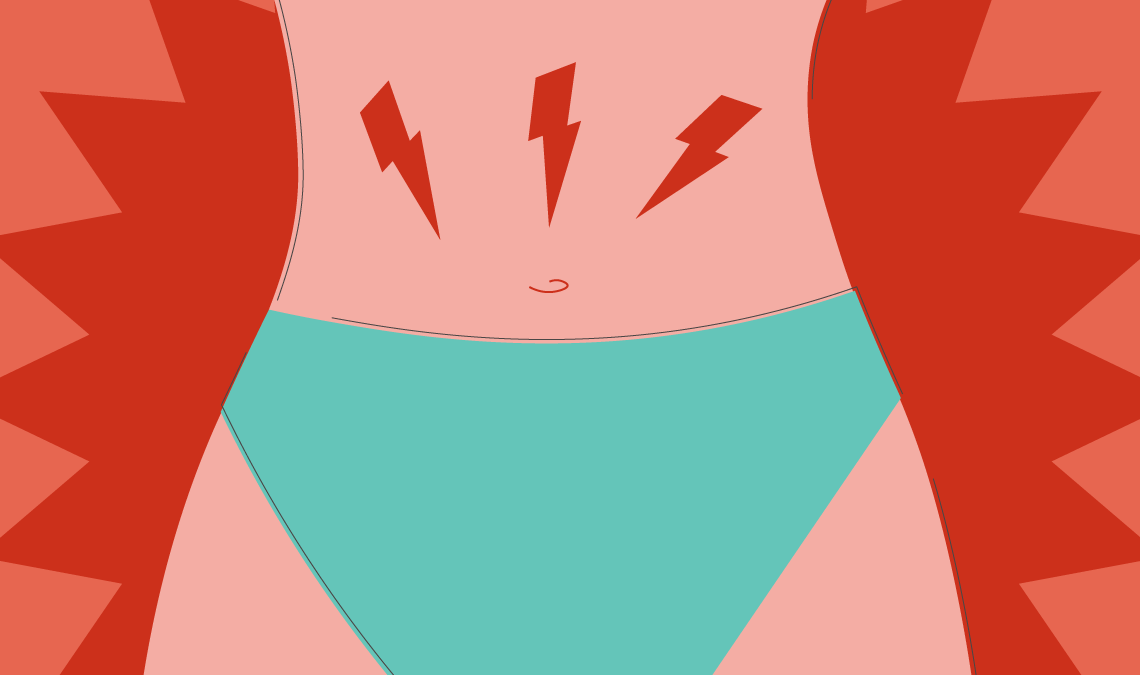
When your uterus squeezes, it’s not a gentle hug. It’s more like a firm, repetitive tightening that can radiate into your lower back, hips, thighs, and sometimes even your stomach. That’s why menstrual cramps can feel deep, heavy, and kind of internal, like the pain is coming from somewhere you can’t quite point to on the outside. The common period cramps symptoms include a dull, wave-like ache in the lower belly, sometimes paired with bloating, nausea, or fatigue.
Blog continues after the ad.

According to research, up to 90% of women experience period cramps. So, it’s pretty common. But of these women, studies show up to 15% with dysmenorrhea find the discomfort so disruptive that they stay home from school or work to recover.
When the wave hits mid-meeting, steady hands-free heat is what actually helps. Nua’s Cramp Care Heat Patches were built for exactly this moment.
What do muscle cramps feel like when they’re not related to your period?
Muscle cramps are your body’s version of a system glitch. A cramp is when a muscle suddenly tightens and refuses to relax, usually because of fatigue, dehydration, electrolyte imbalances, or just being overworked. When that muscle locks up, the nerve endings in that area start firing, and you feel that unmistakable knotting, grabbing pain. These muscle cramps symptoms tend to stay focused in one muscle group rather than spreading across the pelvis or abdomen.
This kind of cramp is usually more localized. Calves, hamstrings, feet, sometimes lower back if you’ve been sitting awkwardly or lifting something heavy. It feels close to the surface compared to period cramps, and you can often trace it to a specific spot with your fingers.
Muscle cramps also tend to feel like a sudden spike, sharp, tight, and very present in the moment. Once the muscle relaxes, the pain usually fades into soreness rather than continuing in pulses.
Both are muscle-related, but they’re happening in totally different neighborhoods of your body and for different reasons. This is exactly why understanding the difference between period cramps and muscle cramps matters when you’re trying to figure out what your body needs.
How do you tell the difference between period cramps and muscle cramps?
The three biggest clues are location, timing, and the quality of the sensation. Here’s how to read each one.
Why Location Matters
- Period cramps usually center in the lower abdomen, right above the pubic bone, and often spread into the lower back, hips, and upper thighs. The nerves that serve the uterus overlap with nerves in those surrounding areas, so your brain sometimes reads the pain as coming from multiple places at once. This is why leg cramps during period pain can sometimes feel connected, even if the uterus is the source.
- Muscle cramps are more likely to stay put. If your calf cramps, it’s your calf. If your lower back muscle is tight, it’s usually one side or one specific band of muscle you can point to. You might even feel the muscle harden under your hand.
- If the pain feels deep, central, and kind of wraps around your pelvis, that leans uterine. If it feels like a knot you could almost massage out, that leans muscular. This is a useful way to think about lower abdominal cramps vs. muscle cramps when you’re trying to decode what’s happening.
How Timing Can Be A Clue
- Period cramps usually show up right before bleeding starts or within the first couple of days of your period, which is when prostaglandin levels peak. Cramps before period onset are common too, often starting a day or two early. For many people, cramps ease as the period goes on and the uterine lining has mostly shed, though some also notice cramps after period ends, usually lighter and shorter-lived.
- Muscle cramps don’t care about your cycle. They care about your activity, hydration, posture, and stress on the muscle. If you went for a long walk, did leg day, slept twisted like a pretzel, or forgot to drink water all day, a muscle cramp can pop up whenever it feels like it.
- So if the pain shows up every month around the same time and politely leaves when your period is over, that’s a strong pattern pointing toward period cramps.
Even the Sensation Itself Helps
- Period cramps often feel like pressure, squeezing, heaviness, or a dull ache that comes and goes in waves. There’s often a sense of fullness or pulling that feels like it’s happening behind the scenes, not right under your skin. This wave-like pattern is one of the key cramps causes tied to prostaglandins and uterine contractions.
- Muscle cramps feel more like a sudden grab. Tight, sharp, sometimes intense enough to make you stop what you’re doing. You might feel the muscle visibly tense or twitch, and you can usually point to the exact spot that’s upset. When it releases, stretching or massage tends to help pretty quickly.
- Heat can give you relief in both cases, but doesn’t really tell you which one it is. With period cramps, warmth tends to soften the overall ache and reduce that deep, heavy pressure, but the pain can still ebb and flow in waves. With muscle cramps, heat often makes the area feel looser, and once you stretch or massage, the pain can drop off fast.
Nua’s Cramp Relief Roll-On cools and soothes on contact, so when the waves hit while you’re commuting, working, or just not in the mood to lie down, you’ve got something that actually fits your life.
Why do some periods hurt more than others?
If you’ve ever thought, “Last month was fine, why is this month attacking me”, you’re not imagining things. Prostaglandin levels can vary from cycle to cycle. Higher levels mean stronger uterine contractions and more inflammation, which means more intense period cramps.
Hormonal changes, sleep, nutrition, stress, and even illness can all influence how much prostaglandin your body releases, which is why period cramps aren’t always predictable in severity, even if they’re predictable in timing.
Muscle cramps are more about what you’ve been doing with your body recently. Long flights, new workouts, dehydration, low magnesium or potassium, and awkward sleeping positions can all turn into next-day muscle complaints. Different causes, different chaos.
Can you have period cramps and muscle cramps at the same time?
Yes, you can absolutely have both at the same time. During your period, posture changes, bloating, and fatigue can shift how you move and sit, which can strain your lower back and hips. Meanwhile, your uterus is doing its monthly thing. So you might have uterine contractions creating deep pelvic pain alongside surrounding muscles tightening in response. This is a real form of muscle cramps during the menstrual cycle that can feel like a cramp during period coming from more than one place.
That combo can feel extra confusing because the pain layers on itself. In that case, heat, gentle movement, and hydration help both systems calm down.
What should you do once you know which type of cramp it is?
Understanding the source of your pain isn’t about winning a diagnosis game. It’s about choosing support that actually helps.
For period cramps:
- Apply heat directly to the lower abdomen: Heat relaxes uterine muscles and improves blood flow. Nua’s Cramp Care Heat Patches give you steady, hands-free warmth right where your uterus is contracting, without having to reheat a hot water bottle every 20 minutes.
- Move gently: Walking or light stretching can reduce prostaglandin buildup and ease tension in the surrounding muscles.
- Stay hydrated: Helps your muscles and can reduce bloating-related pressure.
- Use anti-inflammatory support: Whether that’s through food or medication, it targets the prostaglandin side of the equation.
- Keep a roll-on within reach: For quick, on-the-go comfort, especially when you’re at work or commuting, Nua’s Cramp Relief Roll-On helps calm abdominal cramps or lower-back discomfort with cooling, soothing ingredients you can reapply whenever the waves hit.
For muscle cramps:
- Stretch the affected muscle: This is the most direct way to get relief.
- Hydrate and check your electrolytes: Low magnesium and potassium are common culprits.
- Apply heat before stretching: Nua’s Cramp Relief Roll-On can help here too, to warm the area and make stretching more effective.
- Rest the muscle: If it’s overworked, pushing through just leads to repeat episodes.
If the pain responds quickly to stretching and massage, it’s probably muscular. But if it comes in waves, feels deep, and lines up with your cycle, your uterus is the main character in this story.
If you’ve been pushing through the pain for a while, see what actually targeted period cramps relief feels like here.
When do cramps deserve a closer look?
Normal cramps are one thing, but pain that consistently interferes with your life is not something you have to just accept.
If your period cramps are severe, last many days, don’t improve with typical remedies, or are getting worse over time, it’s worth talking to a healthcare provider. Conditions like endometriosis, fibroids, or pelvic inflammatory disease can cause cramps that are much more intense than average cycle-related discomfort.
Muscle cramps that are frequent, severe, or happening without clear triggers can also point to nutrient deficiencies, nerve issues, or circulation problems.
Your body isn’t supposed to feel like it’s in constant battle mode.
How do you start learning your body’s language around cramps?
One of the most powerful things you can do is start noticing patterns instead of treating every ache like an isolated event. Your body is incredibly consistent in how it communicates. We’re just rarely taught how to listen. Ask yourself:
- Does this pain show up with bleeding or after workouts?
- Does it pulse or does it grab?
- Does it spread or stay focused?
- Does stretching help, or does it barely make a dent?
These little details tell you a lot. Understanding period cramps vs. muscle cramps isn’t about becoming your own doctor. It’s about being able to say, “Okay, I know what you’re trying to tell me, and I’ve got you.” And honestly, that kind of self-trust changes everything.
The Bottom Line
Period cramps and muscle cramps can feel similar but they’re different in origin, sensation, and timing. Period cramps are uterine, wave-like, and tied to your cycle, driven by prostaglandins that cause inflammation and strong contractions. Muscle cramps are localized, sudden, and linked to physical activity or dehydration. The key to telling them apart is paying attention to where the pain lives, when it shows up, and how it behaves. Once you know what you’re dealing with, you can respond in a way that actually helps. That could be heat and rest for menstrual cramps, stretching and hydration for muscle cramps, or a combination of both when they overlap. Your body isn’t being dramatic. It’s communicating, and now you have the tools to listen.
Disclaimer:
The content of this article is provided for general informational and educational purposes only and is not intended to constitute medical advice, diagnosis, or treatment. The information shared is of a general nature and may not be appropriate for all individuals or specific circumstances. Readers should not disregard, delay, or substitute professional medical advice based on the information contained herein.
If you experience any symptoms, notice anything unusual, or have concerns relating to your health or overall wellbeing, you should consult a qualified healthcare professional. While every effort is made to ensure the information shared is accurate and up-to-date, Nua makes no representations or warranties, express or implied, regarding the accuracy, completeness, or suitability of the information provided and disclaims all liability arising from reliance on this content to the fullest extent permitted by law.