

Thin pads are often the better choice. They offer the same protection as thick ones, but with way more comfort and less bulk. For decades, many of us believed that thicker = better. Thicker pads looked more secure, more capable, and honestly, just felt like the “safer” option, especially on heavy flow days.
But the truth is, modern pads are changing the game. With advanced materials and smart design, thin pads today offer powerful protection, minus the extra weight, sweat, or discomfort!
Don’t believe this? Well, let’s go through what really matters when choosing a pad, and why millions of women are now choosing smart ultra-thin pads over bulky ones.
First things first: What’s the difference between thick and thin pads?
The difference goes deeper than size. Thick pads are usually the older, more traditional kind. They’re heavier, with extra layers of fluff that were once necessary for absorbency.
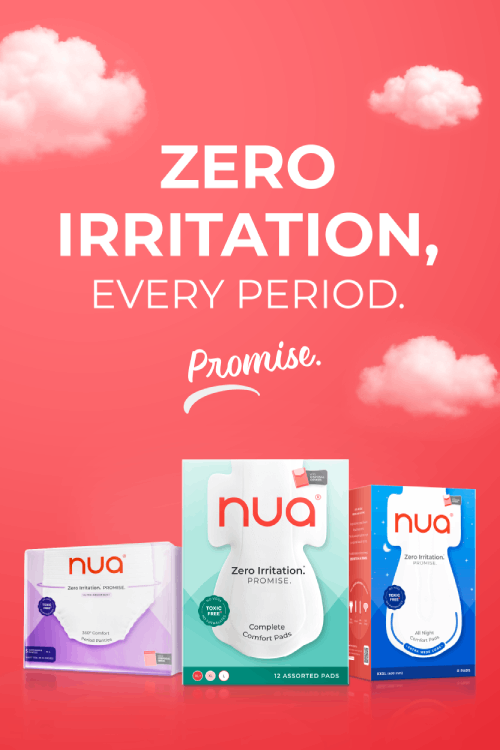
However, nowadays, research shows that pads (like Nua’s) use a smart 3-layer design.
- A super-soft top layer to give you that smooth, breathable, zero irritation feel.
- A distributive layer underneath that quickly pulls in the flow and spreads it out evenly.
- An absorbent core that traps blood by converting it into a gel without puffing up the pad.
So while thin pads might look slim, they’re anything but ineffective. They can absorb just as much as (and often more than) thick pads. Translation? You stay dry without the feeling of wearing a cushion. You just have to make sure you’re choosing something safe and reliable (more on that here).
So, thin pads are not just for light flow?
Nope. Not anymore.
It’s true that older thin pads weren’t very reliable during heavy flow days. But that’s changed. Today’s ultra-thin pads are far more advanced. Take Nua’s, for example. They’re super absorbent and perfectly capable of handling heavy flow, all while being super thin!
In fact, they have a 50% wider back and anti-stain wings for added protection. Trusted by over 10 lakh women, they’re proof that smart design beats bulk any day.
But then, what about thick pads?
If you still reach for thick pads because they feel more secure, especially at night or during a heavy flow, that’s completely okay. Sometimes, that extra fluff can give you a sense of reassurance, and we get it.
But trust us when we say that technology has come a long way. Thin pads for nighttime and heavy days are now a reality. The perfect example of it is Nua’s Ultra-Safe Night Pads. They use innovative features like:
- Honeycomb weave that quickly soaks up gushes and avoids wet spots.
- Hydrophobic leak guards, which are little barriers along the edges that help stop blood from leaking out of the sides.
- Liquid lock layer, which is a special layer inside the pad that quickly pulls in any fluid and prevents anything from seeping back.
So if you’re choosing thick pads only because they seem like the “safer” option, know that ultra-thin ones can now match (and even beat) that protection.
Does this mean thin pads are becoming the preferred choice?
Honestly, yes, and for a lottttt of good reasons:
You won’t feel like you’re on your period.
Thick pads can feel bulky and distracting, since you’re always aware of something foreign in your underwear. Thin pads, on the other hand, just do their job in the background. No discomfort, no constant adjusting.
They’re gentler on your skin.
No plasticky textures or heat-trapping fluff here. Thin pads are often more breathable and less likely to cause irritation, rashes, or that annoying itchy feeling.
They don’t mess with your outfit.
Leggings? Fitted trousers? A bodycon dress? Go for it. Thin pads stay discreet under clothes, so you don’t have to plan your wardrobe around your period.
Less weight, less waste, less hassle.
They’re easier to carry and lighter on the go. The Nua ones even come with individual disposal covers, so tossing them out is no longer a struggle.
They’re made for real life.
Hot weather, long work days, surprise workouts, or even just Netflix marathons, thin pads stay in place and you stay comfortable. No matter what your day looks like.
To summarize, thin doesn’t mean less.
If you’ve been sticking to thick pads only out of habit or fear of leaks, it might be time to rethink this strategy. Because ultra-thin doesn’t mean less absorbent. It doesn’t mean you have to change more often. And it definitely doesn’t mean less protection.
With the right materials, technology, and design, thin pads can outperform thicker ones. And that’s exactly what Nua pads do with 4x the comfort and a zero irritation promise. Just remember, protection doesn’t have to come with bulk!
But we’d love to know what you think. Are you team thick or team thin? Or maybe a mix of both? Tell us in the comments below!