What you will learn about night pads in this guide:
What Are Day Pads and Night Pads?
A day pad is designed for active hours. It’s slim, discreet, and made to move with you whether you’re commuting, working, or running errands. You can change it every few hours, and its size is suited for the upright, moving body.
A night pad is built for sleep. It’s longer, wider at the back, and has a higher absorption capacity because your body is lying flat and blood tends to pool differently. You’re wearing it for 6–8 uninterrupted hours, often without waking up to adjust or change. That’s a very different kind of demand.
The key purpose difference is day pads keep you comfortable while you’re awake and aware. Night pads keep you protected while you’re completely off-guard.
Blog continues after the ad.

Day Pads vs Night Pads: What’s the Real Difference?
Let’s break it down properly. The difference between day and night pads goes beyond just size.
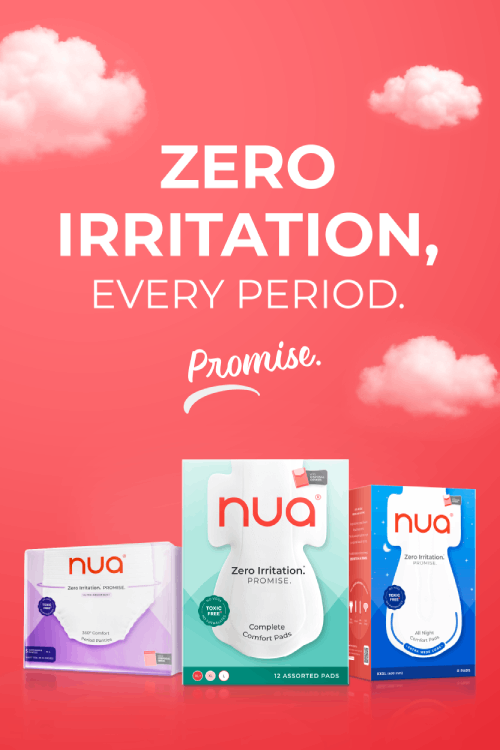
Night pads are longer, a lot longer. Nua’s Ultra-Safe Night Pad goes all the way to 400mm. That covers you from front to back even if you’re a ninja-level sleeper who tosses and turns. Day pads like Nua’s Complete Comfort Sanitary Pads are slimmer and available in Regular, Heavy, and Long sizes to match your flow throughout the day.
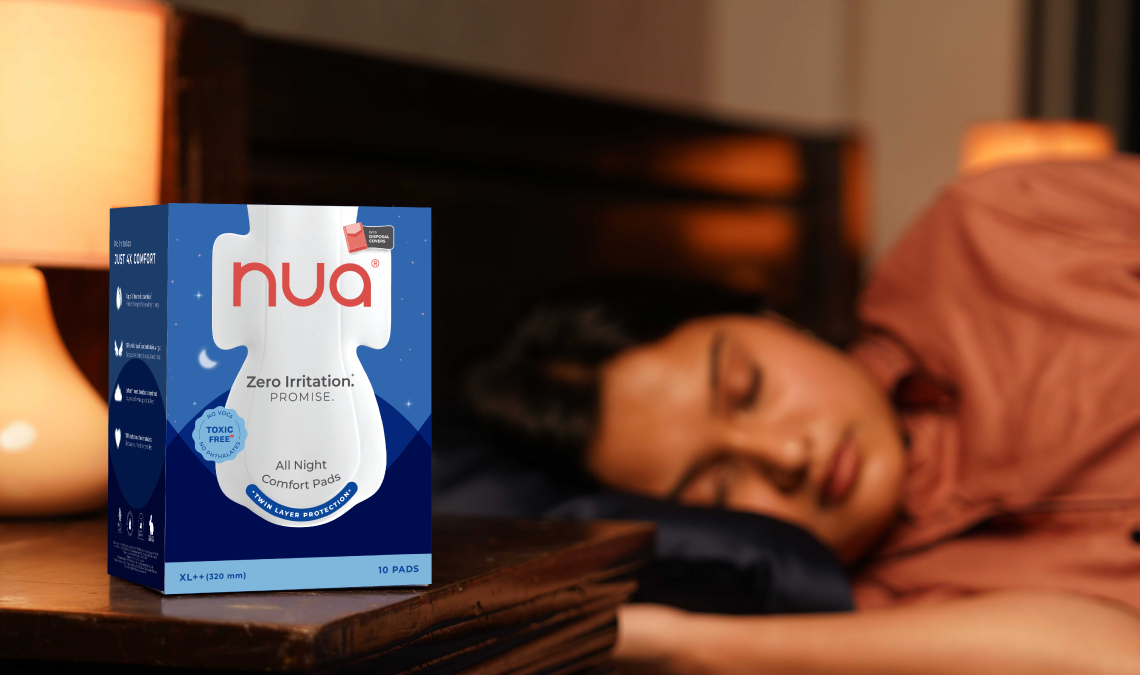
The absorbency gap is significant too. The Ultra-Safe Night Pad has a wider back, 50–60% more absorption capacity, and an elevated core that’s built to trap fluid. Day pads are absorbent but designed for shorter, more frequent changes.
| Feature | Day Pads | Night Pads |
| Length | Regular to Long (up to ~320mm) | Extra long (up to 400mm) |
| Back coverage | Standard | Wider back, front-to-back coverage |
| Absorbency | Moderate, suited for active hours | 50–60% more capacity, elevated core |
| Wing support | Anti-stain wings for daytime wear | Wider wings for nighttime security |
| Comfort layer | Feather-soft, rash-free top sheet | Feather-soft, designed for 6–8 hrs |
| Best for | Office, travel, gym, daily errands | Sleeping, heavy-flow nights |
| Thickness | Ultra-thin, discreet | Slightly thicker for extra absorbency |
| Wear duration | Changed every 4–6 hours | Designed for 6–8 hours overnight |
Your nights deserve better than leaks and restless sleep. Here’s what we built for the hours when you’re asleep.
How to Choose the Right Pad Size for Day vs Night Use
For daytime, match your pad size to your flow level. Light days call for a Regular, heavier days need a Heavy or Long. For the Indian routine, where work hours are long and travel is unpredictable, having a Heavy or Long day pad on hand means fewer mid-day changes and less anxiety about leaks.
For nighttime, go longer regardless of your flow. Even on lighter nights, a longer pad gives you the back coverage you need while lying down. If you have night pads for heavy flow, the extra absorbency in a proper overnight pad is non-negotiable. This is one of the simplest answers to how to choose the right sanitary pad for each part of your day.
Why Night Pads Are Better for Overnight Protection
When you lie down, gravity works differently. Blood doesn’t just flow downward and forward anymore. It shifts toward the back and sides, which is exactly why standard day pads fail at night. The back-leak problem is real, and it’s the main reason overnight pads vs day pads exist as separate products.
Beyond coverage, there’s the issue of duration. Night pads are engineered for 6–8 hours of continuous wear. Day pads are meant to be changed every 4–6 hours. Wearing a day pad overnight stretches it beyond what it was designed to handle.
Add tossing and turning to the mix, and a regular pad shifts, bunches, and leaves gaps. The Ultra-Safe Night Pad’s wider back and longer length account for exactly this. It’s why people who switch to a proper night pad often say they wish they’d done it sooner. Check out more on overnight pads with better back coverage to understand what makes the design work.
Are night pads better than regular pads for overnight use? Yes, without question. They’re not better in every context, but for sleep, they’re designed specifically for what your body actually needs.
When Should You Use Day Pads vs Night Pads?
Use day pads when:
- You’re heading to work, college, or running errands
- You’re at the gym or doing any physical activity
- It’s a lighter flow day and you can change every few hours
- You’re traveling and have access to restrooms regularly
Use night pads when:
- You’re going to sleep for 6 hours or more
- You have
- You know you won’t wake up to change your pad
- You’re dealing with
For a full breakdown of your overnight period protection options beyond just pads, it’s worth knowing what works for different flow levels.
Can You Use Night Pads During the Day?
Yes, but there’s a trade-off. Night pads are bulkier and longer, so they can feel a bit much during active daytime hours. That said, if you have a very heavy flow day, a long commute, or hours in a meeting where stepping away isn’t easy, using a night pad during the day is a completely valid choice.
The best pads for night use can double up as heavy-flow daytime protection when needed. Just know that they’re designed for lying flat, so the coverage might feel slightly different when you’re upright and moving around.
Can You Use Day Pads at Night?
You can, technically. On a very light flow night where leaking isn’t a real concern, a day pad might get you through. But for most people on most nights, it’s a gamble.
Day pads don’t have the back coverage needed for lying down. They’re not built for 7–8 hours of continuous wear. And if you’ve ever tried layering two day pads to compensate, we’ve all been there, but it’s uncomfortable, wasteful, and doesn’t actually solve the back-leak problem.
If you’re wondering how to prevent leaks at night during period, the simplest answer is to use a pad that was actually designed for the job. You can also read more about how to stop period leaks at night for a full list of tips beyond just pad choice.
How to Choose the Right Pad for Day and Night Comfort
Here’s a quick checklist for how to choose the right sanitary pad:
- Flow level: Match your pad to your flow. Light days need lighter pads; heavy nights need maximum absorbency.
- Pad length: 400mm+ for nights, Regular to Long for days based on activity and flow.
- Top sheet material: Look for breathable, feather-soft layers that won’t irritate or cause rashes with prolonged wear.
- Absorbency core: Night pads should have an elevated or enhanced core for fluid trapping. Day pads need solid performance for movement.
- Wings: Anti-stain wings for daytime, wider wings for nighttime security.
- Wear duration: If you won’t change for 6+ hours, go for a night pad, even during travel or long work days.
If you’re looking for the best sanitary pads in India that cover both ends of your day, Nua’s Day & Night Combo is worth checking out.
FAQs About Day and Night Pads
What is the difference between day pads and night pads?
Day pads are slim and designed for active, upright hours with regular changes. Night pads are longer (up to 400mm), have a wider back, and higher absorbency to handle 6–8 hours of lying-down wear without leaking.
Are night pads better than regular pads?
Are night pads better than regular pads? For overnight use, yes. Night pads are specifically designed for the way your body lies flat and blood shifts toward the back. Regular pads aren’t built for that, which is why leaks happen.
Can I use night pads during the day?
Yes, especially on heavy flow days or during long stretches when you can’t change frequently. They may feel bulkier but they’ll keep you protected.
Can I use day pads overnight?
For very light flow, it might work. For anything moderate to heavy, day pads aren’t designed for the coverage or duration needed at night. The risk of back leaks is much higher.
Which pad is best for heavy flow at night?
A dedicated overnight pad with high absorbency, a wider back, and a longer length. Nua’s Ultra-Safe Night Pad is one of the best pads for night use, designed specifically for heavy-flow nights.
How long can I wear a night pad safely?
Night pads are generally designed for 6–8 hours. If your flow is very heavy, check and change as needed. Don’t wear any pad for more than 8 hours.
Do night pads prevent back leaks?
Yes. The wider back and extra length of a proper night pad are specifically designed to address back leaks that happen when you’re lying down. It’s one of the main reasons night pads for period leaks exist as a category.
Which pads are best for overnight protection in India?
Look for overnight sanitary pads in India with 380–400mm length, breathable materials, and an enhanced core for absorption. Nua’s Ultra-Safe Night Pad ticks all of these boxes and is designed specifically for Indian routines and overnight comfort.
What we built when we got tired of waking up to leaks, explore Nua Ultra-Safe Night Pad.
Conclusion: Choosing the Right Pad for Day vs Night Protection
The difference between day and night pads isn’t about one being better than the other. It’s about using the right tool at the right time. Day pads keep you comfortable and confident through active hours. Night pads give you real protection while you sleep, especially if you deal with heavy flow or frequent leaks.
Knowing the distinction between overnight pads vs day pads is part of giving your body the care it actually needs during your period. Stock both, match them to your flow and lifestyle, and stop settling for disrupted sleep or morning surprises. Period care works best when it’s tailored, not one-size-fits-all.
For real sleep. For real protection. Because one pad doesn’t fit all hours.